



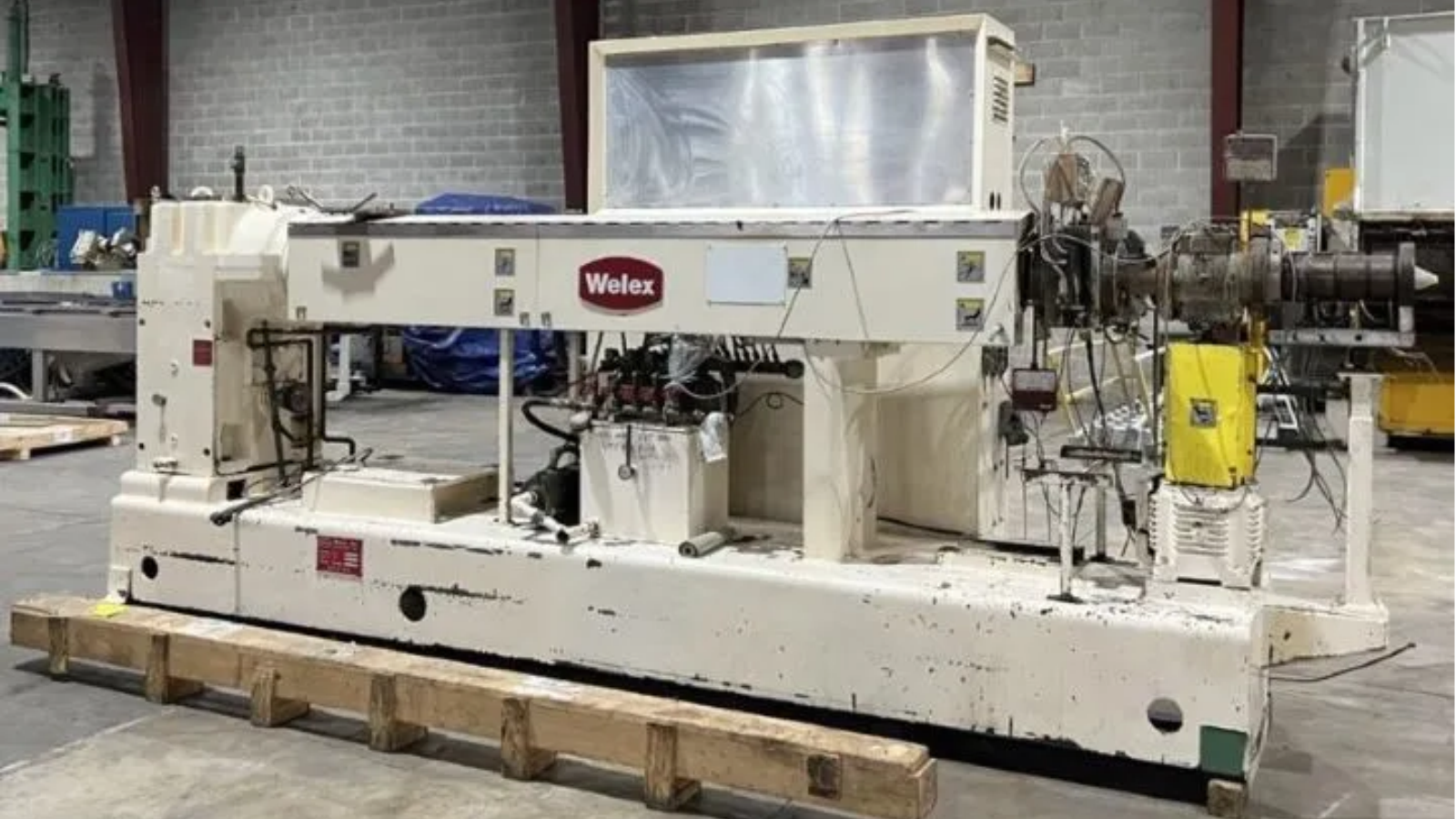
Plastic extrusion is used across many industries to produce continuous plastic products in different shapes, sizes, and thicknesses. Manufacturers selecting Used Plastic Extrusion Machines should first understand the main equipment categories and how each one supports a particular manufacturing process.
The right choice depends on the material being processed, the finished product, required output, and the level of dimensional control needed. Understanding these differences helps buyers focus on equipment that fits their production requirements.
1. Single-Screw Extruders
Single-screw extruders use one rotating screw inside a heated barrel to convey, melt, and push plastic material through a die.
They are widely used in applications involving pipes, profiles, sheets, and films, depending on the machine’s design and configuration.
When evaluating this equipment, review screw diameter, motor capacity, barrel condition, temperature controls, and the materials the machine can process. Confirm that its actual capabilities align with your intended production process.
2. Twin-Screw Extruders
Twin-screw extruders use two screws to process material. Depending on the design, they can provide effective mixing, conveying, and compounding.
They are commonly associated with applications such as polymer compounding, additive blending, and specialized material processing.
Buyers should check whether the system uses co-rotating or counter-rotating screws and whether its configuration suits the intended material. Screw wear, gearbox condition, and control-system functionality also deserve attention.
3. Pipe and Tubing Extrusion Lines
Pipe extrusion lines manufacture continuous plastic pipes and tubing for applications such as water distribution, irrigation, industrial systems, and other uses.
A typical line may include an extruder, pipe die, sizing equipment, vacuum calibration, cooling tanks, haul-off units, and a cutter.
Important selection criteria include pipe diameter, wall thickness, material compatibility, and production speed. Check whether the included tooling covers your required product dimensions.
4. Profile Extrusion Machines
Profile extrusion equipment produces continuous shapes such as channels, trim, window components, and custom plastic sections.
These systems typically use specialized dies to form the required cross-section. Calibration and cooling equipment help maintain the finished product’s dimensions.
Before purchasing, review the available dies, cooling arrangements, haul-off capacity, and dimensional-control capabilities. Additional tooling may be required for new product designs.
5. Sheet and Board Extrusion Lines
Sheet extrusion systems produce flat plastic sheets and boards used in packaging, fabrication, construction, and industrial manufacturing.
A line may include an extruder, flat die, temperature-controlled rolls, cooling equipment, and cutting or winding systems.
Buyers should consider sheet width, thickness range, material requirements, and the condition of the die and rolls. These factors influence whether the line can manufacture products to the required specifications.
6. Blown-Film and Cast-Film Equipment
Film extrusion equipment is generally divided into blown-film and cast-film systems.
Blown-film machines form a tube of molten plastic that is expanded and cooled. Cast-film machines push molten material through a flat die onto cooling rolls.
The two systems differ in their configurations and the film properties they can produce. Selection should account for film width, thickness, material type, output, cooling requirements, and winding equipment.
7. Recycling and Compounding Extrusion Systems
Some extrusion systems are designed to process recycled plastics or blend polymers with additives and other ingredients.
Depending on the application, they may include specialized feeding systems, melt filtration, degassing, pelletizing, and additional process controls.
Buyers should verify that the equipment can handle the intended feedstock and processing conditions. The presence of suitable filtration and feeding systems may be particularly important for recycled materials.
How to Select the Right Equipment Type
Before choosing a machine, define your product dimensions, material specifications, output targets, and available installation space.
Review the machine’s technical documentation and inspect the screw, barrel, gearbox, controls, die, and auxiliary equipment. Confirm that the equipment can integrate with your existing production process and that suitable replacement parts are available.
Conclusion
Different extrusion machines are designed for different products and processing requirements. Selecting the right configuration helps manufacturers avoid unnecessary modifications and invest in equipment that supports their production plans.
When evaluating Used Plastic Extrusion Machines For Sale, compare machine type, technical specifications, included tooling, operating condition, and total installation cost. A careful assessment can help you identify an appropriate system for your manufacturing operation.