






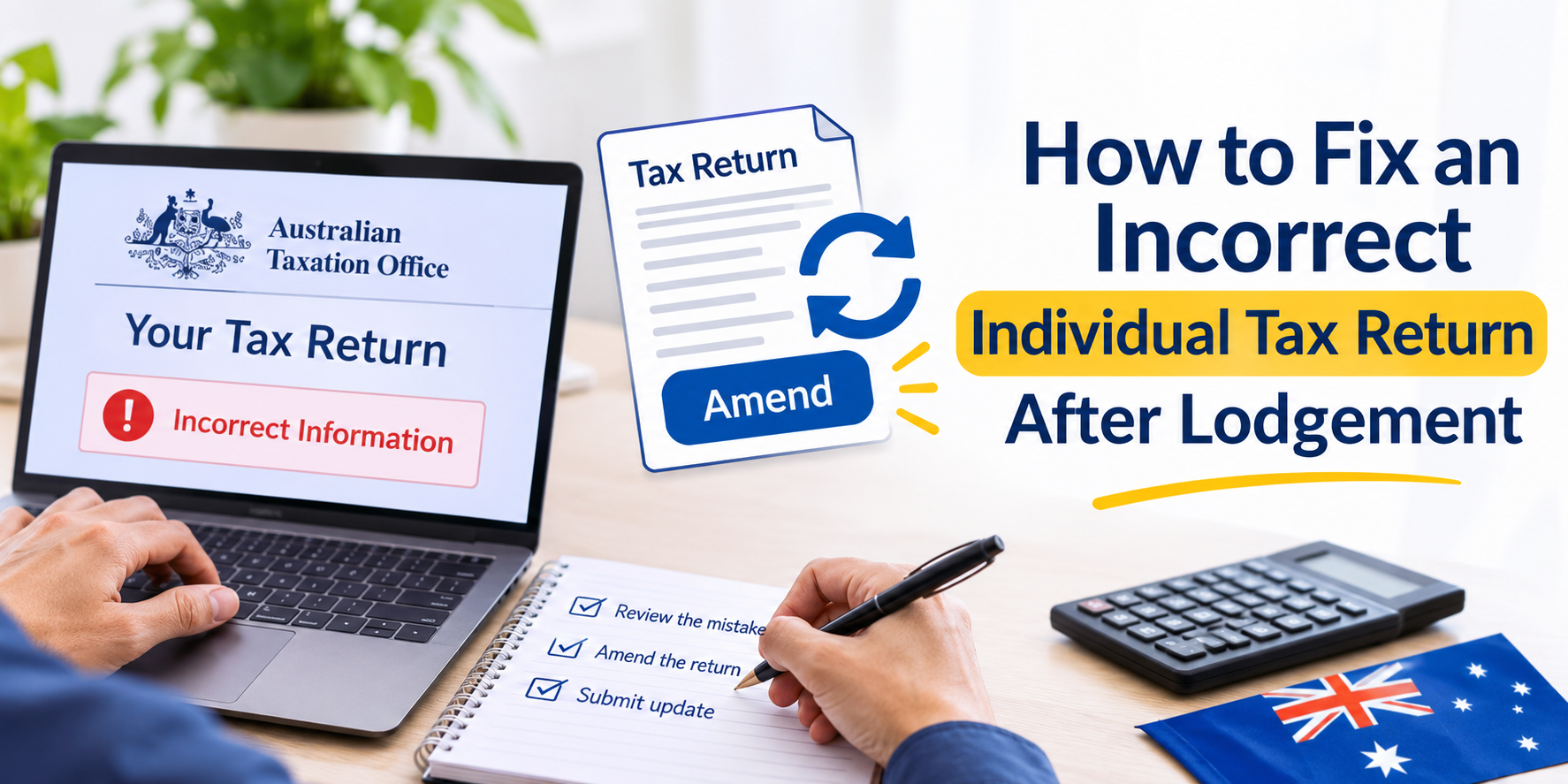
Discovering a mistake after submitting your tax return can be stressful, particularly when you are unsure whether it will affect your refund or create problems with the Australian Taxation Office (ATO). You might have forgotten to declare some income, entered an incorrect deduction or missed an eligible tax offset.
The good news is that you can generally correct these mistakes by requesting an amendment. Understanding how to amend individual tax return information correctly can help you avoid unnecessary complications and ensure your tax records reflect your actual financial position.
Here is what Australian taxpayers should know about correcting an already lodged return.
What Happens If You Make a Mistake in Your Tax Return?
An error in a lodged tax return does not automatically mean you will face a penalty. The next step depends on the type of mistake, whether your original return has been processed and whether the error changes your tax liability.
Common mistakes include:
- Forgetting to declare bank interest, dividends or additional employment income.
- Leaving out freelance, gig economy or side-business earnings.
- Claiming deductions without sufficient supporting records.
- Entering incorrect work-related expenses.
- Missing eligible tax offsets or deductions.
- Reporting incorrect private health insurance information.
- Making errors when declaring capital gains or rental income.
If you identify an error, review the relevant figures and supporting documents before taking action. The ATO provides an official guide to correcting a tax return.
When Should You Amend an Individual Tax Return?
You may need to request an amendment when information in your original return was incomplete or incorrect.
For example, imagine you lodged your return using your employment income and claimed eligible work-related expenses. A few weeks later, you discover that you also received bank interest that was not included. This additional income may change your taxable income and the amount of tax payable.
Similarly, you might receive an updated income statement from your employer after lodging. If the revised information changes the figures in your assessment, you may need to correct the return.
However, not every issue requires an amendment. If you believe the ATO made an administrative or processing error, contact the ATO first to understand whether it can be resolved without submitting a new amendment request.
Important: Wait until the ATO has processed your original return and issued the relevant notice of assessment before requesting an amendment.
How to Amend an Individual Tax Return Online Through myGov
For most individuals, using ATO online services is the most straightforward way to correct an assessment.
Follow these steps:
1. Sign in to Your myGov Account
Visit the myGov website and sign in using your account details. Make sure your account is linked to the ATO so you can access your tax information.
2. Open Your Tax Return
Select the ATO service and navigate to Manage tax returns. Find the income year that contains the mistake.
3. Select the Amend Option
Choose the relevant tax return and select Amend. You can then access the information previously submitted to the ATO.
4. Correct the Incorrect Information
Find the section containing the error and replace the incorrect amount with the correct figure.
If you need to add another income source, deduction or tax offset, you may need to update the relevant section of the return before entering the new details.
5. Review and Submit Your Amendment
Check the revised information carefully. Review the updated tax calculation and make sure the changes are supported by accurate records before submitting your request.
You can follow the ATO’s official instructions for requesting a tax return amendment.
How Long Does an ATO Tax Return Amendment Take?
Processing time depends on how you submit the request and whether the ATO needs additional information.
Online amendment requests generally take around 15 business days to process, according to the ATO’s current guidance. Written requests can take considerably longer, with processing potentially taking up to 90 business days.
These are general timeframes rather than guaranteed completion dates. Complex cases or requests requiring further checks may take longer.
You can monitor the progress of your amendment through ATO online services linked to your myGov account.
What Is the Time Limit for Amending a Tax Return in Australia?
Australian taxpayers should pay attention to the amendment period because there are legal time limits for correcting an assessment.
For most individuals, the standard amendment period is two years from the day after the notice of assessment is issued.
For example, if your notice of assessment is issued on 19 November 2026, your usual amendment period would begin on 20 November 2026 and generally end on 20 November 2028.
Some circumstances have different rules. If you are outside the applicable amendment period, you may need to lodge an objection instead. The process and eligibility requirements depend on your circumstances.
You can review the ATO’s official information about time limits on tax return amendments before proceeding.
Will Amending Your Tax Return Affect Your Refund or Tax Bill?
The financial impact depends on the correction you make.
If the amendment reduces your taxable income or increases your eligible deductions, your revised assessment may result in a larger refund or a reduction in tax payable.
On the other hand, if you forgot to declare income or claimed deductions incorrectly, the amendment could increase your tax liability.
For instance, if additional bank interest or freelance income was omitted, the ATO may recalculate your taxable income. You could then receive an amended assessment showing an additional amount payable.
If you voluntarily disclose an error that increases your tax liability, the ATO may take that disclosure into account when considering penalties. However, this does not guarantee that penalties or interest will be waived.
Common Mistakes to Avoid When Correcting a Tax Return
Although the amendment process is relatively straightforward, rushing through it can create further problems.
Keep these points in mind:
- Do not lodge another complete return: An amendment is generally used to correct the original assessment. You do not normally need to submit an entirely new return.
- Check all income sources: Review salary, interest, dividends, rental income and additional earnings.
- Keep supporting documents: Retain receipts, invoices, bank statements and other records that support your revised figures.
- Avoid unsupported deductions: Only claim expenses you are legally entitled to claim.
- Check the amendment deadline: Do not assume you can amend an assessment indefinitely.
- Review the final calculation: Make sure the revised figures accurately reflect your financial circumstances.
Taking time to review your information can help prevent repeated amendments and unnecessary ATO correspondence.
When Should You Seek Help From a Registered Tax Agent?
Some corrections are simple, but others involve more complicated tax matters. Professional assistance may be useful if you have multiple income sources, investment properties, capital gains, foreign income or substantial work-related deductions.
A registered professional can review your previous assessment, identify missing information and help determine the appropriate correction process.
If you need assistance with a previous return or want to prepare your next individual tax return accurately, professional guidance can make the process easier.
Taxpayers in Western Australia can also consult a registered tax agent Perth to discuss amendment requirements, supporting records and communication with the ATO.
Final Thoughts
Finding an error after lodging your tax return can be frustrating, but ignoring it may create bigger problems later. Whether you have missed income, entered an incorrect deduction or received updated financial information, it is important to review the issue and take the appropriate steps.
Knowing how to amend individual tax return details, understanding the ATO’s time limits and keeping supporting documents can help you manage the correction process with greater confidence.
If your tax situation is complicated or you are unsure which figures need changing, consider seeking professional assistance before submitting an amendment. Correcting the information properly can help keep your tax affairs accurate and up to date.