




The global shift toward renewable energy has placed solar panels, wind turbines, and offshore clean-tech installations in some of the world’s most extreme environments. From coastal wind farms battered by ocean spray to solar installations exposed to humid atmosphere conditions, renewable energy infrastructure must endure decades of relentless weathering. Corrosion is one of the biggest threats to these assets, leading to structural failures, reduced efficiency, and costly downtime.
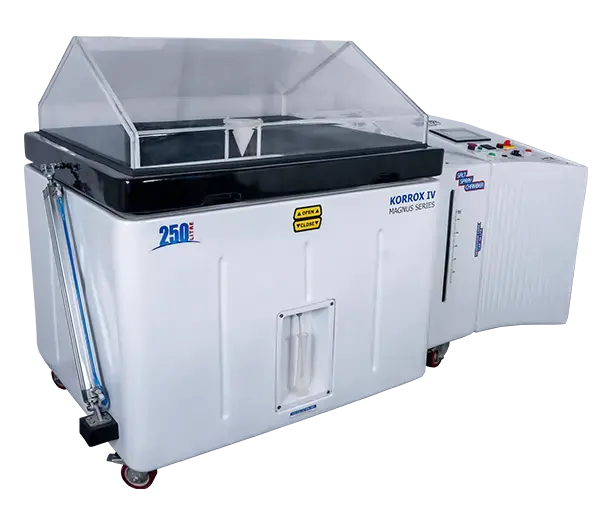
To prevent catastrophic failures, testing materials against atmospheric exposure and accelerated corrosion is vital. This is where high-precision environmental testing equipment plays a crucial role. A salt spray test chamber creates a controlled corrosive environment that simulates years of natural weathering in just days or weeks. In this post, we’ll explore the importance of corrosion testing in clean energy and look at the top manufacturers delivering reliable testing solutions to the sector.
Why Corrosion Testing Matters in Renewable Energy
Renewable energy equipment is expected to operate with minimal maintenance for 20 to 30 years. However, salt fog, high humidity, and temperature variations constantly challenge component integrity:
- Solar Panels & Mounting Structures: Photovoltaic frames, mounting racks, and electrical junction boxes are often deployed in coastal or high-humidity regions where saline moisture accelerates oxidation on metals and protective coatings.
- Offshore Wind Turbines: Offshore installations face relentless sea spray, high winds, and dense humidity. Tower coatings, turbine blades, fasteners, and internal electrical cabinets require rigorous testing to withstand ocean environments.
- Battery Energy Storage Systems (BESS): Outdoor energy storage enclosures must maintain tight seals and corrosion resistance to protect sensitive battery cells and power electronics from atmospheric degradation.
By using a reliable salt spray chamber, manufacturers can evaluate protective coatings, anodized aluminum, stainless steel components, and electroplated finishes against international standards like ASTM B117, ISO 9227, and IEC standards.
Top Salt Spray Chamber Manufacturers
Choosing the right testing equipment manufacturer ensures accurate test results, compliance with global standards, and long-term instrument reliability. Here are three leading manufacturers powering quality assurance in the renewable energy sector.
1. Presto Enviro
When it comes to high-performance environmental test equipment, Presto Enviro stands out as a trusted global brand known for precision engineering, robustness, and innovative technology. Presto Enviro provides advanced testing instruments engineered specifically to meet the demanding requirements of quality control laboratories and R&D centers across the renewable energy supply chain.
Their comprehensive range includes top-tier salt spray tester models equipped with modern features such as touchscreen interfaces, precise temperature controllers, automated atomization systems, and corrosion-resistant fiberglass-reinforced plastic (FRP) bodies. Whether testing solar rack fasteners or turbine housing components, Presto Enviro delivers consistent fog collection rates and uniform mist distribution essential for reproducible testing.
Key Highlights of Presto Enviro:
- Full compliance with international standards including ASTM B117, ISO 9227, and JIS Z 2371.
- Durable triple-walled construction designed for long-term corrosion resistance.
- User-friendly touch-screen controllers with programmable test cycles and data logging capabilities.
- Exceptional customer support and customization options tailored to specific component dimensions.
2. Thermotron Industries
Thermotron Industries is a well-established North American manufacturer with decades of experience in designing custom environmental testing chambers. Their corrosion testing equipment is widely used in aerospace, automotive, and green energy applications.
Thermotron offers versatile corrosion chambers capable of performing cyclic corrosion testing (CCT), combining salt spray exposure with dry-off phases, humidity cycles, and temperature swings. This multi-environment simulation closely mimics real-world conditions experienced by solar arrays and wind turbines throughout changing seasons.
Key Highlights of Thermotron:
- Advanced cyclic corrosion capabilities for realistic environmental simulation.
- Integrated software solutions for remote monitoring and data collection.
- Robust build quality suitable for heavy-duty industrial components.
3. Weiss Technik
Weiss Technik is a global leader headquartered in Germany, renowned for premium environmental simulation systems. Their SaltEvent series of salt spray test chambers offers exceptional precision and climate control for high-end research and manufacturing setups.
Engineered for maximum reliability, Weiss Technik chambers feature optimized spray nozzles and intelligent misting systems that ensure even fog distribution across large test samples. Their equipment is heavily relied upon by European wind energy manufacturers and solar component suppliers who demand strict adherence to international quality benchmarks.
Key Highlights of Weiss Technik:
- High-precision dosing pumps and atomization nozzles for exact salt mist concentration.
- Seamless integration into automated laboratory workflows.
- Energy-efficient design reducing operational costs during extended test runs.
Key Features to Consider When Choosing a Salt Spray Chamber
When selecting a corrosion testing chamber for renewable energy applications, evaluate the following factors:
- Test Volume and Sample Capacity: Ensure the chamber chamber dimensions can accommodate actual component sizes, such as full-length mounting rails or heavy structural brackets.
- Standards Compliance: Verify that the equipment supports key standards like ASTM B117, ISO 9227, IEC 60068-2-11, or MIL-STD testing.
- Automation and Control: Modern digital controllers with touchscreen interfaces simplify cycle programming, temperature monitoring, and data export.
- Construction Material: Look for non-corrosive housing materials like high-grade FRP or reinforced plastics that resist chemical degradation over time.
Conclusion
As the renewable energy industry expands into harsher offshore and desert climates, corrosion testing becomes an indispensable step in product development and quality assurance. Investing in high-performance equipment like a salt spray test chamber enables manufacturers to validate component longevity, protect brand reputation, and accelerate the transition toward clean, sustainable power. Manufacturers like Presto Enviro, Thermotron, and Weiss Technik continue to provide the cutting-edge testing solutions needed to keep tomorrow’s green infrastructure running strong.