





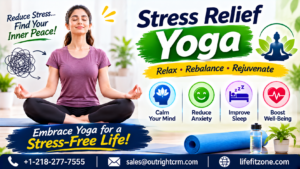
Modern life can be overwhelming. Between work deadlines, family responsibilities, financial worries, and everyday challenges, stress can quickly become part of our daily routine. If you’re looking for a natural way to relax, Stress Relief Yoga can be a helpful addition to your lifestyle.
Stress relief yoga combines gentle movements, mindful breathing, meditation, and relaxation techniques to help calm your mind and release physical tension. Whether you’re a beginner or an experienced yoga practitioner, regular practice can support your physical and emotional well-being.
At Lifefitzone, we believe that a healthy lifestyle starts with taking care of both your physical and mental health.
What Is Stress Relief Yoga?
Stress relief yoga refers to yoga practices designed to relax the body, calm the mind, and improve emotional balance.
Through gentle movements and stress management through yoga, you can develop greater awareness of your breathing, release physical tension, and create a peaceful daily routine.
Popular yoga styles for relaxation include Hatha Yoga, Restorative Yoga, Yin Yoga, and Yoga Nidra.
10 Best Yoga Poses for Stress Relief and Relaxation
Practicing simple yoga poses for relaxation can help release muscular tension and encourage mindfulness. These beginner-friendly postures are excellent starting points:
- Child’s Pose (Balasana)
- Cat-Cow Pose (Marjaryasana-Bitilasana)
- Legs Up the Wall Pose (Viparita Karani)
- Standing Forward Bend (Uttanasana)
- Bridge Pose (Setu Bandhasana)
- Easy Seated Pose (Sukhasana)
- Corpse Pose (Savasana)
- Butterfly Pose (Baddha Konasana)
- Seated Forward Bend (Paschimottanasana)
- Happy Baby Pose (Ananda Balasana)
Practice slowly, breathe comfortably, and avoid forcing your body into difficult positions.
How Yoga Helps Reduce Stress Naturally
Regular yoga practice can support relaxation and emotional well-being in several ways.
1. Encourages a Relaxed Nervous System
Gentle movements and mindful breathing may help activate the body’s relaxation response.
2. Helps Release Physical Tension
Yoga stretches can help ease stiffness in the shoulders, neck, back, and other areas where physical tension commonly develops.
3. Supports Mental Health
A consistent daily yoga routine for mental health can encourage mindfulness, improve body awareness, and provide time to disconnect from everyday pressures.
4. Supports Better Sleep
Relaxing yoga before bedtime may help you unwind and establish healthier sleep habits.
5. Improves Emotional Well-Being
Yoga encourages you to focus on the present moment rather than constantly worrying about past or future events.
Best Breathing Exercises for Stress Relief
Along with physical postures, breathing exercises for stress relief are an important part of yoga.
Here are three techniques you can practice at home:
1. Deep Belly Breathing
Sit comfortably, place one hand on your abdomen, and slowly inhale through your nose. Allow your abdomen to expand before gently exhaling. Continue for 2–5 minutes.
2. Alternate Nostril Breathing
Practice slow, comfortable breathing through alternate nostrils. This traditional technique is also known as Nadi Shodhana.
3. Humming Bee Breath
Breathe in gently through your nose and produce a soft humming sound while exhaling. Repeat several times without straining.
A Simple 15-Minute Daily Yoga Routine for Stress Relief
A short daily yoga routine for mental health can help you develop a consistent self-care habit.
| Yoga Practice | Duration |
| Deep belly breathing | 2 minutes |
| Cat-Cow Pose | 2 minutes |
| Child’s Pose | 2 minutes |
| Butterfly Pose | 2 minutes |
| Standing Forward Bend | 2 minutes |
| Legs Up the Wall Pose | 3 minutes |
| Corpse Pose | 2 minutes |
| Total | 15 minutes |
You can practice this routine in the morning to start your day mindfully or in the evening to relax after a busy schedule.
Tips for Beginners Starting Relaxing Yoga
If you’re new to yoga, relaxing yoga for beginners is a great way to build confidence and develop healthy habits.
Follow these simple tips:
- Start with 10–15 minutes of gentle yoga.
- Choose comfortable clothing.
- Practice in a quiet environment.
- Focus on your breathing instead of perfecting poses.
- Use cushions or yoga blocks for support.
- Avoid movements that cause pain.
- Practice consistently without putting pressure on yourself.
Remember, yoga is a personal journey. You don’t need advanced flexibility or expensive equipment to get started.
Frequently Asked Questions (FAQs)
Which yoga is best for stress relief?
Restorative Yoga, Hatha Yoga, Yin Yoga, and gentle yoga are excellent options for relaxation. Beginners can start with Child’s Pose, Cat-Cow Pose, and Savasana.
Can yoga help with stress and anxiety?
Yoga may help manage everyday stress and mild anxiety by combining physical movement, breathing exercises, and mindfulness. However, it is not a replacement for professional mental healthcare.
How long should I practice yoga for stress relief?
Beginners can start with 10–15 minutes daily and gradually increase their practice according to their comfort and fitness level.
Can beginners practice stress relief yoga at home?
Yes. Beginners can practice simple yoga poses and breathing exercises at home using a comfortable mat and a quiet space.
Final Thoughts
Stress is an unavoidable part of life, but developing healthy habits can help you manage everyday challenges. Stress relief yoga offers a simple way to slow down, reconnect with your body, and create moments of relaxation.
Whether you choose yoga poses for relaxation, breathing exercises, or a daily 15-minute routine, consistency is more important than perfection.
At Lifefitzone, we encourage you to make self-care a priority and explore the benefits of a balanced lifestyle.
Take a deep breath, roll out your yoga mat, and give yourself a few peaceful moments every day!