






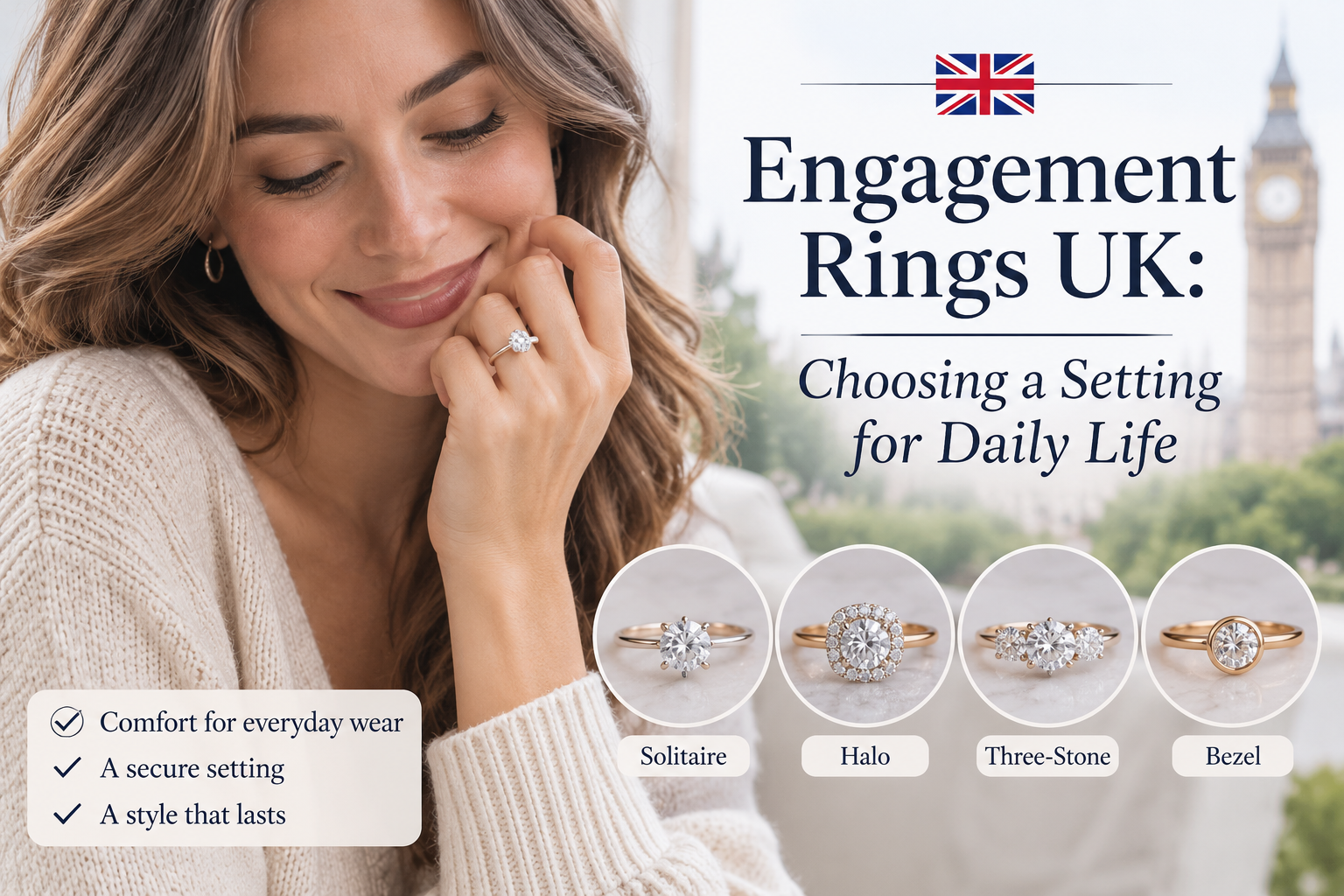
Most people pick a ring based on looks alone, then discover in week two that it snags on every jumper sleeve. The setting, meaning the metalwork that holds the stone on the band, shapes how a ring feels far more than the stone does. If you’re browsing engagement rings UK jewellers offer, start there. A solitaire suits simplicity, a three-stone brings balance and presence, and a halo delivers maximum sparkle with a little more upkeep.
This guide swiftly covers each style, and then, matches them to desk jobs, gym routines and wardrobes, so the ring still feels right every time you wear it.

What Are the Main Engagement Ring Settings?
A setting is the metalwork that holds the centre stone on the band. The three most popular styles are the solitaire (one stone), the three-stone (a centre diamond flanked by two side stones) and the halo (a ring of smaller diamonds around the centre). Each changes how the ring looks, sits and wears.
Solitaire: the one-stone classic
A solitaire is a single diamond held by metal claws, usually four or six. It’s the simplest design to live with, because there’s little detail for fabric or hair to catch on. Many lab grown engagement rings use this format, and it’s a sensible starting point if you’ve never worn a ring daily.
Three stone: a little more presence
Here, two smaller diamonds sit on either side of the centre stone. The look is broader across the finger, which can make a modest centre diamond appear more substantial. Some people like the “past, present and future” reading of the three stones; others simply like the symmetry. Either reason is fine.
Halo: sparkle with a frame
A halo surrounds the centre stone with a ring of small diamonds. It adds visual size without increasing the centre stone itself, and it catches light from more angles. Halo designs suit lab grown diamond engagement rings well when you want impact on a sensible budget, although the extra tiny stones do mean slightly more cleaning.
Which Setting Suits Your Daily Routine?
Choose according to your busiest, messiest day, not your best one. Low, simple settings, such as a solitaire, are suitable for activities like typing, driving, and manual work. Halo and three-stone designs sit a bit wider and suit people who mostly work at a desk or want a more noticeable ring.
If you type, drive or commute all day
Desk workers tend to be kinder to jewellery than they think. However, laptop edges, bag straps, and tube handrails can all damage a ring. A solitaire with a low profile is the least likely to snag, and a halo is perfectly workable if you’re careful with knitwear.
Fit matters here too. Fingers swell in summer heat and shrink in a cold British January, so a ring that spins in winter may feel snug by July. UK sizes run in letters (a half size is an actual thing), and it’s worth trying a ring on at different times of day. Anyone shopping for engagement rings in the UK should check retailers’ stock before committing.
If you are active or work with your hands,
Gym bars, climbing walls and gardening all scratch metal and loosen claws. Many people choose to remove the ring for these activities, and that is the best advice. A silicone band is a cheap stand-in for lifting days. If you can’t remove it, pick the lowest setting you like and avoid tall, lofty claws.
If you cook, clean or look after small children
Hands in water, handwash and tiny fingers pulling at jewellery are a rough combination. A solitaire is the easiest to wipe clean. A halo can trap soap residue between the little stones, so give it a quick rinse and dry afterwards.

How Do You Match the Metal and Shape to Your Style?
Match the metal to the jewellery you already wear, then match the diamond shape to your hand and wardrobe. Yellow, white and rose gold, or platinum, each give a different tone. Round diamonds read classic and bright, while cushion shapes feel softer and slightly vintage.
Choosing a metal
Gold purity is measured in carats, with 24 carats being pure gold. 18 carat gold is 75 per cent pure gold (750 parts per thousand), with other metals mixed in for strength. That alloy is why gold rings come in so many colours.
- Yellow gold looks warm and traditional, and it flatters most skin tones.
- White gold gives a cool, silvery finish, but it’s usually rhodium plated and may need replating after a few years.
- Rose gold has a soft, rosy warmth that tends to suit vintage-leaning styles.
- Platinum has a naturally silver-white colour and a satisfying weight in the hand.
If you wear a silver watch every day, white gold or platinum will sit more comfortably beside it. If your other pieces are all gold, don’t fight it. Lab grown engagement rings come in the same metals, so the choice is about taste, not stone.
Round or cushion?
A round diamond is the most sparkly and the easiest to pair with other jewellery. A cushion shape has rounded corners and a gentler, pillowy glow. If you’ve small hands, either works, though a slimmer band keeps things proportionate.
How Do You Look After a Ring You Wear Every Day?
Wash it gently, check the claws now and then, and keep it out of harsh chemicals. A diamond ranks 10 on the Mohs scale of hardness, so it resists scratching extremely well. The metal around it is softer, and that’s where daily wear shows.
Cleaning at home
Soak the ring for 10 to 15 minutes in warm water with a few drops of mild washing-up liquid. Brush gently with a soft toothbrush, rinse, and pat dry with a lint-free cloth. Avoid bleach, which can damage some metals, and take it off before swimming. Wrists knock desks and door handles more than you’d expect, so lab grown diamond bracelets deserve the same gentle wash.
Checking the claws
Look at the stone sideways every month or so. If it moves when you tap the ring near your ear, or you can see a claw lifting away from the diamond, stop wearing it and see a jeweller. A quick check by a trained jeweller or gemmologist is much less expensive than losing a stone.
Lab grown diamond engagement rings need exactly the same care as any other diamond ring. The same goes for a lab created diamond necklace, which tends to get less knocking than a ring but still collects skin oils.
Planning for the wedding band
If you’re buying a bridal set or expect to add a band later, think about how the two sit together. A halo can leave a gap against a straight band, while a solitaire usually sits flush. Eternity rings are lovely, but bear in mind that they’re worn alongside the ring and rub against it daily, so a jeweller can advise you on the best order to wear them.
Frequently Asked Questions
-
Is a solitaire or three-stone better for everyday wear?
A solitaire is usually the more practical choice because it has fewer parts to catch on clothing or collect grime. A three-stone sits wider and looks more substantial, so it suits people who work mostly at a desk. Both hold up well, including on lab grown diamond engagement rings, if you check the claws regularly.
-
Can I wear my ring to the gym?
It’s safest not to. Weights, bars and rowing machines can scratch the metal or loosen claws, and sweat makes fingers swell. Many people swap to a plain silicone band for workouts. That advice applies equally to lab grown engagement rings, as the stone and the metal behave much like any other.
-
How much should I budget for a ring?
Budgets vary enormously, and there’s no correct figure. As a rough guide, many people spend between £1,000 and £3,000 on a high-quality solitaire or three-stone ring in gold or platinum. Decide a number first, then look at the setting, metal and shape within it.
-
Should my ring match my other jewellery?
It helps to match the metal, but the designs don’t need to be identical. A lab created diamond necklace and lab grown diamond bracelets look best when they share the ring’s metal tone and simply echo its shape, rather than copying it exactly.
Summing up
The best setting is the one that suits your day, not just your Instagram feed. A solitaire is the easy, low-snag option; a three-stone gives balance and a broader look, and a halo adds sparkle for a little extra cleaning. Match the metal to the jewellery you already own, let the shapes echo rather than copy each other, and check the claws regularly. Choosing among engagement rings UK shoppers love is easier once you picture the ring on an ordinary Tuesday, not just the proposal. A ring that fits your life will still feel like yours in twenty years.