






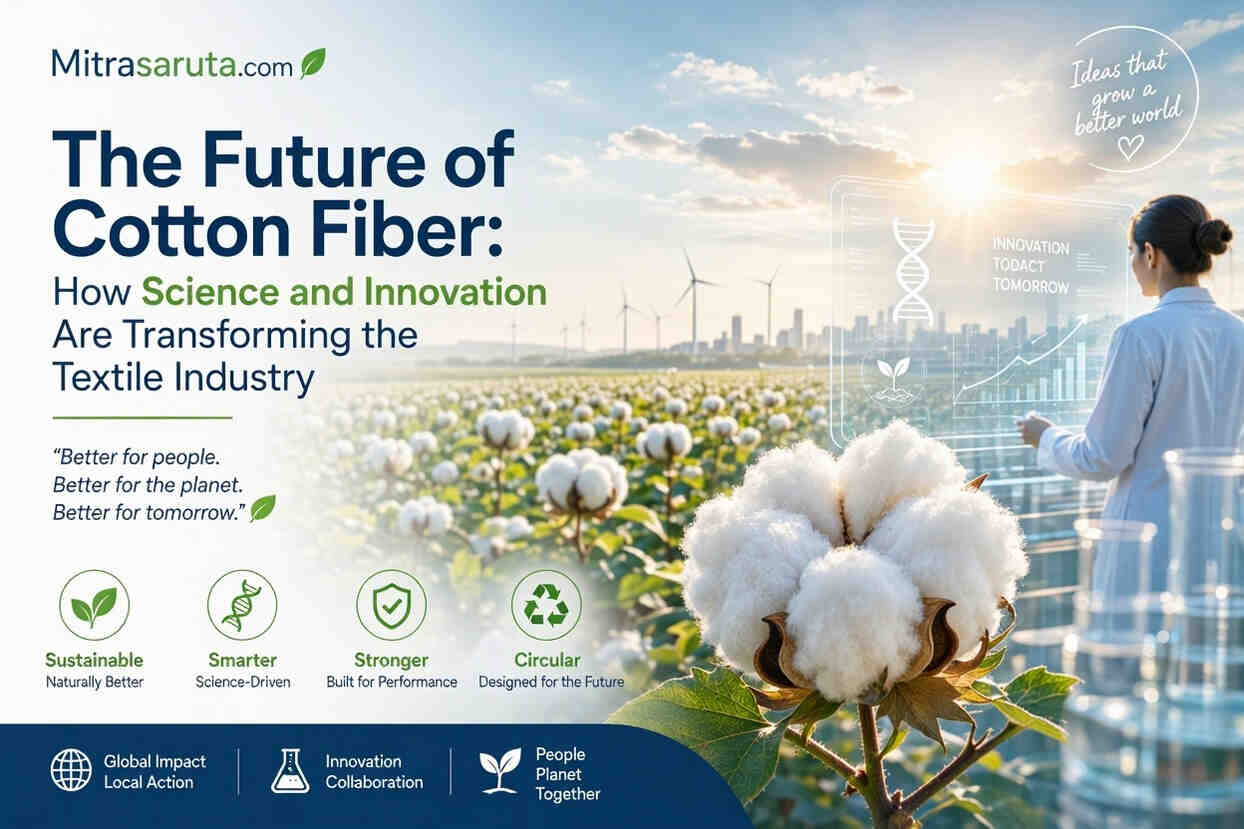
Cotton has remained one of the world’s most important natural fibers for centuries. Its softness, breathability, versatility, and comfort make it a preferred material for clothing, home textiles, and various industrial applications. However, as the global textile industry faces increasing demands for sustainability, product quality, and production efficiency, traditional cotton manufacturing is undergoing significant transformation. Scientific research and technological innovation are creating new opportunities to improve cotton fiber performance while reducing its environmental impact.
The future of cotton depends not only on agricultural production but also on advancements in fiber development, processing technologies, textile engineering, and responsible manufacturing. These innovations are helping cotton maintain its position as a valuable natural resource in an increasingly competitive textile market.
1. Scientific Research Is Improving Cotton Fiber Quality
Fiber quality is one of the most important factors influencing the performance of cotton textiles. Characteristics such as fiber length, strength, fineness, uniformity, and maturity determine how cotton behaves during spinning, weaving, knitting, and finishing.
Modern agricultural research is helping develop cotton varieties with improved fiber characteristics. Through conventional breeding programs and advanced biotechnology, researchers can identify plant varieties that produce stronger, longer, and more uniform fibers. Better fiber quality can improve yarn consistency, reduce processing difficulties, and support the production of durable fabrics.
Scientific developments also allow cotton producers to understand how environmental conditions affect fiber development. Temperature, water availability, soil nutrients, and growing conditions can influence the final quality of harvested cotton. By studying these factors, farmers can make better cultivation decisions and improve production outcomes.
2. Smart Agriculture Is Transforming Cotton Production
Innovation in agriculture is playing an increasingly important role in the future of cotton. Traditional farming methods are gradually being supported by precision agriculture technologies that help farmers manage resources more efficiently.
Satellite monitoring, agricultural sensors, GPS equipment, and data analytics can provide valuable information about soil conditions, crop development, and irrigation requirements. These technologies help farmers identify areas that need additional attention and make more informed decisions throughout the growing season.
Smart irrigation systems are another important development. Since cotton cultivation can require considerable amounts of water, efficient water management is essential in regions facing water shortages. Drip irrigation, soil moisture sensors, and automated irrigation controls can help reduce unnecessary water consumption.
Precision agriculture also supports more responsible fertilizer and pest management. Applying agricultural inputs according to actual crop requirements can reduce waste, lower production costs, and limit environmental pressure.
3. Sustainable Cotton Is Becoming an Industry Priority
Environmental responsibility is becoming a major consideration for textile manufacturers, retailers, and consumers. Cotton production and processing involve several environmental challenges, including water consumption, agricultural chemical use, energy requirements, and wastewater management.
In response, the industry is exploring more sustainable cultivation and manufacturing practices. Organic cotton, for example, is produced under standards that restrict synthetic pesticides and fertilizers. Other responsible cotton production systems focus on improving soil health, water efficiency, biodiversity, and farming practices.
Sustainability also extends beyond the farm. Textile manufacturers are investing in improved dyeing technologies, energy-efficient machinery, and wastewater treatment systems. These developments can reduce the environmental footprint associated with converting raw cotton into finished fabrics.
Recycling is another promising direction. Cotton textile waste can be collected, sorted, and processed into recycled fibers for new products. Although mechanical recycling may shorten fibers and affect their strength, blending recycled cotton with virgin fibers can help achieve suitable yarn quality for different applications.
4. Advanced Spinning Technologies Improve Yarn Performance
The transformation of cotton continues inside modern textile factories. Spinning technology determines how individual cotton fibers are converted into yarn, making it an important stage in textile manufacturing.
Modern spinning systems are designed to improve productivity, consistency, and resource efficiency. Compact spinning, ring spinning, and open-end rotor spinning offer different advantages depending on the desired yarn characteristics and production requirements.
Compact spinning, for instance, can produce yarn with improved strength and reduced hairiness compared with conventional ring-spun yarn under suitable processing conditions. This can contribute to smoother fabrics and better overall product quality.
Automation and digital monitoring also help manufacturers maintain consistent production standards. Sensors can monitor machine performance, detect irregularities, and identify potential problems before they cause significant defects.
These improvements allow textile businesses to produce cotton yarn for a wide range of applications, from lightweight apparel and premium fabrics to durable household textiles.
5. Digital Technology Is Creating Smarter Textile Manufacturing
Digital transformation is changing how textile companies manage production. Artificial intelligence, machine learning, and industrial automation are increasingly being used to improve manufacturing efficiency and quality control.
AI-powered inspection systems can analyze fabric surfaces to identify defects such as broken threads, uneven textures, and weaving irregularities. Automated inspection can help reduce human error and support more consistent quality standards.
Digital production management systems also provide manufacturers with better visibility into inventory, machinery performance, production schedules, and material consumption.
In addition, digital product traceability is becoming more important. Manufacturers and brands increasingly want to understand where cotton originates, how it is processed, and whether it meets relevant sustainability requirements. Traceability systems can strengthen supply chain transparency and support more responsible purchasing decisions.
6. Cotton Blending Is Expanding Textile Applications
Although cotton offers many natural advantages, blending it with other fibers can create materials with additional performance characteristics. Textile manufacturers frequently combine cotton with polyester, viscose, elastane, and other fibers to achieve specific fabric properties.
Cotton-polyester blends, for example, can combine cotton’s softness and breathability with polyester’s durability and dimensional stability. Cotton-elastane fabrics provide stretch and flexibility, making them suitable for activewear, casual clothing, and fitted garments.
Research into advanced fiber combinations is also encouraging manufacturers to explore innovative textile structures. These developments can improve wrinkle resistance, moisture management, fabric durability, and comfort.
However, selecting the appropriate blend requires careful consideration of the intended application, manufacturing process, product performance, and end-of-life recycling requirements.
7. The Future of Cotton in a Circular Textile Economy
The circular economy is expected to influence the next generation of cotton products. Instead of following a traditional production model in which textiles are manufactured, used, and discarded, circular manufacturing emphasizes longer product lifespans, reuse, repair, and recycling.
For cotton manufacturers, this creates opportunities to develop fabrics that are easier to recycle and recover. Better material identification, improved textile collection systems, and innovative fiber separation technologies can support more effective recycling processes.
Brands and manufacturers can also contribute by designing durable cotton products and reducing unnecessary production waste. Collaboration between farmers, spinning mills, fabric producers, and retailers will be essential to achieving these goals.
Conclusion
The future of cotton fiber will be shaped by the combination of scientific research, agricultural innovation, advanced manufacturing, and environmental responsibility. Improvements in crop development, smart farming, spinning technology, digital quality control, and textile recycling are creating new possibilities for the global cotton industry.
Mitrasaruta: As consumer expectations and manufacturing requirements continue to evolve, cotton remains an important material with considerable potential. Businesses that embrace innovation and responsible production practices will be better positioned to deliver high-quality cotton products while supporting a more efficient and sustainable textile industry.