





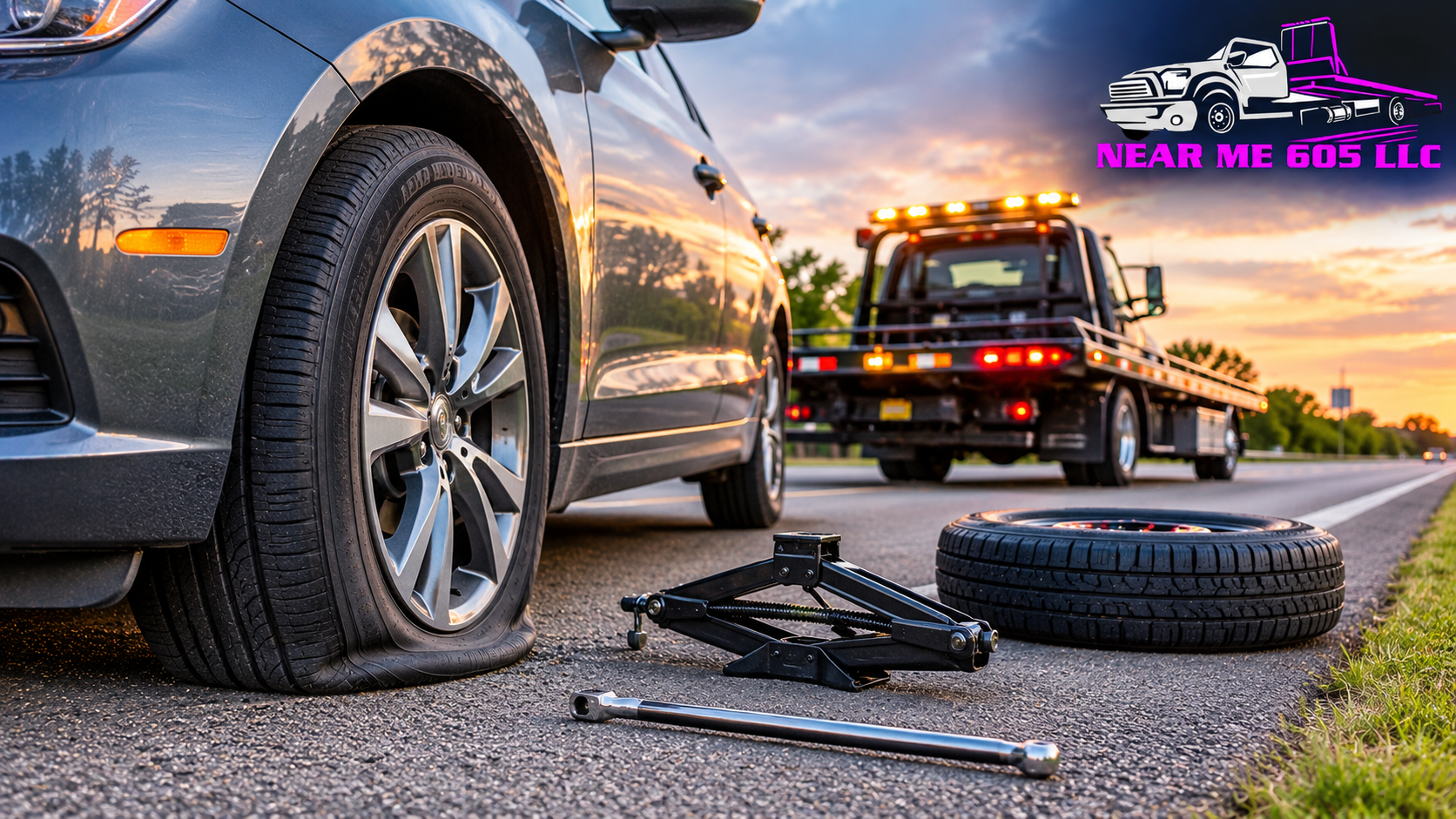
A flat tire can turn an ordinary drive into an unexpected roadside emergency. Whether you are commuting to work, traveling through Sioux Falls, or heading out on a longer journey, a damaged tire can leave your vehicle difficult or unsafe to drive. Punctures, worn tread, damaged valves, and sudden air loss are common reasons drivers experience tire problems.
Knowing what to do when a tire goes flat can help prevent additional vehicle damage and reduce roadside safety risks. Depending on the type of damage, a tire may be repairable, replaceable, or require professional vehicle transportation.
For drivers looking for Flat tire change Sioux Falls, SD, understanding the available roadside options is important. Towing Near Me LLC serves Sioux Falls, SD, and provides a local contact for towing assistance when a vehicle cannot safely continue its journey.
Quick Overview: What Should You Do When Your Car Gets a Flat Tire?
If you experience a flat tire while driving, gradually reduce your speed, avoid sudden steering movements, and move to a safe location away from traffic when possible.
Once safely stopped, turn on your hazard lights and inspect the tire only if it is safe to do so. Depending on the damage and your circumstances, you may need a spare tire installation, professional roadside tire assistance, or towing to a repair facility.
Do not continue driving on a completely flat tire. Doing so can damage the wheel, affect vehicle control, and create additional safety risks.
What Causes a Flat Tire?
Flat tires can happen for several reasons. Some problems develop gradually, while others cause sudden air loss.
Understanding the cause can help drivers recognize potential warning signs before a tire becomes completely unusable.
1. Nails and Sharp Objects
Road debris is one of the common causes of tire punctures. Nails, screws, metal fragments, and other sharp objects can penetrate the tire tread and allow air to escape.
A small puncture may sometimes be repairable, depending on its location and the tire manufacturer’s recommendations. However, damage to the sidewall or shoulder generally requires tire replacement rather than a conventional puncture repair.
2. Worn-Out Tire Tread
Tires gradually lose tread as they accumulate mileage. Reduced tread depth can affect traction, particularly on wet or slippery roads.
Regularly inspecting your tires helps identify excessive wear before it becomes a serious problem.
3. Incorrect Tire Pressure
Both underinflation and overinflation can affect tire performance.
Underinflated tires can generate excessive heat and experience additional stress. Overinflated tires may have reduced contact with the road and wear unevenly.
Check tire pressure using a reliable gauge and follow the pressure recommendations provided by your vehicle manufacturer.
4. Damaged Wheels or Valve Stems
A bent wheel, cracked rim, or damaged valve stem can cause air leakage.
Sometimes drivers repeatedly add air without realizing that the wheel or valve assembly is responsible for the problem. A proper inspection can help identify the actual cause.
5. Road Hazards and Potholes
Potholes, sharp road edges, and uneven surfaces can damage tires and wheels.
A strong impact may cause a tire bulge, sidewall damage, or an immediate loss of air. If you notice a bulge or visible structural damage, avoid driving on that tire.
When Should You Consider Mobile Tire Repair?
Drivers often search online for Mobile tire repair near me when a tire becomes damaged away from home.
Mobile tire assistance can be convenient because it may allow certain tire problems to be inspected or addressed at the vehicle’s location instead of requiring transportation to a repair shop.
Depending on the provider’s equipment and capabilities, mobile tire services may include:
- Inspecting a punctured tire.
- Checking tire pressure.
- Installing a suitable spare tire.
- Replacing a damaged tire.
- Identifying possible air leaks.
- Advising whether the tire requires professional replacement.
However, not every tire problem can be repaired at the roadside.
For example, sidewall damage, extensive tread separation, a damaged wheel, or a severely compromised tire may require replacement or transportation to a suitable repair facility.
Before requesting mobile assistance, explain the tire’s condition and ask whether the provider can perform the required work at your location.
Flat Tire Change vs. Tire Repair: What Is the Difference?
Although these terms are sometimes used interchangeably, tire repair and tire replacement are different services.
Flat Tire Repair
A repair may be possible when a puncture is located in an approved repairable area of the tread and meets applicable industry guidelines.
A qualified tire professional should inspect the tire internally and externally before determining whether repair is safe.
Simply inserting a temporary plug from the outside does not necessarily provide an appropriate permanent repair.
Flat Tire Replacement
A replacement is generally necessary when the tire has severe structural damage, an unsuitable puncture location, significant sidewall damage, or other conditions that make repair unsafe.
A replacement tire should match the vehicle’s specifications and be suitable for its wheel size and driving requirements.
Installing a Spare Tire
If your vehicle has a suitable spare tire and the roadside conditions are safe, replacing the damaged tire with the spare may be an option.
Always follow the vehicle manufacturer’s instructions, including any speed and distance limitations for temporary spare tires.
If you do not have a spare or cannot safely install it, professional assistance may be necessary.
What If Your Flat Tire Cannot Be Repaired at the Roadside?
Sometimes a tire problem cannot be resolved where the vehicle is parked.
For example, the tire may have extensive damage, the wheel may be bent, or the vehicle may be located somewhere unsafe for roadside repairs.
In these situations, Car towing near me searches can help drivers identify local transportation options.
Towing may be appropriate when:
- The vehicle has no usable spare tire.
- The damaged wheel prevents safe movement.
- Multiple tires are damaged.
- The vehicle has additional mechanical problems.
- Roadside repairs cannot be performed safely.
- The vehicle needs to reach a professional tire repair facility.
The appropriate towing equipment depends on the vehicle’s type, condition, and location.
Before arranging a tow, explain whether the vehicle can roll, whether the wheel is damaged, and whether the steering or brakes are affected.
How to Choose a Car Towing Service in Sioux Falls, SD
When a flat tire leaves your vehicle stranded, selecting an appropriate towing provider can make transportation easier.
If you are searching for a Car towing service Sioux Falls, SD, consider the following factors before confirming assistance.
Check Local Availability
Choose a provider that can accommodate your pickup location.
If you are outside Sioux Falls, provide your exact location and ask whether the company can arrange assistance in that area.
Explain Your Vehicle’s Condition
Tell the towing provider whether:
- The tire is completely flat.
- The wheel is visibly damaged.
- The vehicle has a spare tire.
- More than one tire is affected.
- The vehicle is parked on a highway shoulder or another difficult location.
This information helps the provider understand the situation and determine whether the requested towing arrangement is suitable.
Ask About Pricing
Request an estimated price before confirming transportation.
The cost may depend on the distance, vehicle type, pickup location, loading requirements, and additional recovery work.
Confirm the Destination
Decide where the vehicle should be transported.
A tire repair shop may be appropriate for a puncture or replacement, while a dealership may be preferable for vehicles with special wheel or tire requirements.
How Towing Services Support Drivers During Tire Emergencies
Tire problems do not always happen near a repair shop or residential area. A vehicle may become stranded on a busy road, in a parking area, or somewhere that makes roadside repairs difficult.
Professional Towing services provide a transportation option when a disabled vehicle cannot safely continue.
Depending on the equipment available and the vehicle’s condition, a towing provider can discuss suitable transportation arrangements.
For example, a passenger car with a severely damaged wheel may need to be moved to a repair facility rather than driven on the damaged tire.
The key is to explain the problem accurately before requesting assistance. This helps avoid unsuitable equipment or unnecessary delays.
What to Do While Waiting for Roadside Assistance
Your safety matters more than getting the vehicle moving quickly.
Follow these practical precautions while waiting for help.
Move to a Safe Location
If possible, move the vehicle away from active traffic without creating additional danger.
On a highway, avoid standing close to moving vehicles or attempting tire repairs on a narrow shoulder.
Turn On Hazard Lights
Use your hazard lights to make the vehicle more visible to approaching drivers.
If your vehicle is creating an immediate traffic hazard, contact emergency services or the appropriate road authority.
Avoid Driving on the Flat Tire
Even a short distance on a completely flat tire can damage the wheel and other vehicle components.
If the tire has lost substantial pressure, do not assume that driving slowly will make the journey safe.
Share Accurate Location Information
When calling for assistance, provide the road name, nearest intersection, highway exit, direction of travel, or nearby landmark.
Clear location details help the provider identify where the vehicle is stranded.
How to Prevent Future Flat Tire Emergencies
Although tire damage cannot always be avoided, regular inspections and proper maintenance can reduce the likelihood of unexpected problems.
Check Tire Pressure Regularly
Inspect tire pressure according to your vehicle manufacturer’s recommendations.
Do not rely only on visual appearance because a tire can be underinflated without looking obviously flat.
Inspect Tread and Sidewalls
Look for uneven wear, cracks, bulges, embedded objects, and visible damage.
If you notice anything unusual, arrange a professional inspection.
Rotate Tires When Recommended
Regular tire rotation can help promote more even tread wear.
Follow your vehicle manufacturer’s recommended maintenance schedule.
Keep a Spare Tire and Tools
If your vehicle is equipped with a spare, make sure it is properly inflated and that the required tools are available.
Learn how your vehicle’s spare tire system works before an emergency occurs.
Avoid Road Hazards When Possible
Maintain a safe following distance and watch for potholes, debris, and damaged road surfaces.
Avoid sudden movements that may expose your tires to unnecessary impact.
Flat Tire and Towing Assistance in Sioux Falls, SD
A flat tire can interrupt your journey at any time. Knowing whether you need a repair, replacement, spare tire installation, or towing can help you make a more informed decision.
For drivers in Sioux Falls, SD, Towing Near Me LLC provides a local contact for towing assistance when a vehicle cannot safely continue.
If your vehicle has a damaged tire or wheel and requires transportation, contact the company to explain your situation and ask about available assistance.
Towing Near Me LLC
Location: Sioux Falls, SD
Phone: (605) 323-5939
Frequently Asked Questions
1. Can I drive my car with a flat tire?
Driving on a completely flat tire is not recommended. It can damage the wheel, affect vehicle handling, and create safety risks. Stop in a safe location and arrange appropriate assistance.
2. Is mobile tire repair available in Sioux Falls, SD?
Mobile tire repair availability depends on the service provider, location, equipment, and type of tire damage. Contact a local provider to confirm whether assistance is available.
3. When should a flat tire be replaced instead of repaired?
A tire may need replacement when it has significant sidewall damage, structural damage, an unsuitable puncture location, or excessive wear. A qualified tire professional should make the final assessment.
4. What if I do not have a spare tire?
If your vehicle does not have a spare, you can contact a roadside assistance provider to ask about mobile tire services. If the tire cannot be repaired at the location, towing may be necessary.
5. Can a towing company transport a car with a damaged wheel?
A suitable towing provider may be able to transport a vehicle with wheel damage, depending on its condition and the equipment available. Explain the damage before requesting assistance.
6. How can I find car towing near me in Sioux Falls?
Search for local towing providers, verify their service area, explain your vehicle’s condition, and request a price estimate before confirming transportation.
7. Who can I contact for towing assistance in Sioux Falls?
You can contact Towing Near Me LLC at (605) 323-5939 to discuss towing assistance in Sioux Falls, SD.
Final Thoughts
A flat tire is more than a minor inconvenience when it happens away from home. Continuing to drive on a damaged tire can create additional problems, while attempting roadside repairs in an unsafe location may put you at risk.
Understanding the difference between tire repair, tire replacement, and vehicle towing helps you choose an appropriate solution.
For drivers in Sioux Falls, SD, Towing Near Me LLC is a local contact for towing assistance when a vehicle cannot safely continue its journey. Keep the company’s contact information available so you are better prepared for unexpected roadside situations.