


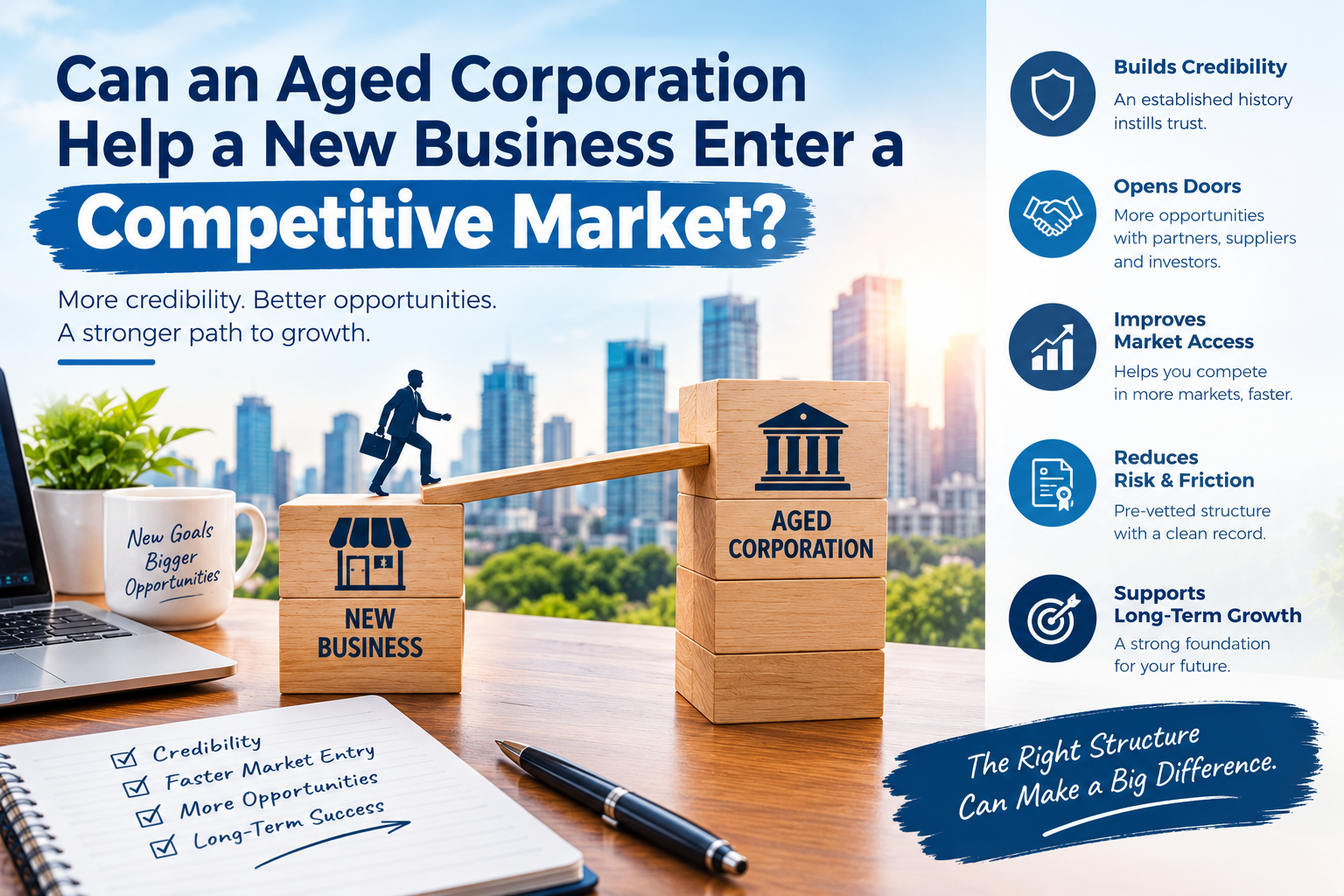
Entering a competitive market can be challenging for a new business. Established competitors often have stronger customer relationships, recognizable brands, and years of operational experience. New entrepreneurs must build credibility while managing startup expenses, developing products, and attracting customers.
An aged corporation is sometimes considered an alternative to forming a completely new business entity. Since it was incorporated in an earlier year, it provides an existing legal structure with an established formation date. However, its usefulness depends on the company’s history, legal standing, and the buyer’s business objectives. Understanding its advantages and limitations can help entrepreneurs determine whether it offers meaningful value.
Understanding How Aged Corporations Work
An aged corporation is a legally registered company that was formed several years ago and may have remained inactive since incorporation. These entities are sometimes called shelf corporations because they are maintained until someone acquires them.
Unlike an established operating business, an unused aged corporation generally has no customers, revenue, employees, or commercial performance history. Its age reflects the original registration date rather than years of active business operations.
Entrepreneurs who want to purchase aged corporation entities should examine their legal status, ownership records, filing history, and outstanding obligations before making a decision. An older incorporation date alone does not establish business credibility or guarantee commercial advantages.
Can Corporate Age Improve Market Credibility?
Credibility plays an important role when entering industries where customers and suppliers prefer dealing with established organizations. A corporation formed several years ago may initially appear more familiar than an entity registered recently.
However, sophisticated customers, lenders, and commercial partners often examine actual business operations rather than relying on incorporation dates. They may request financial statements, customer references, trading records, or evidence of completed projects.
An aged corporation without operating history cannot legitimately claim years of industry experience. Presenting its formation date as evidence of commercial activity could create misleading expectations.
Its potential value is therefore limited to genuine corporate history. Long term credibility must still be developed through reliable services, transparent communication, and consistent business performance.
Does an Aged Corporation Provide Faster Market Entry?
Starting a business involves several administrative responsibilities, including entity formation, tax registration, banking arrangements, and industry licensing. Acquiring an existing corporation may eliminate the need to complete the original incorporation process.
However, ownership transfers introduce their own requirements. Buyers may need to update directors, officers, shareholders, registered agents, and corporate records. Depending on the transaction, additional tax and regulatory obligations may also apply.
An existing corporation does not automatically provide operational licenses, bank accounts, or permission to conduct regulated activities. These requirements must be evaluated independently.
For entrepreneurs entering competitive markets, the practical advantage depends on whether acquiring the entity saves meaningful time compared with establishing a new corporation.
Understanding Business Credit and Financing Opportunities
Access to financing is often a major concern for businesses competing against established companies. Entrepreneurs may assume that an older corporation has better borrowing opportunities because it has existed for several years.
In reality, lenders generally assess financial performance, repayment history, revenue, ownership information, and other risk factors. An unused corporation may have no established business credit profile despite its age.
Some entrepreneurs research companies that help build business credit to understand how responsible borrowing, accurate business information, and timely payments can support financial development. These activities are separate from purchasing an aged corporation.
Corporate age does not automatically create creditworthiness. Businesses must establish genuine financial records and meet the requirements of individual lenders before qualifying for financing.
Evaluating Competitive Advantages Beyond Incorporation Date
Successful market entry depends on more than the age of a legal entity. Product quality, customer demand, pricing, marketing, and operational efficiency often have a greater influence on commercial success.
An aged corporation may provide an existing administrative foundation, but it does not transfer customer loyalty or market recognition unless an actual operating business is also being acquired.
Entrepreneurs should therefore evaluate whether the purchase supports a specific operational objective. For example, an existing entity may be useful in a corporate restructuring or acquisition strategy where continuity of legal identity has practical importance.
Without a clear purpose, purchasing an older corporation may introduce additional costs without improving the business’s competitive position.
Why Due Diligence Matters Before Acquisition
Due diligence is essential because acquiring an existing corporation may involve responsibilities connected to its previous activities. Even companies described as inactive can have unresolved taxes, filing deficiencies, contractual obligations, or legal disputes.
Buyers should review formation documents, corporate status, ownership history, tax records, and available financial information. Verifying good standing with the appropriate state authority is also important.
A seller’s assurance that a corporation has never operated should not replace independent verification. Professional legal and accounting advice can help identify potential liabilities and confirm whether the proposed ownership transfer is appropriate.
Careful investigation protects buyers from assuming obligations that could affect their financial resources or future business operations.
Building a Strong Business After Acquisition
Once ownership has been transferred, the new business must develop its own competitive strengths. This includes establishing a clear market position, identifying customer needs, and delivering consistent value.
Businesses should also maintain accurate accounting records, comply with regulatory requirements, and develop professional relationships with suppliers and customers. A well planned marketing strategy can help attract attention in markets dominated by established competitors.
The corporation’s formation date may remain part of its legal identity, but its commercial reputation will depend on actual performance.
Sustainable growth comes from operational discipline, financial responsibility, and customer satisfaction rather than corporate age alone.
Conclusion
An aged corporation can offer an existing legal structure for entrepreneurs entering a competitive market, but its advantages should not be overstated. While an earlier incorporation date may serve certain administrative purposes, it does not automatically provide business credibility, financing eligibility, or established customer relationships.
The decision to acquire an aged corporation should depend on verified corporate records, compliance requirements, acquisition costs, and specific business objectives.
For most entrepreneurs, competitive success ultimately depends on delivering reliable products or services, maintaining financial stability, and building trust through genuine business activity. An aged corporation may support the legal structure of a new venture, but its long term value comes from how effectively the business operates after acquisition.