




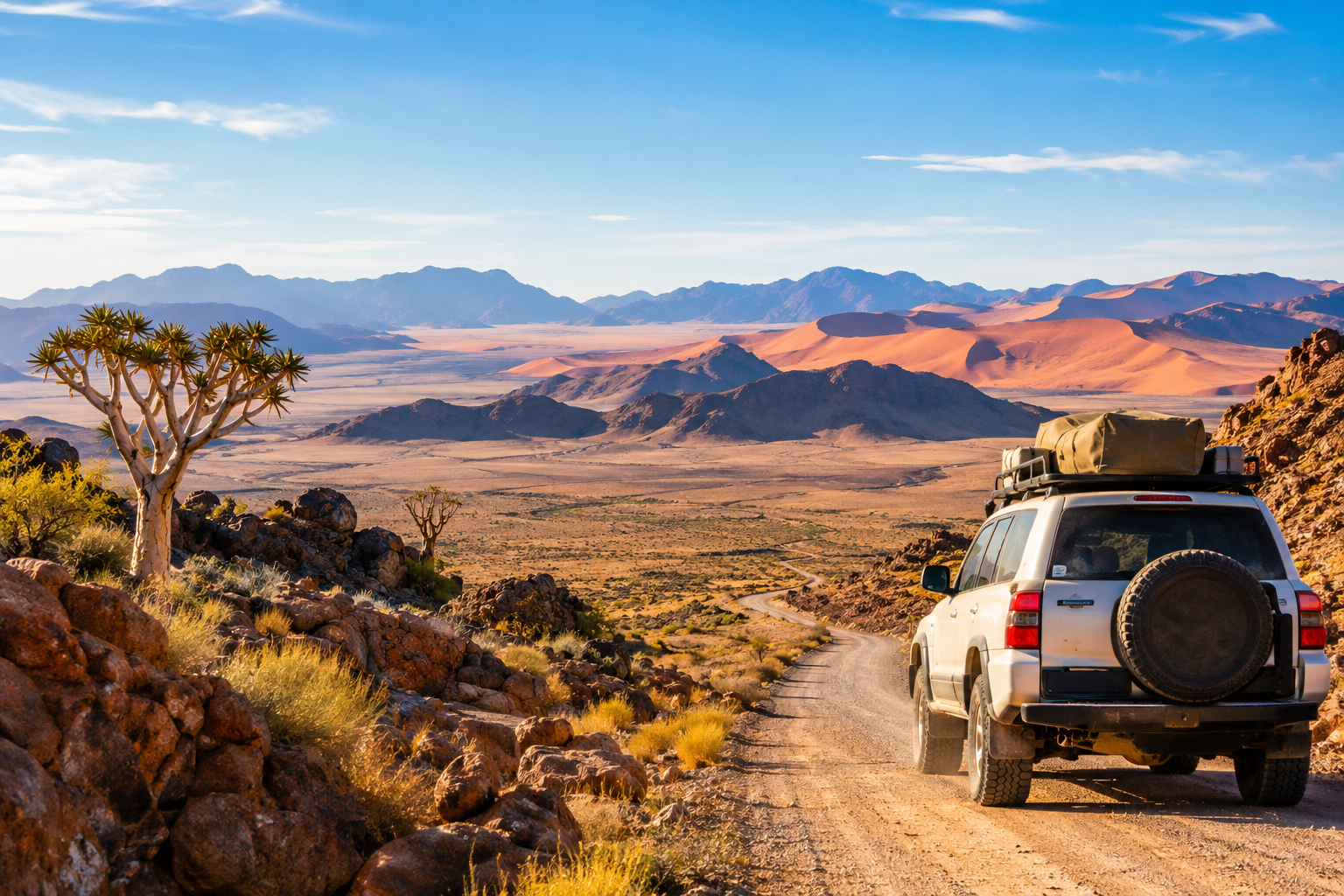
Namibia is a remarkable destination for travellers who love wide-open landscapes, wildlife encounters and the freedom of exploring at their own pace. From towering red sand dunes and rugged mountain scenery to Atlantic coastal towns and unforgettable safari experiences, this southern African country offers an extraordinary variety of adventures. A self-drive holiday allows you to experience these landscapes gradually, stopping at scenic viewpoints, remote lodges and fascinating destinations along the way.
However, successful Namibia travel planning requires more than choosing places on a map. Distances are considerable, many roads are gravel, and some regions have limited fuel stations, mobile coverage and accommodation. With a carefully planned Namibia road trip itinerary, you can enjoy the journey comfortably while leaving enough time to appreciate each destination.
1. Choose the Best Time for Your Namibia Road Trip
The ideal time for a road trip through Namibia depends on your priorities. The country has a predominantly dry climate, but seasonal changes influence temperatures, road conditions and wildlife viewing.
The dry season, generally from May to October, is especially popular for safari holidays. Wildlife becomes easier to spot around waterholes in Etosha National Park, while daytime temperatures are often more comfortable for outdoor activities. Clear skies also create excellent conditions for photography and stargazing in desert regions.
November to April is the warmer, wetter period. Some landscapes become greener, and seasonal rainfall can bring fresh scenery and birdlife. However, heavy rain may make certain gravel roads difficult to navigate, particularly in remote areas.
For many first-time visitors, June to September offers a practical balance between comfortable sightseeing and rewarding wildlife experiences. July and August can be busy, so reserve popular lodges, campsites and rental vehicles well in advance.
Regardless of when you travel, prepare for temperature changes. Desert mornings and evenings can be surprisingly cold, even when afternoons are warm.
2. Build a Namibia Road Trip Itinerary Around the Main Highlights
For a first visit, allow approximately 12–16 days to explore Namibia’s best-known destinations without rushing. A classic circular route from Windhoek combines desert scenery, coastal attractions and wildlife viewing.
Begin in Windhoek, the capital, where you can collect your rental vehicle, purchase supplies and become familiar with local driving conditions. Spend a night here before heading towards the Namib Desert.
Next, travel to Sesriem and Sossusvlei, famous for their enormous red dunes and striking desert landscapes. Allow at least two nights to experience sunrise at the dunes, explore Deadvlei and visit Sesriem Canyon. Arriving early helps you avoid the strongest midday heat.
Continue north-west towards Swakopmund, a coastal town known for its German-influenced architecture, restaurants and outdoor activities. Nearby Walvis Bay offers opportunities for boat trips, birdwatching and encounters with marine wildlife. Plan two nights or more if you want to enjoy activities such as kayaking or guided desert excursions.
From the coast, head inland towards Damaraland. This rugged region features dramatic rock formations, ancient rock engravings at Twyfelfontein and landscapes that feel wonderfully remote. Depending on your route, you may also explore the Skeleton Coast.
Finish with several days in Etosha National Park, where self-drive game viewing offers opportunities to see elephants, giraffes, zebras, antelopes and, with luck, lions or other predators.
Return to Windhoek with sufficient time before your departure. Remember that this is a suggested route rather than a fixed schedule: travel distances, road conditions and your interests should determine the final plan.
3. Select the Right Vehicle and Understand Namibia’s Roads
Choosing the appropriate vehicle is one of the most important decisions when driving through Namibia. You do not automatically need a four-wheel-drive vehicle for every itinerary. Many established routes and major attractions are accessible with a suitable two-wheel-drive car, depending on road conditions and the season.
A higher-clearance SUV can provide additional comfort on uneven gravel roads. A 4×4 becomes more useful when travelling on sandy tracks, exploring remote areas or visiting places where the terrain requires extra capability. The final sandy stretch to Sossusvlei beyond the designated two-wheel-drive parking area requires a suitable 4×4; alternatively, visitors can use a local shuttle.
Namibia drives on the left, and most rural journeys require patience. Gravel surfaces can be loose, corrugated or slippery after rain. Reduce speed, maintain a generous following distance and avoid sudden steering or braking movements.
Check your rental agreement carefully, including insurance exclusions, tyre cover, permitted routes and roadside assistance. Confirm whether an international driving permit is required by your rental provider and ensure you carry your valid driving licence.
Most importantly, avoid driving after dark outside urban areas. Wildlife and livestock may cross roads unexpectedly, and unlit roads can make hazards difficult to see. Plan to arrive at your accommodation before sunset rather than attempting to complete an ambitious journey late in the evening.
4. Prepare for Long Distances, Fuel Stops and Remote Conditions
One of the biggest differences between a Namibia road trip and a typical European driving holiday is the distance between services. Two destinations may look relatively close on a map, yet gravel surfaces, scenic stops and changing road conditions can make the journey much longer than expected.
As a general planning principle, aim for manageable driving days and avoid filling every day with long transfers. A route with fewer destinations and more overnight stays is often more rewarding than a packed itinerary.
Refuel whenever you have a convenient opportunity, especially before entering remote areas. Do not assume that every settlement will have a working fuel station or that fuel will always be available. Carry sufficient drinking water, snacks, basic supplies and a charged mobile phone. Offline maps are particularly useful where network coverage is limited.
Before departing, inspect the tyres, spare wheel, jack and essential vehicle equipment. For remote routes, consider carrying an additional spare tyre if recommended by your rental company. Share your itinerary with someone, and understand how to contact roadside assistance or local emergency services.
Check local road conditions before setting out, especially during the rainy season. Ask your accommodation or rental provider about recent road conditions and whether your chosen route is suitable for your vehicle.
These practical preparations may seem simple, but they make a significant difference to comfort and safety when travelling through Namibia’s vast landscapes.
5. Find Memorable Stops Beyond the Main Tourist Route
The country’s famous attractions deserve a place in your itinerary, but some of the most rewarding experiences happen between them.
In the south, Fish River Canyon offers dramatic viewpoints over one of Africa’s most impressive canyon landscapes. It requires additional driving time, so consider adding several days if you want to include it in a longer journey.
The Namib Desert is another highlight for travellers who enjoy photography, hiking and peaceful surroundings. Staying near Sesriem allows you to enter the park early and experience the changing colours of the dunes as the sun rises.
Along the Atlantic coast, Swakopmund combines outdoor adventure with relaxed seaside dining. Travellers can choose guided desert excursions, scenic drives and water-based activities in nearby Walvis Bay.
Further inland, Damaraland rewards slower exploration. Its rocky terrain, desert-adapted wildlife and cultural heritage provide a different perspective on Namibia beyond traditional safari experiences.
Finally, Etosha offers a distinctive wildlife experience because visitors can often watch animals gathering at waterholes from their own vehicles or designated viewing areas. Allow multiple days rather than expecting to see everything in a single visit.
Choose stops according to your interests, and resist the temptation to include every destination. Namibia’s landscapes are best enjoyed when you have time to pause, explore and appreciate the surroundings.
6. Manage Your Budget, Accommodation and Travel Essentials
A well-organised Namibia travel plan should account for more than car rental and flights. Include fuel, accommodation, park entry fees, meals, activities and any equipment required for your chosen route.
Accommodation ranges from campsites and guesthouses to comfortable lodges and luxury wilderness retreats. Camping can provide flexibility and a closer connection to nature, while lodges are a convenient option for travellers who prefer ready-made meals and organised excursions.
Book accommodation early during popular travel months, particularly in and around Etosha and Sossusvlei. Staying inside or close to major attractions can also reduce unnecessary driving and help you make the most of early-morning wildlife viewing or sunrise visits.
Pack lightweight clothing, comfortable walking shoes, sun protection, a warm layer for chilly evenings and a small first-aid kit. Keep passports, driving documents and rental paperwork accessible. Travellers should also check entry requirements, visa rules, recommended health precautions and travel advisories before departure.
Consider adding a little flexibility to your schedule. Unexpected roadworks, weather changes or wildlife sightings may alter your plans, and some of the best moments happen when you have time to stop without watching the clock.
Final Thoughts
Planning a Namibia road trip is about balancing adventure with preparation. A thoughtful route, realistic driving days, suitable transport and advance accommodation bookings will help you explore the country with greater confidence.
Whether you are watching the sunrise over Sossusvlei, enjoying the Atlantic breeze in Swakopmund or spotting wildlife in Etosha, each region offers a different reason to slow down and appreciate the journey.
With careful Namibia travel planning, your self-drive adventure can become much more than a series of destinations. It can be an unforgettable journey through some of Africa’s most extraordinary landscapes.