






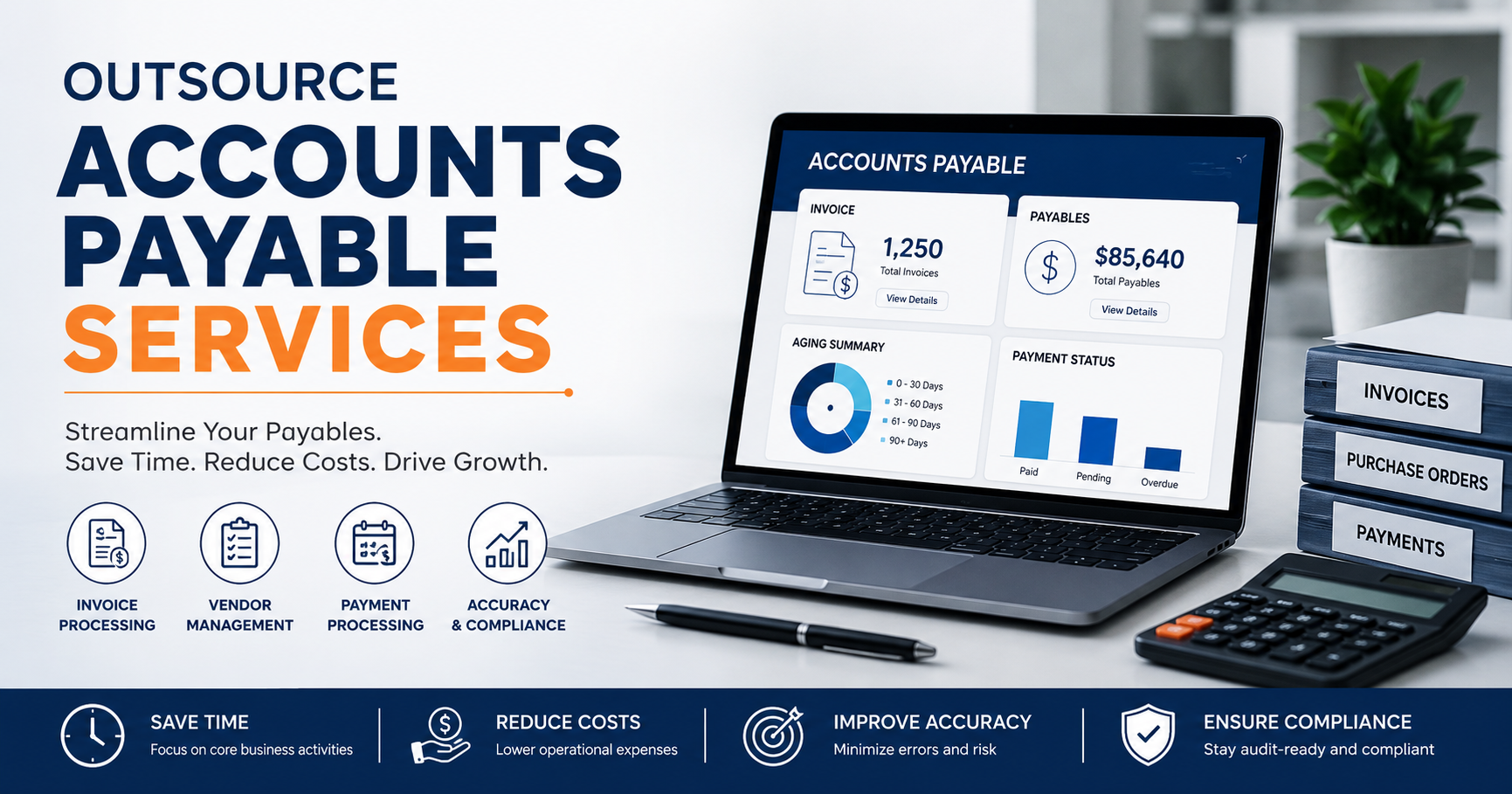
Managing invoices may seem like a straightforward accounting responsibility, but it can quickly become complicated when a business works with multiple suppliers, handles recurring purchases, and has several approval layers. Every invoice needs to be reviewed, recorded, tracked, and eventually settled. For companies dealing with growing transaction volumes, Outsource Accounts Payable Services can provide additional support in managing these responsibilities without overwhelming the internal finance team.
Many businesses in the United States are looking for practical ways to reduce administrative workload while keeping their accounting records accurate. Instead of spending hours processing bills and following up on approvals, companies can establish a structured workflow that makes invoices easier to manage and financial obligations easier to track.
Why Invoice Management Can Become a Daily Struggle
The accounts payable process often involves different employees, departments, and systems. An invoice might arrive in an email inbox, get forwarded to a department manager, wait for approval, and then return to accounting for recording and payment scheduling.
When there is no standard process, employees may not know where an invoice stands. Some bills get processed quickly, while others remain pending because supporting documents are missing or approval requests have been overlooked.
These delays can create problems beyond the accounting department. Vendors may send reminders, managers may have difficulty reviewing expenses, and employees may spend unnecessary time investigating transactions.
A more organised workflow helps businesses avoid these recurring interruptions and keeps invoice-related responsibilities clearly defined.
Understanding the Work Involved in Accounts Payable Outsourcing
Outsourcing allows companies to delegate selected payable activities to an external accounting team. The services can be adjusted according to the business’s transaction volume, software, and internal controls.
Invoice Processing and Recording
The first step is collecting invoices and capturing the information required for accounting records. This typically includes vendor names, invoice numbers, dates, amounts, payment terms, and expense details.
An outsourced team can help maintain organised invoice records and enter information into the company’s accounting system. Consistent recording makes it easier to retrieve transactions and review expenses later.
Invoice Verification
Before an invoice moves forward, its details may need to be checked against purchase orders, contracts, receipts, or other supporting documents.
This review helps identify incorrect charges, missing information, and discrepancies that require clarification. Businesses can establish procedures for handling invoices that do not meet their requirements.
Vendor Account Maintenance
Supplier information needs to remain accurate. Vendor records may include contact details, billing addresses, payment terms, and other relevant information.
Maintaining updated records helps reduce confusion and makes vendor-related transactions easier to manage. Periodic reviews can also help identify duplicate or inactive vendor accounts.
Accounts Payable Reconciliation
Reconciliation involves comparing accounting records with vendor statements or other transaction documentation. It helps identify missing invoices, unapplied payments, credit notes, and differences in outstanding balances.
Regular reconciliation can improve the reliability of financial records and help businesses resolve issues before they become more complicated.
Payment Schedule Management
Businesses need to keep track of invoices awaiting payment, upcoming due dates, and approval status.
Outsourced professionals can help prepare payment schedules and provide reports on outstanding obligations. The business retains control over payment authorisation and the actual release of funds.
Benefits of Outsourcing for Growing Businesses
Outsourcing can be helpful when accounting responsibilities increase but the business is not ready to expand its internal finance department.
Reducing Repetitive Work
Invoice processing involves several tasks that happen repeatedly throughout the month. Data entry, document checks, vendor follow-ups, and payment status updates can consume a large amount of employee time.
Delegating these activities allows internal staff to focus on financial reporting, expense analysis, budgeting, reconciliations, and other responsibilities that support business decisions.
Making Accounting Resources More Flexible
Workloads do not always remain consistent. Some months may involve a higher volume of supplier invoices, while other periods are relatively quiet.
Outsourcing gives businesses an opportunity to obtain additional support based on their operational requirements. This can be useful during expansion, seasonal demand, or changes in purchasing activity.
Improving Process Consistency
When invoices follow a defined workflow, businesses can reduce confusion and improve accountability.
A standard procedure can outline how invoices are received, verified, recorded, approved, and prepared for payment. Employees and outsourced professionals can follow the same guidelines, making the process easier to monitor.
Consistency also helps businesses identify recurring bottlenecks and make adjustments where necessary.
Maintaining Good Supplier Relationships
Vendors are an important part of a company’s daily operations. Businesses depend on suppliers to deliver materials, products, equipment, and services on agreed terms.
When payment processes are disorganised, suppliers may have to follow up repeatedly about invoices. This can create unnecessary friction and make routine business communication more difficult.
An organised accounts payable system helps companies identify invoice status, respond to supplier inquiries, and resolve billing discrepancies in a timely manner.
It may also help businesses review available payment terms and identify early payment discounts when appropriate. Reliable records make it easier to understand what is owed and communicate with suppliers about payment arrangements.
How Accounts Payable Supports Cash Flow Planning
Cash flow management requires businesses to understand their upcoming financial obligations. Revenue alone does not provide a complete picture of a company’s financial position.
Accounts payable records help show outstanding invoices, recurring expenses, payment deadlines, and other short-term liabilities. When this information is updated regularly, managers can plan expenses more effectively.
With Outsource Accounts Payable Services, businesses can receive assistance maintaining payable records and organising payment-related information. This visibility can help managers avoid overlooking obligations and make better decisions about available funds.
Although outsourcing does not guarantee improved cash flow, a well-maintained payable schedule can support more informed financial planning.
Common Errors Businesses Should Try to Avoid
Accounts payable mistakes can create unnecessary expenses and additional work. Even small inaccuracies may require multiple corrections or affect financial reports.
Some common issues include:
-
Recording the same invoice more than once
-
Entering incorrect invoice amounts or dates
-
Using the wrong expense category
-
Processing bills without proper approval
-
Missing vendor payment deadlines
-
Failing to record credit notes
-
Ignoring differences in vendor statements
A structured review process can help identify these issues. Businesses should establish clear verification procedures and make sure discrepancies are resolved before invoices are approved for payment.
Using Digital Tools to Improve Invoice Handling
Accounting software has changed how companies manage vendor transactions. Businesses can use cloud-based systems, digital document storage, invoice scanning, and approval workflows to reduce manual paperwork.
These tools can make invoice information easier to access and help employees monitor pending approvals. When an outsourced team works within the company’s existing accounting system, records can be maintained without creating separate spreadsheets that are difficult to reconcile.
Automation may help capture invoice details or identify duplicate entries, but it still needs appropriate oversight. Unusual transactions, supplier changes, disputed charges, and incomplete documents should be reviewed carefully.
Technology is most useful when it supports a clear and reliable process.
Security and Financial Responsibility
Outsourcing accounting tasks involves sharing business information, so companies need to understand how their service provider protects financial records.
Vendor invoices may contain sensitive information, including bank details, purchasing data, pricing, and contractual terms. Businesses should review confidentiality agreements, data security procedures, system access restrictions, and document handling policies before engaging a provider.
Internal controls should also remain intact. The responsibilities for processing invoices, approving expenses, and releasing payments should be clearly separated wherever practical.
Regular reviews and appropriate approval limits help maintain accountability while allowing outsourced teams to handle agreed responsibilities.
Selecting the Right Accounts Payable Provider
Choosing an outsourcing partner requires understanding how the provider will support the company’s existing operations.
Businesses should consider the provider’s experience with invoice processing, vendor reconciliations, accounting software, reporting, and exception management. Communication practices and service turnaround times should also be discussed before the arrangement begins.
It is helpful to define the exact scope of work, reporting frequency, approval responsibilities, and procedures for resolving discrepancies.
A provider that understands these expectations can make the outsourcing arrangement more practical and easier to manage.
When Should Businesses Consider Outsourcing?
Outsourcing may be worth exploring when invoice backlogs become frequent, accounting employees are spending too much time on repetitive tasks, vendor reconciliations are falling behind, or payment tracking has become difficult.
Companies can start with a limited scope instead of transferring every responsibility at once. For example, they may outsource invoice entry and reconciliation while keeping approvals and payment releases internal.
This allows the business to evaluate service quality, communication, accuracy, and efficiency before expanding the arrangement.
Creating a More Organised Accounts Payable Function
A reliable accounts payable process supports accurate financial records, smoother vendor communication, and better visibility into business expenses. When invoice responsibilities are managed consistently, employees can spend less time resolving administrative problems and more time supporting other financial activities.
Choosing to Outsource Accounts Payable Services can help businesses establish a dependable workflow, manage increasing transaction volumes, and reduce the pressure on internal accounting staff.
With clear procedures, experienced support, suitable technology, and proper financial controls, companies can create an accounts payable function that works efficiently in the background and supports sustainable business growth.