



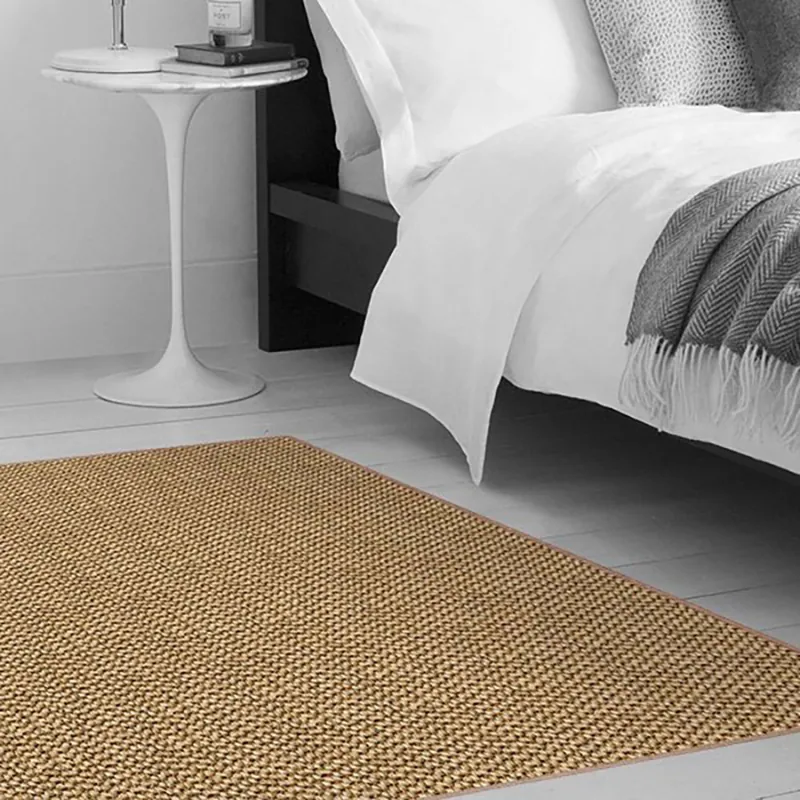
Most flooring advice is written for an imaginary home where nobody spills anything, the dog never comes inside and the furniture never moves. Real Melbourne households look different. There are school bags dumped in the hallway, a kelpie that insists on sleeping by the heater, Sunday roast dinners with the extended family and, in summer, sandy feet arriving back from Mordialloc or Rye. Any natural floor covering under consideration needs to cope with that reality.
Seagrass carpet has earned a reputation as the most forgiving of the natural fibres for busy homes, largely because of its smooth, relatively non-porous strands. But “forgiving” is not the same as “indestructible”, and how well seagrass performs depends heavily on who lives in the house and how it is used. This article looks at seagrass carpet through the lens of different Melbourne household types, with honest notes on where it shines and where another option may be wiser.
A Quick Refresher on Why Seagrass Behaves Differently
Seagrass is cultivated in flooded fields, harvested, dried and spun into a firm, rope-like strand. Its outer surface is naturally smooth, so liquids tend to bead briefly before soaking in, and dry soil does not lodge deeply in the fibre. Those two traits underpin almost every practical advantage it has in family homes. The same smooth surface also resists dye, which is why seagrass comes mostly in natural tones that start slightly green and mellow to warm straw over time.
With that in mind, here is how it plays out in different households.
Families With Young Children
What works
For families, the biggest advantage of seagrass carpet is time. When a cup of juice tips over, there is usually a short window to blot it up before it is absorbed, which is often the difference between no mark and a permanent one. Crumbs and dried mud vacuum away easily from the smooth strands rather than grinding into a deep pile. The firm, flat surface is also stable for toddlers finding their feet and for children building block towers or driving toy cars.
Seagrass is tough, too. Busy family rooms see constant traffic, dragged beanbags and furniture that gets rearranged for every school project. A tight seagrass weave will handle that kind of use well.
What to watch
Seagrass is firm and slightly ridged, so it is not the softest surface for babies who are crawling or for children who spend hours lying on the floor. Many families solve this by laying a soft, washable play mat or a wool rug in the main play zone during the early years. It is also wise to keep seagrass away from the kitchen, where oil-based spills are frequent, and from bathrooms and laundries where water is a constant.
Craft activities deserve a mention. Paint, slime, play dough and felt-tip pens can be challenging on any natural fibre. A plastic sheet or an old rug for messy projects saves a lot of stress.
Households With Pets
Dogs
Seagrass generally copes well with dogs. Its tough strands resist wear from paws, and pet hair tends to sit on the surface where a vacuum can lift it. Dogs that come in muddy from the backyard are a bigger issue than the dogs themselves, so a towelling station and a coir mat at the back door make a real difference in a Melbourne winter.
Cats
Cats are more complicated. Some cats ignore seagrass entirely; others discover that a chunky basketweave makes an excellent scratching surface. If you have cats, choose a tighter, flatter weave rather than a bold, loopy pattern, and provide good scratching posts nearby. A sample left on the floor for a week is a useful test of your cat’s intentions.
Accidents
Pet urine is the most serious risk for any natural fibre floor. Even with seagrass’s smooth surface, urine will eventually penetrate the strands and the backing, potentially causing staining and odour. Act immediately: blot thoroughly with dry towels, use minimal moisture, and dry the area quickly. Test any pet-specific cleaning product on an offcut or hidden area first, because some formulations can discolour natural fibres. For puppies not yet house-trained, consider holding off on fitted seagrass, or use bound rugs that can be lifted and professionally cleaned.
Holiday Homes on the Peninsula and Coast
Many Melburnians have, or rent, a holiday house somewhere between the Bellarine and Phillip Island, and seagrass carpet suits these homes surprisingly well. Its relaxed, organic look complements coastal interiors, and its smooth strands make it easier than many fibres to vacuum sand out of. That matters when every visit involves beach walks.
The caveat is moisture. Wet swimmers, damp towels dropped on the floor and outdoor showers near living spaces are all risky for natural fibres. Holiday homes also often sit closed up for weeks, which can mean damp, stale air in winter. Good habits help: keep a hard-floored or tiled zone near the back door for wet gear, open the house up and ventilate on arrival, and avoid leaving damp items lying on the carpet. If the house is let out to short-stay guests, clear signage about wet towels and footwear can help protect the floors.
Rental Properties and Investment Homes
For landlords and investors, flooring decisions involve a different calculation: durability, ease of maintenance by tenants and how the floor will look at the end of each lease.
Seagrass carpet has points in its favour here. It is hard-wearing, its natural tones are neutral enough to suit almost any tenant’s furniture, and its stain resistance is better than that of other natural fibres. It can lift the presentation of a property in a competitive rental market, particularly for character homes in inner suburbs.
However, tenants may not be familiar with the care requirements of natural fibres. A tenant who calls in a steam cleaner at the end of a lease, as is common with synthetic carpet, could do real damage. If you do choose seagrass for a rental, provide written care instructions, specify appropriate cleaning methods, and consider whether bound rugs over hard floors would be easier to manage and replace between tenancies.
Older Residents and Downsizers
Downsizers moving into townhouses and apartments often want warmth underfoot without the trip hazards of loose rugs. Fitted seagrass offers a stable, low-profile surface that does not ruck up or catch the feet the way the edge of a loose rug can. Its firmness can make walking and moving furniture easier than on a thick, plush carpet.
The one note of caution is slip resistance. Seagrass is smooth, and in socks or smooth-soled slippers it can feel slippery, especially on stairs. For anyone with mobility concerns, a tight sisal weave on stairs, or non-slip footwear indoors, may be the safer option. Getting advice from an occupational therapist for specific needs is always sensible.
Home Offices and Multi-Purpose Rooms
With so many Melburnians now working from home at least part of the week, the spare room has often become an office. Seagrass’s firm surface supports desk chairs better than plush carpet, though a clear chair mat is still recommended to prevent castors from wearing a track. The neutral texture also reads well on video calls, adding warmth without visual clutter.
Choosing the Right Seagrass Weave for Your Household
Seagrass is available in several weaves, and the right one depends on your household:
- Tight herringbone or small-scale weaves suit homes with cats, high-traffic family rooms and dining areas.
- Larger basketweave or panama weaves suit lower-traffic living rooms and holiday homes where a bolder, more relaxed texture is wanted.
- Bound seagrass rugs suit renters, households with very young pets and anyone who wants the look without a permanent commitment.
Whatever you choose, plan the layout so seams sit outside the busiest paths, and ask for advice on whether the product is better suited to wall-to-wall installation or as a rug.
Everyday Care in a Busy Melbourne Home
The care routine for seagrass carpet is simple, which is part of its appeal to busy households:
- Vacuum at least weekly, more often in high-traffic areas or during sandy summer months. Use suction or a raised brush roll.
- Blot spills straight away with a dry white cloth. Use only a barely damp cloth for residue, then dry the area thoroughly.
- Avoid steam cleaning, hot-water extraction and saturating the carpet.
- Use furniture cups and felt pads under heavy or frequently moved pieces.
- Keep doormats at every external door, and ideally one on each side of the door.
- Use blinds or curtains in rooms with strong afternoon sun to keep the colour even.
For deeper cleaning, use a professional cleaner with experience in natural fibre floor coverings and dry cleaning methods.
When Seagrass Probably Is Not the Answer
Being honest about limitations is part of choosing well. Seagrass carpet is probably not the right choice if your household has a puppy or elderly pet with frequent accidents, if you want a deep, soft surface for lounging on the floor, if you need a specific colour beyond natural tones, or if the area is regularly exposed to water. In those cases, a wool carpet, a bound rug that can be lifted, or a hard floor with washable rugs may serve you better.
Conclusion
Seagrass carpet suits real life better than most natural fibres. Its smooth strands buy you time with spills, release dirt and sand easily and stand up to the traffic of family homes, coastal getaways and well-managed rentals. It does ask for some common sense: keep it away from water, choose tight weaves where cats or heavy traffic are involved, act quickly on pet accidents and make sure everyone who cleans it knows to keep things dry.
For Melbourne households weighing their options, Floorspace is a local natural fibre flooring specialist whose range of seagrass carpet and floor coverings is available for family homes, holiday houses and investment properties across Melbourne and surrounding suburbs.