




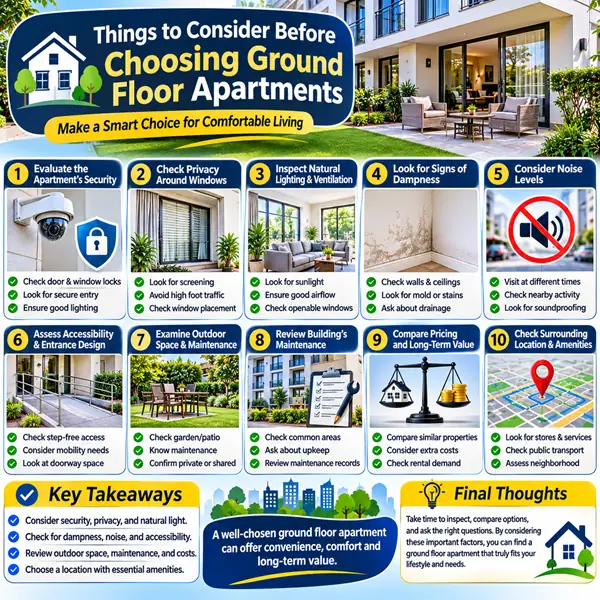
Finding the right apartment involves more than choosing an attractive location or a property with appealing interiors. Factors such as accessibility, privacy, security, natural lighting, and maintenance can significantly influence everyday living. One option worth exploring is ground floor apartments, which offer several practical advantages for people who prefer convenient access and a closer connection to outdoor spaces.
These properties can be particularly appealing to families with young children, older adults, pet owners, and individuals who want to avoid depending on elevators. However, ground-level living also comes with certain considerations that prospective buyers and renters should understand before making a decision.
Whether you are searching for a long-term home or considering an investment property, evaluating the following factors can help you choose an apartment that meets your expectations.
1. Evaluate the Apartment’s Security
Security should be one of the first considerations when exploring ground floor apartments. Since these properties are closer to outdoor areas, windows, patios, and external entrances may be more accessible to people outside the building.
Before selecting a property, check the quality of its doors, window locks, access controls, and security arrangements. Buildings with controlled entrances, proper outdoor lighting, and surveillance systems may offer additional peace of mind.
It is also worth checking whether the apartment has secure windows and whether outdoor spaces are separated from public walkways.
A well-maintained residential development should have clear security measures that protect all residents, regardless of their apartment’s location.
2. Check Privacy Around Windows and Outdoor Areas
Privacy can vary considerably between ground-level properties. Apartments located near pedestrian pathways, parking areas, reception spaces, or shared gardens may experience more foot traffic.
If windows face common areas, residents may feel uncomfortable keeping curtains open throughout the day. This can affect the amount of natural light entering the property.
Look for apartments with suitable window placement, privacy screens, landscaping, or outdoor boundaries. Trees, fences, and carefully designed courtyard layouts can help create separation from shared spaces.
Visiting the property at different times can also help you understand how much activity takes place around its windows and entrances.
3. Inspect Natural Lighting and Ventilation
Natural light and fresh air contribute significantly to indoor comfort. However, some ground floor apartments may receive less direct sunlight because of nearby buildings, boundary walls, or mature trees.
During a property visit, observe how sunlight enters different rooms. Pay particular attention to living areas, bedrooms, kitchens, and spaces where you expect to spend most of your time.
Ventilation is equally important. Check whether windows can be opened easily and whether air circulates properly throughout the apartment.
Good ventilation can help maintain indoor comfort and reduce moisture buildup. Apartments with well-positioned windows and suitable building layouts are generally worth prioritizing.
4. Look for Signs of Dampness and Water Damage
Moisture management is particularly important when evaluating ground-level properties. Poor drainage, plumbing problems, or inadequate waterproofing can contribute to damp walls, unpleasant odors, and water damage.
Before committing to an apartment, carefully inspect walls, ceilings, flooring, and corners for discoloration, peeling paint, mold, or unusual smells.
Ask the property owner or management about previous water-related problems and the building’s drainage arrangements.
It is also useful to check the surrounding outdoor areas for signs of standing water after rainfall.
A professional property inspection can help identify potential problems that may not be immediately visible during a viewing.
5. Consider Noise Levels and Nearby Activity
Ground floor apartments can sometimes experience more noise because of their proximity to entrances, shared facilities, parking spaces, and outdoor walkways.
For example, an apartment facing a busy entrance may experience frequent movement throughout the day. Properties located near recreational areas or communal gardens may also receive occasional noise from other residents.
Before choosing a property, visit it during different periods, including mornings and evenings. Listen for traffic, conversations, building activity, and other disturbances.
If possible, choose an apartment positioned away from busy communal areas. Window quality and sound insulation can also influence the overall indoor environment.
6. Assess Accessibility and Entrance Design
One of the main reasons people consider ground floor apartments is their convenient accessibility. These properties can make everyday movement easier because residents generally do not need to use stairs or elevators.
This can be especially useful for families with strollers, older adults, people with mobility challenges, and residents who frequently carry groceries or household supplies.
However, not every ground floor apartment offers completely step-free access.
Check whether the building entrance, surrounding pathways, doorways, and internal layouts are suitable for your requirements. If accessibility is a priority, also consider bathroom arrangements, hallway widths, and access to parking facilities.
A convenient location within the building can make a significant difference to everyday comfort.
7. Examine Outdoor Space and Garden Maintenance
Some ground-level properties include private gardens, patios, terraces, or courtyards. These features can provide additional space for relaxation, gardening, and outdoor activities.
However, outdoor spaces also require maintenance. Depending on the property’s design, residents may need to manage plants, clean patios, maintain drainage, or follow building regulations.
Before choosing an apartment with a garden or courtyard, clarify who is responsible for maintaining the area.
You should also check whether the outdoor space is exclusively private or shared with other residents.
Understanding these details can help prevent disagreements and unexpected maintenance responsibilities later.
8. Review the Building’s Maintenance and Management
The overall condition of a residential building can influence your experience regardless of which apartment you choose.
Pay attention to common areas, exterior walls, drainage systems, landscaping, parking facilities, and waste management arrangements.
A well-maintained development is more likely to provide a comfortable residential environment. Ask the property manager about maintenance schedules, service charges, repair procedures, and how resident concerns are handled.
For purchased properties, review any available building maintenance records and homeowners’ association rules.
These details can provide a clearer understanding of the property’s long-term upkeep requirements.
9. Compare Pricing and Long-Term Value
The price of an apartment should always be considered alongside its features, location, and overall condition.
Ground floor apartments may appeal to buyers and renters who prioritize accessibility or outdoor spaces. However, their value can vary depending on local demand, building quality, security, and the availability of similar properties.
Compare several apartments within the same development or neighborhood before making a decision.
Consider additional costs such as maintenance charges, utilities, parking fees, and possible repair expenses.
If you are purchasing the property as an investment, research local rental demand and resale trends rather than assuming that a particular floor level guarantees better returns.
10. Check the Surrounding Location and Amenities
An apartment’s immediate surroundings can influence daily convenience just as much as its interior features.
Look at the distance to grocery stores, healthcare facilities, schools, public transportation, parks, and other essential services.
Also consider the condition of nearby roads, pedestrian pathways, parking arrangements, and street lighting.
If the apartment is close to a busy commercial area, evaluate whether traffic and noise could affect your comfort.
Choosing a property in a suitable neighborhood can make everyday activities easier and improve the overall residential experience.
Final Thoughts
Choosing the right ground-level property requires careful attention to more than just its appearance and asking price. Ground floor apartments can offer convenient access, practical outdoor spaces, and an appealing living arrangement for people with different lifestyle requirements.
However, security, privacy, drainage, natural lighting, ventilation, and building maintenance should all be evaluated before making a final decision.
Take time to visit the property, inspect its surroundings, ask relevant questions, and compare available options. If necessary, arrange a professional inspection to identify potential maintenance or structural concerns.
By considering these factors carefully, you can make a more informed choice and find an apartment that offers lasting comfort, convenience, and value.