






Understanding how a breast lift works begins with answering the central question directly: yes, mastopexy removes excess skin and tightens the remaining skin envelope around a reshaped breast mound. When skin loses elasticity due to aging, pregnancy, nursing, or weight changes. The outer covering stretches beyond what the underlying glandular and fatty tissue fills.
Rather than relying on skin alone to hold the breast upright, surgical reshaping repositions deeper tissue while trimming surplus skin so the contour fits more snugly. Exploring options for Breast Lift Surgery in Abu Dhabi or researching how surgical lifting works elsewhere often starts with learning what skin removal can—and cannot—change about breast volume, shape, and position.
-
Direct answer: Yes, a breast lift removes redundant skin and tightens the surrounding skin envelope.
-
Primary mechanism: Underlying breast tissue is reshaped and lifted while surplus skin is excised.
-
Core goal: Aligning the outer skin covering with the elevated nipple-areola complex and reshaped mound.
How Breast Lift Surgery Addresses Excess Skin
Why Excess Skin Develops Over Time
Breast shape depends on a balance between internal soft tissue volume, Cooper’s ligaments, and the elasticity of the overlying skin. When pregnancy expands breast tissue and later involution shrinks it, or when weight fluctuates significantly, the skin stretches like an over-inflated balloon. Gravity gradually pulls the breast mound and nipple-areola complex downward relative to the inframammary fold.
Once collagen and elastin fibers stretch past their rebound threshold, non-surgical skin care cannot draw large amounts of slack back into a firm contour. Removing excess skin directly addresses that stretched envelope so the breast does not drape loosely over its lower pole.
-
Skin laxity: Stretched skin loses its ability to snap back after volume shifts or aging.
-
Downward drift: The nipple-areola complex often sits lower as skin elongates.
-
Structural mismatch: Loose outer skin leaves the breast looking deflated or elongated even when internal tissue remains.
Reshaping Underlying Tissue Alongside Skin Removal
Removing excess skin without addressing the tissue beneath it can leave the breast looking flat or cause the skin envelope to stretch again prematurely. During mastopexy, surgeons typically gather, lift, and contour the underlying glandular and fatty tissue to improve upper-pole fullness and projection. Internal sutures are often used to support the reshaped mound so the outer skin is not bearing the entire weight alone.
The nipple-areola complex is moved to a higher, more natural position on the mound while preserving its blood supply and nerve connections. If the areola has widened from stretching, a circular rim of skin around it is also trimmed to bring its size into proportion.
-
Internal contouring: Deeper tissue is lifted and shaped to create firmer projection.
-
Nipple elevation: The nipple-areola complex moves upward to match the lifted contour.
-
Areola sizing: Overstretched areolas can be narrowed during the same procedure.
Incision Patterns and How Much Skin Each Removes
Limited Areolar Patterns (Crescent and Donut)
The amount of excess skin a breast lift can remove is closely tied to the incision pattern chosen. A crescent lift removes a small half-moon of skin along the upper edge of the areola and suits only minor sagging or subtle positioning tweaks. A donut (periareolar) lift makes a full circle around the areola, allowing mild skin tightening and areola size reduction.
Because circular patterns have limited room to gather extra skin without flattening the breast mound or widening the areola, they are generally reserved for mild laxity. When sagging is minimal, less extensive skin excision keeps incision lines confined near the areolar border.
-
Crescent pattern: Targets minor laxity along the upper areola border.
-
Donut pattern: Encircles the areola for mild sagging and areola narrowing.
-
Scope limit: Best suited when only modest skin tightening is needed.
Skin Removal vs. Breast Volume, Implants, and Reduction
How Skin Removal Differs from Adding Volume
Removing excess skin tightens what is already there, but it does not create new internal volume on its own. If a breast has lost fullness after pregnancy or weight loss and now has extra skin with little internal volume, trimming skin alone creates a smaller, perkier contour rather than a fuller one. People who want greater upper-pole fullness alongside skin tightening sometimes pair mastopexy with volume enhancement.
Understanding the difference between tightening loose skin and adding fullness helps set realistic expectations before surgery. A lift without added volume focuses on lifting existing tissue and removing surplus skin, whereas combining techniques addresses both slack skin and volume deficit.
-
Skin tightening alone: Refines shape and position without adding internal fullness.
-
Deflated appearance: Loss of internal volume often accompanies stretched skin.
-
Combined goals: Extra volume is considered separately when fullness is a primary goal.
How a Lift Differs from a Breast Reduction
A standard breast lift focuses on excising excess skin and reshaping existing tissue to elevate the breast rather than intentionally shrinking its overall size. By contrast, a breast reduction removes both excess skin and a meaningful amount of glandular and fatty tissue to reduce overall breast size and weight. While both procedures reshape the breast and reposition the nipple-areola complex, their volume goals differ.
Even in a pure breast lift, some minor tissue adjustment occurs as the mound is contoured and excess skin is removed. However, preserving natural volume remains central to mastopexy when the goal is lifting rather than downsizing.
-
Mastopexy focus: Removes surplus skin and reshapes tissue while preserving volume.
-
Reduction focus: Removes both excess skin and substantial parenchymal tissue.
-
Shared foundation: Both procedures reposition the nipple-areola complex for a higher contour.
Planning Timing, Scars, and Long-Term Expectations
Timing Around Weight Stability and Future Pregnancies
Because pregnancy, nursing, and weight changes can stretch breast skin again, timing matters when planning a lift that removes excess skin. Significant weight fluctuations after surgery can alter breast volume and place fresh tension on the tightened skin envelope. Reaching a steady weight beforehand helps ensure the amount of skin removed matches a stable baseline.
Future pregnancies can also stretch newly tightened skin and change breast proportions over time. Many people wait until major life changes involving breast volume are complete. While others choose to proceed earlier depending on their personal timeline and priorities.
-
Weight stability: Steady body weight supports a more predictable skin-to-volume match.
-
Future pregnancies: Later hormonal and volume shifts can stretch skin again.
-
Personal timing: Decisions balance current comfort against anticipated life changes.
Scar Placement and Gradual Settling
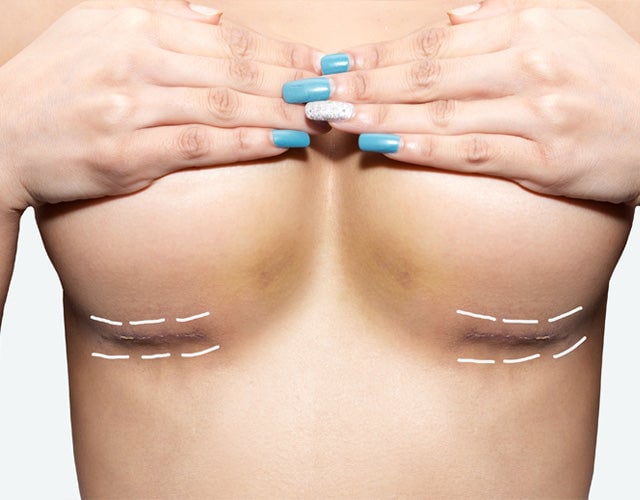
Whenever excess skin is excised and the edges are brought together, incisions leave permanent marks along the lines where the skin was trimmed and closed. These lines typically follow the border of the areola, run vertically down the lower breast. Or sit along the natural crease beneath the breast depending on the technique. Over time, scars generally soften and fade from pink or reddish tones toward lighter shades, though they do not disappear completely.
Immediately after surgery, the breast often looks higher and firmer than its settled shape as swelling subsides and tissue relaxes. Over several months, the lower pole softens into a more natural curve as the lifted mound settles.
-
Permanent lines: Incision marks remain, though they usually fade significantly over time.
-
Strategic placement: Lines are positioned along natural borders and creases where possible.
-
Gradual settling: Initial firmness softens over months as tissues relax.
Frequently Asked Questions About Breast Lift Surgery
Does a breast lift remove stretch marks on the breast?
A breast lift can remove stretch marks that happen to sit within the specific strip of excess skin excised during the procedure. Stretch marks located outside the trimmed areas—such as on the upper pole or outer sides of the breast—remain on the skin. Because the skin is pulled tighter, remaining stretch marks may look slightly less noticeable. Though the surgery is designed to remove redundant skin rather than act as a stretch-mark removal treatment.
Can a breast lift remove excess skin without leaving visible scars?
No, removing excess skin requires incisions so the surplus skin can be trimmed and the remaining edges closed. While surgeons place incisions along natural contours like the areola edge or under-breast crease and use layered closure techniques, every incision leaves a scar. Smaller lifts leave shorter scars, whereas lifts addressing greater skin excess require longer incisions to reshape the breast smoothly.
Will removing excess skin make my breasts look smaller?
Removing excess skin tightens the outer covering rather than directly removing large amounts of internal breast tissue. If your breasts have plenty of internal volume, they will generally keep a similar fullness in a higher, firmer position. If your breasts have lost volume and consist mostly of stretched skin, removing that slack can make them appear more compact and lifted rather than larger.
How much excess skin can be removed in a single breast lift?
The amount of excess skin removed in a single procedure depends on your anatomy, skin elasticity, blood supply needs, and the incision pattern used. Mild laxity may call for a limited circular trim around the areola. While moderate to significant laxity often uses a vertical or anchor pattern to remove more skin safely. Preserving healthy circulation to the nipple-areola complex and breast tissue guides how much skin is trimmed at one time.