



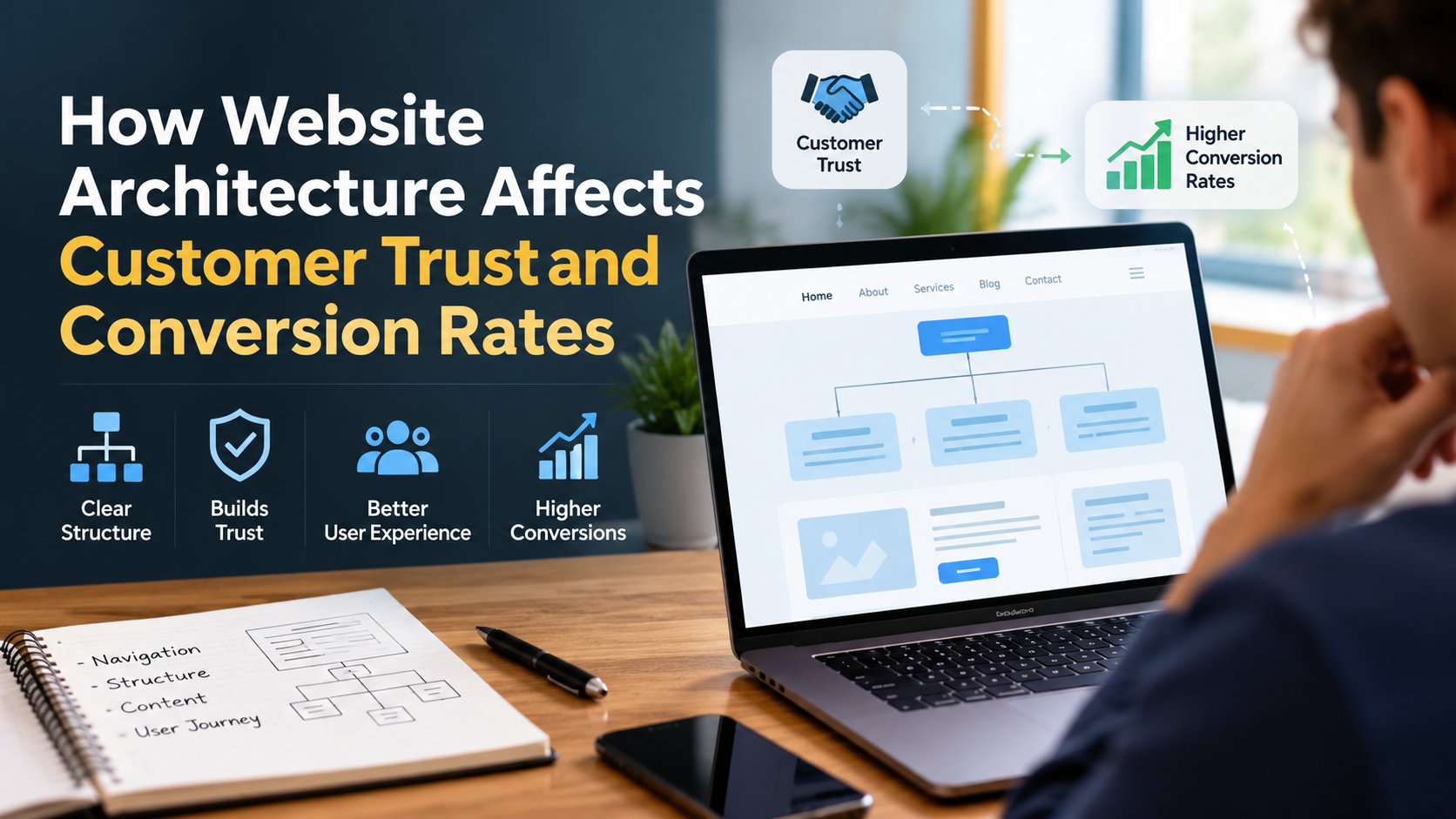
Website architecture plays an important role in how visitors experience a business online. It determines how pages are organised, how information is presented, and how easily users can navigate from one section to another. A well structured website helps visitors find relevant information without confusion, while poor architecture can create frustration and discourage potential customers from taking action.
Customer trust and conversion rates are closely connected to website usability. When visitors can easily understand a website, locate important details, and complete their intended actions, they are more likely to feel confident about the business. Understanding how website architecture influences these behaviours can help businesses improve their online performance.
The Connection Between Website Structure and Customer Trust
A website often creates the first impression of a business. Visitors begin evaluating its reliability as soon as they arrive, even before reading detailed information about its products or services. Clear navigation, organised content, and consistent page layouts help establish a sense of professionalism.
When important information is difficult to locate, visitors may question whether the business is dependable. For example, a website with confusing menus, broken links, and inconsistent page structures can make customers hesitant to submit enquiries or complete purchases.
A logical architecture allows visitors to understand where they are and what information is available. This predictability reduces uncertainty and supports a more comfortable browsing experience, which can gradually strengthen customer confidence.
How Navigation Influences Conversion Rates
Navigation is one of the most important elements of website architecture because it connects visitors with the information they need. A complicated menu can increase the effort required to explore products, compare services, or contact a business.
Effective navigation uses clear labels and groups related pages into understandable categories. Visitors should be able to move between important sections without repeatedly returning to the homepage. Breadcrumb navigation can also help users understand their location within larger websites.
For businesses working with a search optimisation agency, improving navigation can support both search engine accessibility and customer experience. A logical internal structure helps search engines discover relevant pages while allowing visitors to reach useful information more efficiently.
When customers encounter fewer obstacles, they are more likely to complete actions such as requesting quotations, booking appointments, or making purchases.
Why Information Hierarchy Matters for User Decisions
Information hierarchy determines how content is organised and prioritised across a website. Visitors rarely read every word on a page before deciding whether to continue. Instead, they scan headings, descriptions, images, and important details to understand what the business offers.
A clear hierarchy places essential information where visitors can find it quickly. Service pages, for example, should explain what is offered, who it is suitable for, and how customers can proceed. Supporting details can appear further down the page without distracting from the primary purpose.
Poorly organised content forces visitors to search for answers, increasing the likelihood that they will leave. A thoughtful structure helps users evaluate their options and make informed decisions without unnecessary effort.
The Role of Visual Consistency in Building Credibility
Website architecture is not limited to menus and page relationships. Consistent visual presentation also influences how customers perceive a business. Typography, spacing, colours, and design elements should work together to create a recognisable experience throughout the website.
Brand identity contributes to this consistency. Businesses exploring affordable logo design should consider how their visual identity will appear across navigation menus, landing pages, forms, and mobile layouts. A recognisable logo combined with consistent styling can make the website feel more established and organised.
However, visual appearance alone cannot establish trust. Professional design should be supported by accurate information, accessible contact details, clear policies, and reliable functionality. These elements work together to create a credible digital experience.
How Mobile Architecture Affects Customer Behaviour
Many customers access websites through smartphones, making mobile usability an essential consideration. A website that works well on desktop computers may still create problems when its navigation, content, or forms are difficult to use on smaller screens.
Mobile architecture should prioritise readable content, accessible menus, appropriately sized buttons, and simple navigation paths. Important information should remain easy to locate without excessive scrolling or complicated interactions.
For example, a customer searching for a local service may want to review pricing information and contact the provider quickly. If these actions require navigating through several confusing pages, the customer may choose another website.
Responsive layouts and efficient mobile navigation help businesses provide a consistent experience across devices, supporting customer satisfaction and potential conversions.
Internal Linking and the Customer Journey
Internal linking connects related pages and guides visitors through different stages of their decision making process. A customer reading an informational article may want to explore a related service, compare available options, or understand the next steps.
Relevant internal links make these transitions easier. For example, a website development article might link to resources about website maintenance, technical performance, or user experience. These connections help visitors explore subjects in greater depth without searching independently.
Internal links also support search engines in understanding relationships between pages. However, they should be added because they provide genuine value rather than simply increasing the number of links.
A useful linking structure creates natural pathways from initial research to more specific information and potential conversion opportunities.
Reducing Friction During the Conversion Process
Conversion friction refers to obstacles that make it difficult for visitors to complete an intended action. These obstacles may include confusing forms, unclear instructions, unnecessary steps, or difficulty locating contact information.
Website architecture can reduce friction by creating straightforward paths between relevant content and conversion points. For example, an ecommerce website should make product information, delivery policies, payment options, and checkout steps easy to understand.
Service based businesses can benefit from clearly organised enquiry forms and accessible appointment information. Visitors should understand what happens after submitting their details.
Reducing unnecessary complexity does not guarantee conversions, but it can remove barriers that might otherwise discourage interested customers.
Measuring the Effectiveness of Website Architecture
Improving website architecture requires more than making visual changes. Businesses should examine how visitors interact with their websites and identify areas where users experience difficulties.
Analytics tools can reveal navigation patterns, page engagement, and conversion performance. User testing can provide additional insights into whether visitors understand menus, locate information, and complete tasks successfully.
For example, a high abandonment rate during checkout may indicate confusing steps or unexpected requirements. Similarly, limited engagement with important service pages may suggest that visitors struggle to discover them.
Testing improvements and monitoring results helps businesses make informed decisions rather than relying on assumptions. Regular evaluations also ensure that website architecture continues to support changing customer expectations.
Conclusion
Website architecture directly influences how customers navigate, understand, and interact with a business online. Clear navigation, logical information hierarchy, consistent design, and accessible conversion paths can help strengthen customer confidence and improve usability.
Businesses should view website architecture as an ongoing investment rather than a one time design decision. As content expands and customer needs change, navigation structures and page relationships may require adjustments.
By combining thoughtful organisation with reliable functionality and continuous performance evaluation, businesses can create websites that support customer trust, encourage meaningful engagement, and improve conversion opportunities over time.