







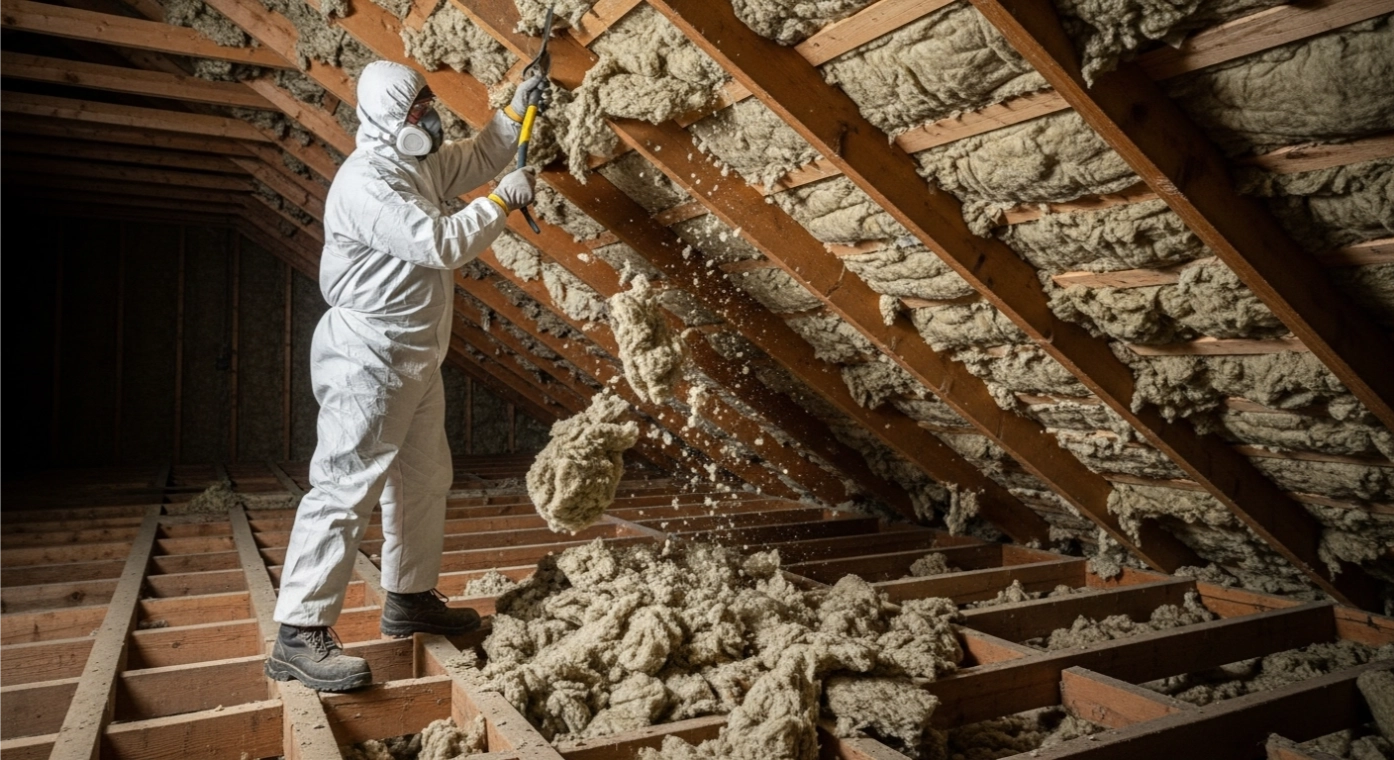
The time required for insulation removal services in Walpole, MA, depends on the size of the area, the type and condition of the insulation, attic access, and whether damaged material needs special handling. A clear, open attic with dry insulation is usually easier to work in than a cramped space with moisture damage, pest waste, or difficult-to-remove spray foam.
This guide explains the main factors that affect old insulation removal, what can delay a project, how Massachusetts weather may influence scheduling, and what homeowners should ask an insulation removal contractor before work begins.
What Factors Affect Insulation Removal Time?
Several conditions determine how quickly an insulation removal crew can complete the job. The actual timeline becomes clearer after the contractor inspects the work area and identifies any extra preparation or cleanup required.
1. Size of the Area
A small attic usually requires less removal and cleanup than a large attic or a project involving several areas of the home. The amount of insulation, ceiling layout, and number of separate spaces also affect the workload.
2. Type of Insulation
Some materials are easier to remove than others. Loose-fill fiberglass or cellulose can often be collected using suitable vacuum equipment, while fiberglass batts may require more manual handling.
Spray foam can take longer to remove because it adheres to the surface where it was installed. The removal method depends on the foam, the substrate, and whether the material must be removed completely.
3. Attic Access and Obstacles
Tight attic openings, low rooflines, narrow crawl spaces, and limited headroom can slow down the work. Ducts, wiring, pipes, and framing also require careful movement to avoid damage.
For attic insulation removal in Walpole, MA, the contractor should assess access before estimating the schedule. A large attic may still take longer if the crew cannot move equipment and removed material through the space easily.

4. Insulation Condition
Dry, loose insulation is often simpler to handle than material affected by water, mold, or pests. Wet insulation may be heavier, while contaminated material may require additional precautions, containment, and disposal arrangements.
ENERGY STAR’s attic insulation guidance recommends addressing conditions such as wet insulation, mold, and animal waste rather than simply covering them with new material.
5. Cleanup and Disposal
Removal involves more than pulling out old insulation. The crew may need to collect debris, clean the work area, protect the home from dust, and transport waste for proper disposal.
The amount of debris and the handling requirements can add time. Homeowners should ask whether cleanup and disposal are included in the estimate.
How Do Different Insulation Materials Affect the Timeline?
The removal method depends on how the insulation is installed and how firmly it is attached to the building. Material type is one of the main factors an insulation removal contractor considers when planning the work.
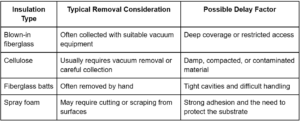
These are general considerations, not guaranteed completion times. The actual method and schedule depend on the material’s condition and the structure being worked on.
When Can Insulation Removal Take Longer?
Some projects take longer when damage, contamination, or repairs require extra work.
Common causes include:
- Water Damage: Roof or plumbing leaks must be fixed, and damp materials may need to dry.
- Mold or Pests: Contaminated insulation may require special handling and cleanup.
- Older Insulation Hazards: Vermiculite may contain asbestos. Qualified professionals should assess it before disturbance.
- Hidden Damage: Damaged framing, roof sheathing, or blocked ventilation may need repairs before new insulation is installed.
The U.S. Department of Energy’s insulation guide covers safety concerns related to older insulation materials.
How Walpole Weather Can Affect Scheduling
Walpole’s cold winters, rain, snow, and humid summers may affect access and related repairs. Although removal happens indoors, severe weather can delay waste transport or roof work. Hot attic conditions may also slow progress.
Before new insulation is installed, moisture problems must be corrected and building materials must be suitable for installation.
What Happens Before and After Insulation Removal?
A typical project includes these steps:
- Inspection: Check insulation, access, moisture, wiring, and potential hazards.
- Removal: Remove insulation using suitable equipment and handling methods.
- Cleanup: Inspect the exposed area for damage, moisture, and pests.
- Repairs and Replacement: Complete necessary repairs and air sealing before installing new insulation.
ENERGY STAR’s attic air-sealing guidance explains why air leaks and moisture issues should be addressed before adding new attic insulation.
Pros and Cons of Professional Insulation Removal
Professional insulation removal can help homeowners prepare an attic or other building area for repairs and new insulation. The main trade-offs are the cost of labor and the need to plan for any issues uncovered during the work.
Advantages
- Suitable equipment can help remove insulation from difficult or extensive areas.
- Proper handling can reduce the spread of dust and help protect nearby living spaces.
- An exposed attic makes it easier to identify moisture damage, pest activity, and gaps that need attention.
Disadvantages
- Larger areas and difficult materials can increase labor and disposal costs.
- Hidden damage may require extra repairs and extend the overall project.
- Suspected hazardous materials may require specialist assessment before ordinary removal can proceed.

How to Plan an Insulation Removal Project
Homeowners can help the project run smoothly by sharing relevant information and clarifying the scope before work starts. A written estimate should explain what the crew will remove and what happens if additional problems are found.
Before hiring an insulation removal contractor, homeowners should ask:
- Is the estimate based on an inspection of the actual area?
- Does the price include cleanup, debris removal, and disposal?
- How will the crew protect the home and handle the specific insulation material?
- Are moisture repairs, air sealing, or replacement insulation included or quoted separately?
- What conditions could change the estimated completion time?
These questions help set clear expectations without relying on a generic time estimate that may not fit the property.
Why Consider Coleman Spray Foam?
Coleman Spray Foam offers insulation services for residential and commercial properties, including insulation removal, attic insulation, blown-in insulation, spray foam insulation, and air sealing. These services can support projects where old material needs to be removed before the attic is repaired or upgraded.
The right approach depends on the insulation type, the condition of the area, and the work required afterward. A project assessment helps establish a realistic schedule and identify tasks that may affect the timeline.
Conclusion
The time required for insulation removal services depends mainly on the area being cleared, insulation type, access, material condition, and cleanup needs. Moisture damage, pest contamination, hazardous materials, and repairs can extend the overall project.
An inspection and clear written estimate help homeowners in Walpole, MA, understand the expected work, possible delays, and next steps before removal begins.
Contact Coleman Spray Foam
Homeowners planning old insulation removal can contact Coleman Spray Foam to discuss their project and available insulation services.
Email: info@colemansprayfoam.com
Phone: (781) 730-6537
Frequently Asked Questions
Can Homeowners Stay in the House During Insulation Removal?
Usually, yes, but dust, noise, and restricted access may cause temporary inconvenience.
Can Insulation Removal Damage the Attic Structure?
Careful removal reduces the risk, but attached materials and hidden damage require extra care.
Should Homeowners Clear the Attic Before Removal?
Yes, moving stored items helps improve access and protects belongings from dust and debris.
How Can Homeowners Compare Removal Estimates?
Compare labor, cleanup, disposal, protection measures, and possible extra charges, not just the total price.
Author & Reviewer
Author: I’m John Coleman. I moved here from Ireland in 2016 to work for an insulation company. In 2019, I purchased my own spray foam trailer and began building my career in the industry. I trained under a PCP-certified Project Manager and Installer, who taught me the chemical process, building science, equipment operation, and repair. His guidance encouraged me to pursue a career in insulation while maintaining the highest standards possible. I established my company on April 19, 2019, reflecting my continued commitment to quality work.
Reviewer: With 6+ years in real estate, Fenwick Thorne builds trust through clear communication and expert guidance, helping clients make confident home-buying and selling decisions.