







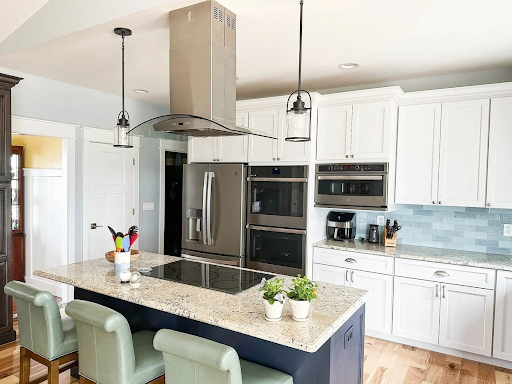
A compact island cooktop still needs a carefully considered ventilation system. Small dimensions do not remove the challenges of overhead mounting, cross-drafts, or concealed ductwork. Choosing a 30-inch island range hood begins with the cooking surface and ceiling arrangement, then moves to airflow, controls, and maintenance.
Check Whether the Width Suits the Cooktop
Measure the actual cooking surface rather than the island cabinetry. The canopy should provide appropriate coverage over the appliance, including the burners used most frequently. Consider depth and front-burner projection as well as width.
The supplied collection presents this size for small-to-medium island layouts. However, a 30-inch island range hood should not be selected solely because the island looks compact. Check the cooking appliance instructions and consider whether additional canopy coverage would be beneficial.
Read the Size-Specific Specifications
The collection includes 30-inch configurations rated at 600 or 900 cubic feet per minute. Some product-family titles describe capacities across several sizes, so the selected configuration needs careful checking. A larger number in a general heading may not apply to the 30-inch version.
For a 30-inch island range hood, confirm:
- Actual blower capacity for that width.
- Body dimensions and weight.
- Required duct connection.
- Permitted chimney adjustment.
- Electrical connection requirements.
- Included filters and accessories.
Save the specification drawing before ordering. It gives the installer a reliable basis for planning, unlike a thumbnail or general description.
Consider Cooking Intensity
The required ventilation arrangement depends on more than room size. Frequent high-heat cooking differs from occasional simmering, and multiple active burners produce a different plume from one small pan.
Assess cooking habits, canopy coverage, mounting height, and duct resistance together. A higher airflow rating does not automatically correct insufficient coverage or poor positioning. Ask an installer to evaluate the proposed 30-inch island range hood as part of the complete system.
Multiple speeds can make daily use more flexible. Compare sound information at useful settings rather than relying only on maximum capacity.
Measure the Ceiling Arrangement
Record the distance between the finished cooking surface and ceiling. Then compare the hood’s body and chimney dimensions with the permitted mounting clearances.
The source’s broader island guidance suggests 28–36 inches above the cooktop, but exact requirements depend on the appliances. Check both manuals and resolve incompatible instructions before installation. A convenient visual position is not sufficient evidence of safe clearance.
Use a lightweight mock-up to assess the proposed canopy position from cooking and seating areas. This helps reveal blocked views and awkward control access.
Plan Structural Support Early
A ceiling-suspended appliance needs suitable framing and the specified mounting hardware. Identify joists and any need for additional blocking before ceiling work begins.
The source recommends professional installation for its island models because secure mounting and alignment are important. Do not rely on decorative ceiling boards or improvise alterations to structural members. A 30-inch island range hood may be compact, but it still needs a properly designed fixing arrangement.
Confirm the Ventilation Path
The individual 30-inch listings shown in the source collection are identified as ducted. Although broader page text discusses ductless flexibility, do not assume that every listed configuration converts to recirculation. Obtain explicit confirmation for the selected model and accessories.
For a ducted installation, settle the route to the exterior, outlet dimensions, and termination position before ordering. Minimise unnecessary bends where the instructions and building layout allow it.
Also discuss make-up air with the installer and local building authority. Requirements depend on the installation and applicable code, not simply the hood’s compact width.
Compare Maintenance and Controls
The collection describes stainless-steel construction, multiple speeds, lighting, and different control arrangements. Confirm those details on the individual product and ensure filters remain accessible after installation.
Check how lights are replaced and whether cleaning can be carried out comfortably at the intended height. Follow the manual for filter care rather than assuming every removable component is washed or replaced in the same way.
Finish With a System Check
After installation, test every speed and light. Investigate unexpected vibration, confirm the exterior damper operates correctly, and keep the manual and installation records together. Addressing small issues at handover is easier than correcting them after the kitchen is in regular use.
Conclusion
A compact island installation succeeds through suitable coverage, accurate measurements, secure mounting, compatible ducting, and accessible maintenance. Homeowners who need greater overhang can compare 36-inch island range hoods before finalising the cabinetry and ceiling plan. Choose the complete ventilation arrangement that suits the cooking area rather than the smallest canopy available.