






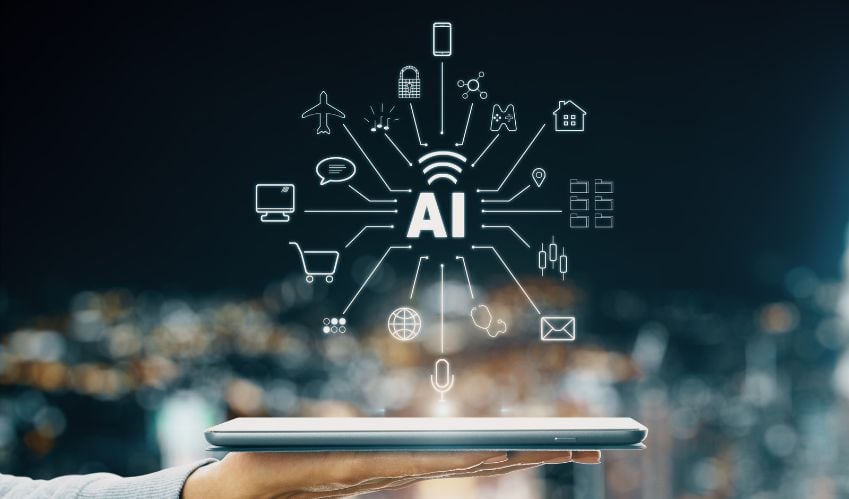
Artificial intelligence is changing how businesses attract customers, create content, manage advertising campaigns, and measure marketing performance. Traditional digital marketing strategies often rely on manual research, broad audience targeting, and historical campaign data. AI introduces a more intelligent approach by helping marketers analyse large volumes of information, identify customer preferences, and make faster decisions. As digital platforms continue to evolve, businesses are increasingly using AI to improve marketing efficiency and deliver more relevant customer experiences.
The Growing Role of AI in Digital Marketing
Digital marketing has become an essential part of business growth, with companies investing in online channels to reach wider audiences and strengthen customer relationships. Artificial intelligence is adding another dimension to this transformation by making marketing activities more data-driven, automated, and personalised. From analysing search behaviour to optimising advertising campaigns, AI-powered tools are helping businesses understand what customers need and how they make purchasing decisions.
According to latest report by Expert Market Research, The global digital marketing market was valued at USD 653.65 Billion in 2025 and is projected to reach USD 1,576.06 Billion by 2035, growing at a CAGR of 9.20% from 2026 to 2035. As digital marketing expands, AI is expected to play an increasingly important role in shaping campaign strategies, improving audience engagement, and helping businesses make better use of marketing budgets. Its ability to process information and identify patterns allows marketers to respond more effectively to changing consumer expectations.
AI-Powered Customer Insights and Audience Targeting
Understanding customer behaviour is one of the most important aspects of successful digital marketing. Businesses need to identify their target audiences, understand their interests, and determine which messages are most likely to generate engagement. AI helps marketers analyse browsing patterns, purchase histories, search queries, and social media interactions to develop a clearer picture of customer preferences.
Machine learning algorithms can identify patterns in customer data that may be difficult to recognise through manual analysis. These insights help businesses divide audiences into more specific segments and create campaigns that address their individual requirements. Instead of delivering identical advertisements to broad audiences, marketers can use AI-driven targeting to reach people based on their interests, online behaviour, and potential purchasing intent.
Predictive analytics also allows businesses to anticipate future customer actions. For example, an e-commerce company can analyse previous purchases and browsing behaviour to identify customers who may be interested in a particular product. This makes it easier to develop targeted promotions, improve conversion opportunities, and strengthen customer retention.
Transforming Content Creation and Marketing Strategies
Content remains central to digital marketing, but producing relevant material consistently can require considerable time and resources. AI-powered writing and content creation tools are helping marketers generate ideas, prepare outlines, develop social media captions, and create initial drafts. These capabilities allow marketing teams to streamline production while focusing more attention on research, creativity, and strategic planning.
Generative AI is also changing how businesses adapt content for different platforms. A single campaign idea can be transformed into blog posts, email newsletters, product descriptions, and social media updates. Marketers can use these tools to explore different messaging approaches and adjust content according to audience preferences. However, human review remains important to maintain accuracy, originality, brand voice, and audience relevance.
AI can also support content optimisation by analysing search intent, identifying related keywords, and highlighting information gaps. These insights help businesses create content that better addresses user questions. Rather than relying entirely on keyword placement, marketers can focus on producing useful information that aligns with the needs of their target audiences.
The Evolution of Search Engine Optimisation
Artificial intelligence is changing how people discover information online. Search engines increasingly use AI to understand search queries, interpret context, and provide more direct answers. Generative search experiences are also influencing how users explore products, compare services, and find information. This is encouraging businesses to rethink their traditional SEO strategies.
Marketers are gradually expanding their focus beyond conventional search engine rankings. Generative Engine Optimisation (GEO) and Answer Engine Optimisation (AEO) are gaining attention as businesses seek to improve their visibility across AI-powered search platforms and answer-based experiences. This involves creating well-structured, informative, and credible content that clearly addresses user questions.
AI-powered SEO tools can assist with keyword research, competitor analysis, technical audits, and content performance monitoring. They can identify emerging search trends and help marketers understand changes in user behaviour. Nevertheless, strong SEO performance still depends on useful content, website quality, relevant backlinks, technical accessibility, and a positive user experience.
Smarter Advertising and Campaign Automation
Digital advertising requires continuous monitoring and optimisation to achieve effective results. Marketers need to manage budgets, select suitable audiences, test creative formats, and evaluate campaign performance across multiple platforms. AI is simplifying several of these activities through automated bidding, audience analysis, and real-time campaign adjustments.
AI-powered advertising platforms can evaluate different audience segments and identify which groups are more likely to interact with an advertisement. Automated bidding systems can also adjust advertising bids based on campaign objectives, available budgets, and expected conversion opportunities. This helps businesses manage advertising expenditure while improving campaign efficiency.
Another important development is the use of AI for creative testing. Marketing teams can generate and compare different advertisement headlines, images, descriptions, and calls to action. By analysing engagement and conversion data, these tools can help identify which creative combinations perform better. Human oversight remains necessary to ensure that advertisements are accurate, appropriate, and consistent with brand guidelines.
Personalisation and Improved Customer Experience
Modern consumers increasingly expect businesses to provide relevant recommendations and convenient interactions. Generic marketing messages may struggle to capture attention, particularly when customers receive a large number of promotional communications. AI allows businesses to personalise customer experiences by using behavioural information, purchase history, and individual preferences.
E-commerce platforms, for example, can use recommendation engines to suggest products based on previous searches and purchases. Email marketing systems can determine suitable content and delivery times for different customer segments. Similarly, businesses can personalise website experiences by displaying relevant products, offers, and information according to visitor behaviour.
Conversational AI is further improving customer interactions through chatbots and virtual assistants. These systems can respond to common questions, provide product information, guide customers through purchasing processes, and offer support outside regular business hours. More advanced solutions can understand conversational context and provide relevant responses, reducing the need for customers to navigate multiple support channels.
The Growing Importance of Data and Marketing Analytics
Successful digital marketing depends on accurate measurement and informed decision-making. Businesses use analytics to understand website traffic, customer engagement, lead generation, conversion rates, and campaign returns. AI is strengthening this process by helping marketers interpret large datasets and identify relationships between different performance indicators.
Predictive analytics can estimate future campaign outcomes by examining historical performance and current market conditions. Marketers can use these insights to identify potential changes in customer demand, allocate resources, and adjust their strategies before performance declines. AI can also help detect unusual patterns in website traffic and advertising results, allowing teams to investigate potential issues more quickly.
However, effective AI-driven marketing requires reliable data. Incomplete, outdated, or inaccurate information can produce misleading insights and poor recommendations. Businesses therefore need to maintain appropriate data collection practices, protect customer information, and ensure that analytics systems are regularly reviewed.
Challenges of Integrating AI into Digital Marketing
Although AI offers several opportunities, its adoption also creates challenges for businesses. One major concern is data privacy. AI-powered marketing systems often depend on customer information to generate personalised recommendations and targeted campaigns. Companies must handle this information responsibly and follow applicable data protection requirements.
Content quality and accuracy are additional concerns. Generative AI tools can produce incorrect information, repetitive material, or content that lacks originality. Publishing such material without proper review can affect brand credibility and customer trust. Businesses should therefore use AI as a support tool rather than relying on it as a complete replacement for human expertise.
Another challenge involves the cost and complexity of implementation. Smaller businesses may face difficulties integrating AI platforms with existing marketing systems or hiring professionals with the necessary technical skills. Selecting tools based on actual business requirements, rather than adopting every new technology, can help organisations achieve better results.
What the Future Holds for AI-Driven Digital Marketing
The future of digital marketing is likely to involve deeper integration of AI across content production, customer engagement, advertising, and analytics. As AI technologies become more capable, businesses may increasingly use autonomous systems to coordinate marketing activities, monitor campaign performance, and recommend strategic adjustments. Agentic AI could take this development further by enabling systems to complete multi-step tasks with limited human intervention.
Voice-based search, conversational commerce, and AI-powered shopping assistants may also influence how consumers discover and purchase products. Businesses will need to adapt their digital presence to these changing experiences while maintaining clear communication and consistent brand identity.
However, human creativity, strategic thinking, and relationship-building will remain important. AI can process information and automate repetitive tasks, but marketers still need to understand customer emotions, cultural differences, and broader business objectives. Organisations that combine technological capabilities with human judgement will be better positioned to develop meaningful customer relationships.
Conclusion
Artificial intelligence is reshaping digital marketing by making customer targeting more precise, content production more efficient, advertising more adaptable, and performance analysis more insightful. Its influence is extending across almost every stage of the marketing process, creating new opportunities for businesses of different sizes.
As AI adoption continues to grow, marketers will need to balance automation with creativity, data-driven decisions with customer trust, and technological innovation with responsible practices. Businesses that approach AI strategically can strengthen their digital presence, improve marketing efficiency, and adapt to the changing expectations of online consumers.