






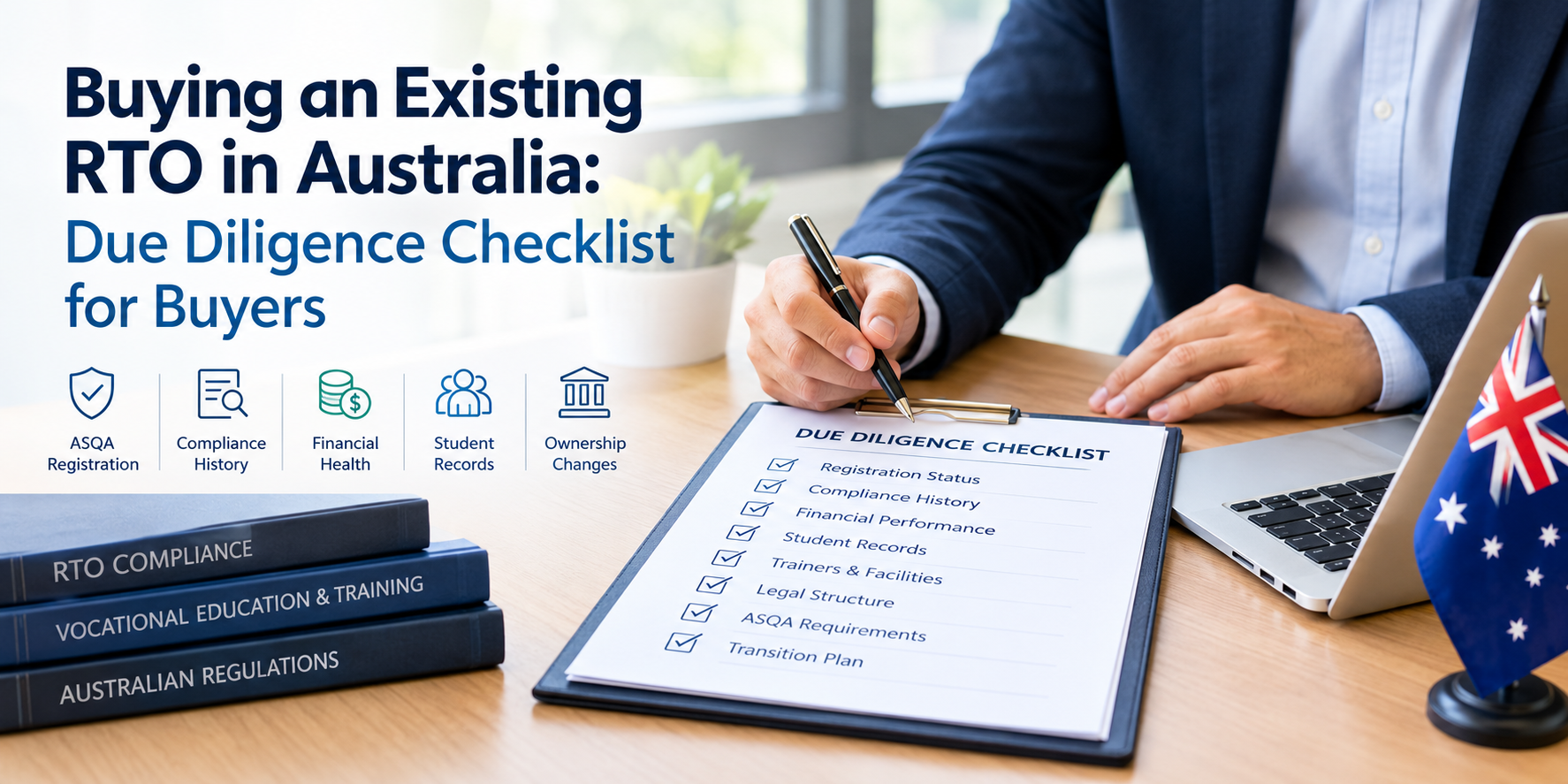
Buying an existing Registered Training Organisation (RTO) can be an attractive opportunity for entrepreneurs, education providers and investors looking to enter Australia’s vocational education and training sector. An established RTO may already have qualified trainers, training resources, student enrolments, industry connections and approved qualifications.
However, purchasing an RTO involves more than assessing its revenue and business potential. Buyers must understand the organisation’s registration status, compliance history, financial position and operational responsibilities before signing a purchase agreement.
A business that appears profitable may have unresolved compliance issues, outdated assessment materials or liabilities that affect its future value. Conducting thorough due diligence helps buyers identify these risks, negotiate with confidence and plan a smoother transition.
Why Is Due Diligence Important When Buying an RTO?
Due diligence allows potential buyers to verify the information provided by the seller and determine whether the RTO is a suitable investment. It also helps establish whether the organisation can continue delivering quality training while meeting its regulatory obligations.
Without proper checks, buyers may discover unexpected debts, incomplete student records, inadequate training resources or registration issues after the transaction has been completed.
A structured review should cover regulatory, financial, legal and operational matters. Seeking advice from professionals familiar with Australia’s vocational education and training sector can also help buyers make informed decisions before committing significant capital.
1. Verify the RTO’s Registration Status
The first step is to confirm that the organisation is currently registered with the Australian Skills Quality Authority (ASQA), where applicable.
Check the National Register of VET to verify the provider’s registration details, approved qualifications, units of competency and registration status. Compare the information with the courses the seller currently advertises and delivers.
Buyers should also investigate any registration conditions, previous audit findings, regulatory actions or unresolved compliance concerns. Request relevant correspondence with ASQA and evidence that any identified issues have been addressed.
Pay attention to the scope of registration. A qualification that the seller plans to introduce may not be included in the provider’s current approved scope.
Most importantly, do not assume that purchasing an RTO automatically gives you the right to operate under its existing registration. The regulatory outcome depends on the transaction structure and the legal entity involved.
2. Understand the Legal Structure of the Purchase
Before negotiating the final price, determine whether the transaction involves buying company shares or acquiring the business’s assets.
In a share purchase, the buyer acquires shares in the company that holds the RTO registration. If the registered legal entity remains unchanged, the organisation may continue operating, subject to applicable notification and regulatory requirements.
An asset purchase is different because RTO registration cannot simply be transferred to another legal entity. If the buyer intends to operate through a new entity, that entity generally needs to obtain its own registration before delivering nationally recognised training.
The purchase agreement should clearly identify the assets, liabilities, contracts and intellectual property included in the transaction. Obtain legal advice before signing, particularly where the proposed structure could affect registration, ownership notifications or ongoing business operations.
3. Review the RTO’s Compliance History
An RTO’s compliance history can significantly influence its value and future operating costs. A provider with strong enrolment numbers may still face difficulties if its training and assessment practices do not meet regulatory standards.
Request the following documents during the due diligence process:
- Previous audit reports and corrective action records.
- Training and assessment strategies for each qualification.
- Assessment tools, validation records and moderation procedures.
- Trainer and assessor qualifications and evidence of industry currency.
- Student complaints, appeals and refund records.
- Student support, enrolment and certification policies.
- Records of regulatory notifications and outstanding compliance obligations.
Do not rely solely on written policies. Check whether the organisation follows them in practice. For example, confirm that trainers possess the necessary competencies and that assessments are appropriate for the qualifications being delivered.
If compliance gaps are identified, establish their likely cost, urgency and impact before proceeding with the purchase.
4. Examine Financial Performance and Outstanding Liabilities
Financial due diligence helps buyers understand whether the asking price reflects the RTO’s actual commercial value.
Request financial statements for the previous three years, where available, along with recent management accounts, cash flow reports, tax records and details of outstanding debts. Compare reported revenue with bank records, student enrolments and completed training activity.
Pay particular attention to:
- Outstanding tax liabilities and creditor payments.
- Trainer salaries, contractor fees and operating expenses.
- Student refunds, prepaid course fees and future delivery commitments.
- Lease obligations, equipment finance and contractual liabilities.
- Dependence on a small number of clients or funding sources.
- Working capital requirements and anticipated operating costs.
An RTO’s financial position can change if enrolments decline, costs increase or funding arrangements are disrupted. Independent accounting advice can help identify inconsistencies and assess whether the proposed purchase price is reasonable.
5. Check Student Records and Training Quality
Existing student enrolments can represent valuable future revenue, but they also create responsibilities for the new owner.
Review enrolment agreements, attendance records, assessment results, student progress and certification records. Identify students who have started training but have not completed their qualifications.
Determine whether the organisation has sufficient trainers, learning materials, facilities and assessment resources to meet its existing commitments. Check the accuracy and security of student records and confirm how authorised access will be maintained during the transition.
If the RTO has international students or operates under specific funding arrangements, examine the additional registration, contractual and student-protection requirements that apply.
A buyer should understand not only how many students are enrolled but also how much time, staffing and expenditure will be needed to support them through to completion.
6. Assess Trainers, Facilities and Operational Resources
An RTO’s long-term performance depends on its operational capacity, not just its registration and course list.
Review employment agreements, trainer contracts, staff turnover and the availability of suitably qualified personnel. Discuss whether key trainers intend to remain after the sale and identify any roles that may need to be replaced.
Inspect classrooms, training equipment, learning management systems and digital resources. Confirm whether leases and third-party agreements can continue after the transaction and whether training locations meet the applicable requirements.
You should also verify ownership of course materials, website content, trademarks and other intellectual property included in the sale.
A detailed operational review helps reveal replacement costs and resource gaps that may not be obvious from the seller’s financial statements.
7. Understand ASQA’s Change-of-Ownership Requirements
Ownership changes can have important regulatory consequences, so buyers should establish their obligations before the transaction is completed.
ASQA requires relevant ownership and control changes to be notified through its prescribed process. For an RTO-only provider, notification is generally required as soon as practicable before the change takes effect or within 10 business days after the event. Different timing requirements apply to CRICOS-registered providers.
ASQA may apply additional scrutiny following significant changes, including changes involving 50% or more of a company’s shareholding within a 12-month period. Buyers may need to provide evidence relating to financial viability, governance, training capability and ongoing compliance.
Review ASQA’s current guidance to determine which notifications, declarations and supporting documents apply to the proposed transaction. If the purchase involves a new legal entity, confirm the registration requirements before planning any training delivery.
Obtaining professional guidance on rto change of ownership can help buyers understand the regulatory process, prepare the relevant documentation and identify potential issues before settlement.
8. Prepare an Acquisition and Transition Plan
Once the due diligence findings are available, use them to negotiate the purchase agreement and prepare for the handover.
The agreement should clearly address the purchase price, payment arrangements, warranties, indemnities, disclosed liabilities and conditions that must be satisfied before completion. Consider making completion conditional on resolving significant concerns identified during the review.
Prepare a transition plan covering staff communication, student support, trainer availability, record access, supplier arrangements and ongoing compliance responsibilities.
Buyers who need assistance assessing regulatory obligations may benefit from working with experienced rto advisory perth professionals who understand the Australian RTO environment and ownership transition requirements.
Avoid rushing the purchase simply because the seller wants a quick settlement. Taking time to verify critical information can help prevent costly surprises after completion.
Final Thoughts
Buying an existing RTO in Australia can create opportunities for business growth, but the success of the acquisition depends heavily on the checks completed before the contract is finalised.
A careful review of registration status, compliance history, financial records, student commitments, staff capability and transaction structure gives buyers a clearer picture of the organisation’s risks and commercial potential.
Before proceeding, consult appropriate legal, accounting and RTO compliance professionals. Verify the current ASQA requirements for your specific transaction rather than assuming that registration, funding arrangements or existing approvals will automatically continue.
With thorough due diligence and a realistic transition plan, buyers can make better-informed decisions and establish a stronger foundation for operating a sustainable training business.