







A few days ago, I was clearing out my desk and found four dead power banks and an old phone battery. I stood there wondering how many millions of batteries sit in Indian homes right now, quietly waiting for a decision. That thought stayed with me, and it’s why I wanted to write about where lithium-ion battery recycling in India is heading.
Why the Future Looks Promising
Lithium-ion batteries now power our phones, laptops, scooters, cars and even home backup systems. As their use grows, so does the number of batteries that will reach the end of their life. Every one of those batteries is a small bundle of useful materials, not just waste.
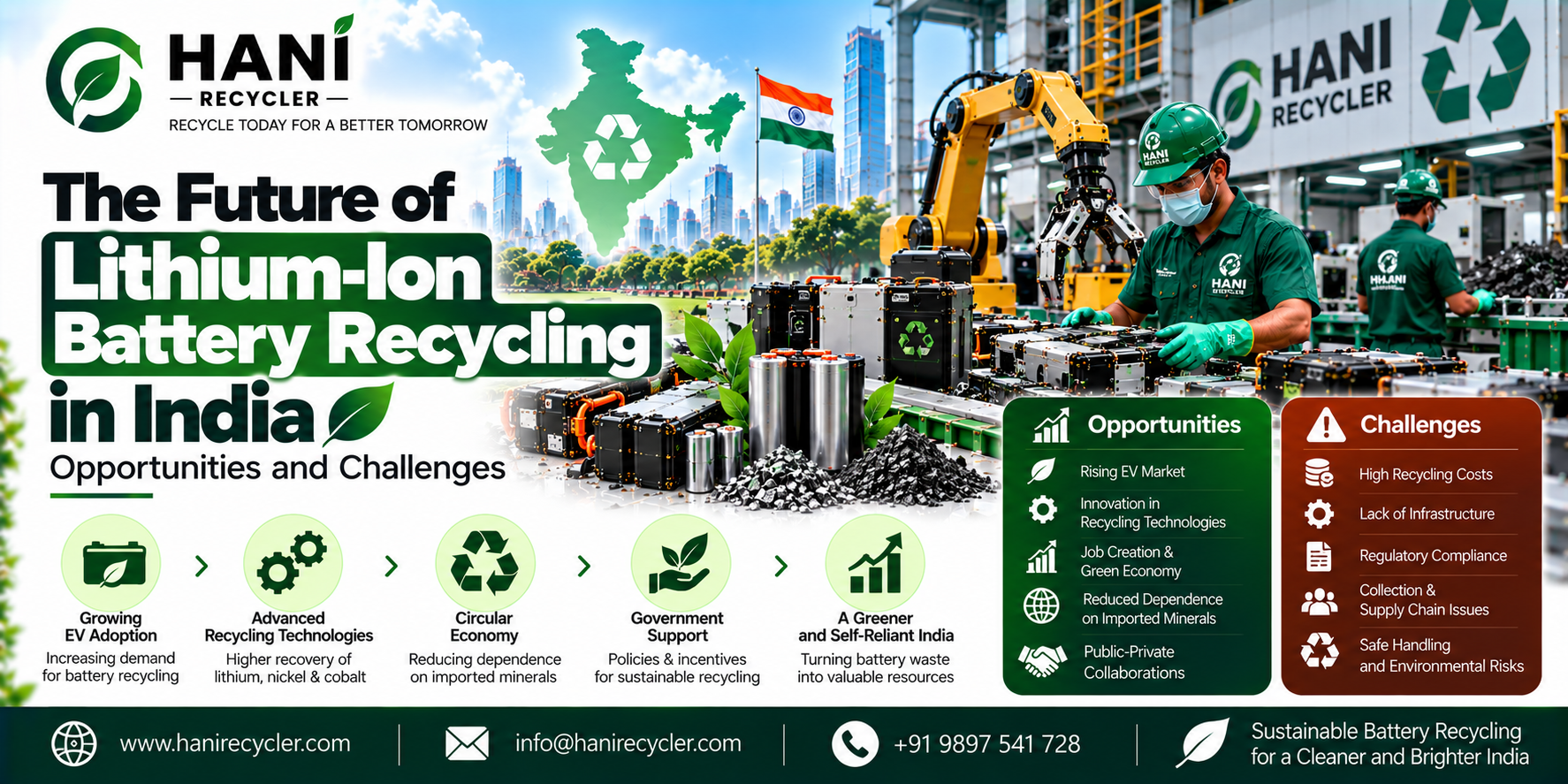
The Big Opportunities
- Less dependence on imports: Lithium, nickel and cobalt are largely imported. Recovering them from used batteries can help India rely less on other countries.
- Cleaner environment: Recycling keeps toxic and fire-prone materials out of landfills and reduces the need for new mining.
- New jobs and skills: A growing recycling industry needs engineers, technicians, drivers and safety experts.
- Support for electric mobility: As EVs become common, a strong recycling system helps the whole sector grow responsibly.
- Second-life use: Batteries that are too weak for vehicles may still work for solar or backup storage before they are recycled.
Rules Are Already Taking Shape
India’s Battery Waste Management Rules, 2022 introduced Extended Producer Responsibility (EPR), which means companies that make or import batteries must make sure old ones are collected and recycled. This gives the industry a clear direction, and it should push more batteries toward proper recycling channels.
Better Technology Is Coming
Recycling methods keep improving. Today, many recyclers use safe discharging, shredding and separation to create black mass, a powder rich in valuable metals. From there, methods using liquid solutions or high heat help recover lithium, nickel and cobalt. Newer approaches, like direct recycling, aim to reuse battery materials with fewer steps. Some of these are still developing, so it’s too early to say which will lead.
The Challenges We Must Be Honest About
I don’t want this to sound like everything is solved. It isn’t. Here are the real hurdles:
- Collection: Many used batteries stay in drawers or reach informal scrap dealers instead of authorised recyclers.
- Unsafe practices: Open burning or breaking batteries by hand wastes materials and puts people at risk.
- Different battery types: Designs and chemistries vary, which makes dismantling and processing harder.
- High setup costs: Advanced recycling plants need investment, skilled workers and strict safety systems.
- Fire risk: Damaged batteries can overheat, so storage and transport need extra care.
- Low awareness: Many people simply don’t know where to take an old battery.
What Needs to Happen Next
The future depends on teamwork. Manufacturers need easy take-back options. Recyclers need safe, scientific processes. Governments need to keep rules clear and enforce them. And ordinary people need to know that a dead battery isn’t garbage.
What You Can Do Right Now
You don’t have to wait for the future to help build it:
- Never throw batteries in the dustbin.
- Stop using any battery that is swollen, hot or leaking.
- Cover the terminals with tape and store it in a cool, dry place.
- Choose an authorised recycler who provides proper paperwork.
If you’re not sure where to begin, you can get in touch with us at Hani Recycler and we’ll point you in the right direction.
Final Thoughts
The future of lithium-ion battery recycling in India holds real promise: fewer imports, cleaner surroundings and a stronger industry. But the promise only becomes real when used batteries actually reach the right hands. So let’s start small. Check your drawers, find that old battery and give it a proper next step.
I kept the article general and didn’t include statistics, market forecasts or company names, since I can’t verify current 2026 figures. If you have trusted data or details about your own recycling work, send them over and I’ll add them. I can also prepare the metadata, meta tags, keyword tags and a social bookmarking description, as before.
Read another Article: EV Battery Recycling in India