


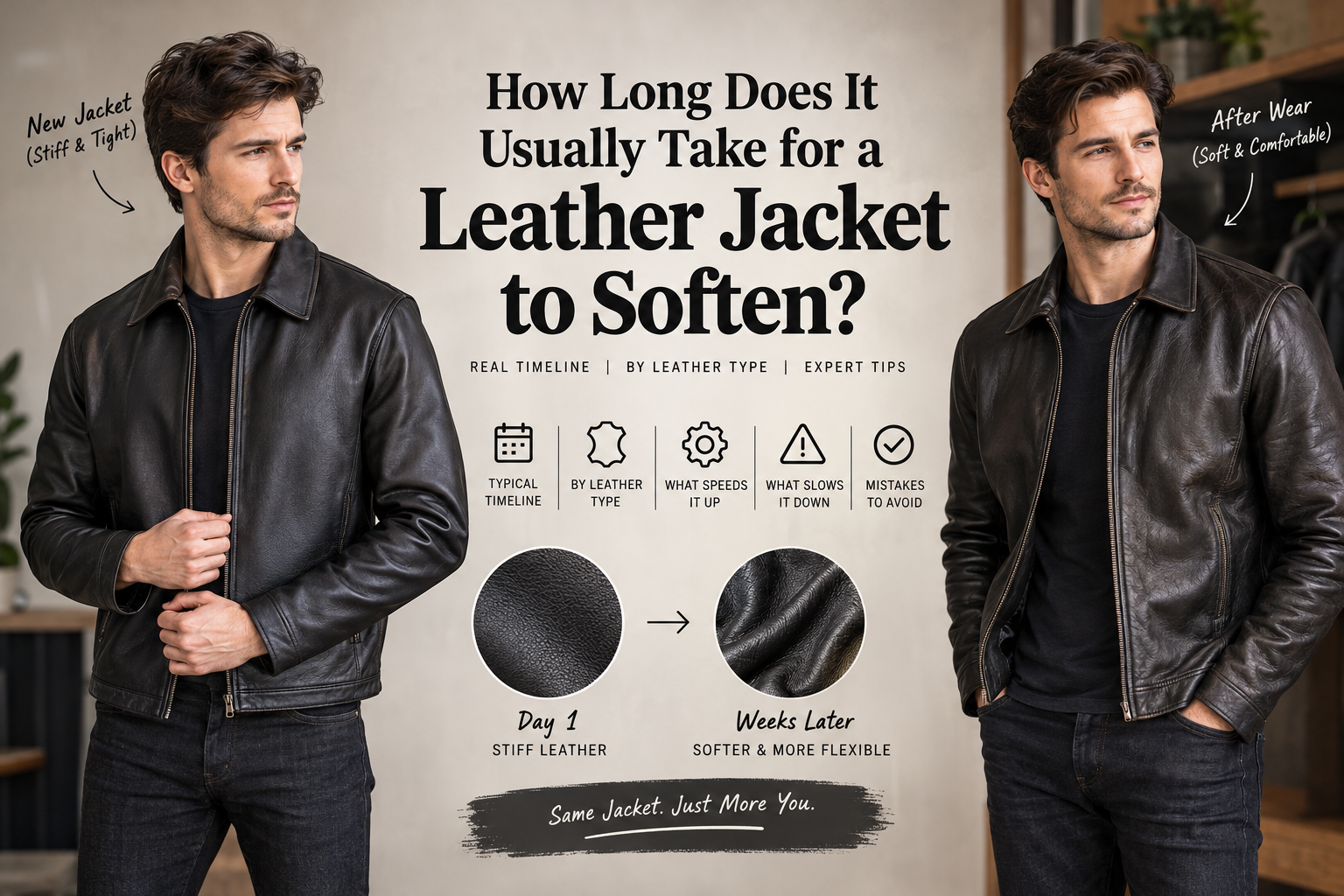
You bought a new leather jacket. It looks great. But the sleeves feel like cardboard and the collar scratches your neck. Sound familiar?
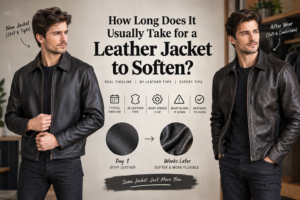
Relax. Almost every good leather jacket starts out stiff. The real question is how long that phase lasts. For most people, it sits between two and eight weeks of regular wear. Some jackets need less. Some need more.
This guide gives you a clear timeline by leather type. You will also see what speeds things up, what slows things down, and what can quietly damage your jacket along the way.
The Short Answer
Here is the quick view before we go deeper.
- Lambskin: about 3 to 10 wears to feel soft
- Goatskin: about 10 to 20 wears
- Full grain cowhide: about 20 to 40 wears, or 4 to 8 weeks
- Thick horsehide or vegetable tanned leather: 3 months or more
- Most jackets feel comfortable by week 3 or 4 of regular wear
- A fully relaxed fit often shows up around month 2 or 3
One note. These are typical ranges based on common wear patterns, not lab tests. Your jacket may land a little above or below them.
Why Leather Is Stiff at the Start
Leather is skin. After tanning, the fibers are tight and packed close together. Fresh from the factory, they haven’t learned your shape yet.
Softening is simple. Each time you move, the fibers stretch a little. Body heat warms them. Natural oils spread. Slowly, the hide loosens and starts to fit you.
Three things matter most here:
- Thickness of the hide. Thicker leather takes longer to relax.
- Tanning method. Chrome tanned leather softens faster than vegetable tanned.
- Finish. Heavy coatings on the surface can slow the process.
Softening Time by Leather Type
Not all hides behave the same. Here is what to expect from the most common types.
Lambskin
- Thin and light, so it feels supple almost right away
- Often soft after one week of daily wear
- Creases easily, so handle it gently
Goatskin
- Tougher than lambskin but still flexible
- Usually comfortable in 2 to 3 weeks
- Holds its grain pattern well over time
Cowhide
- The most popular choice for biker and classic styles
- Needs 4 to 8 weeks of steady wear
- Gets better with age, and develops a rich patina
Horsehide
- Dense and very strong
- Can take 2 to 3 months, sometimes longer
- Worth the wait for people who want a jacket that lasts decades
What the First Month Usually Looks Like
A timeline helps set expectations. Here is a simple week by week view for a standard cowhide jacket.
- Week 1: Stiff arms, tight shoulders, a bit of squeaking. Normal.
- Week 2: Elbows and collar begin to bend with you.
- Week 3: The body of the jacket loosens. Zipping feels easier.
- Week 4: Soft creases form at the elbows. The jacket starts to look lived in.
- Weeks 6 to 8: The fit feels like yours. Shoulders settle and sleeves move freely.
Wear it at least 3 to 4 hours a day. A jacket that hangs in the closet never softens.
What Speeds It Up or Slows It Down
Two people can buy the same jacket and get very different results. Here is why.
Things that speed it up
- Daily wear, even for short trips
- Moderate warmth, since heat relaxes the fibers
- A proper fit that lets the leather flex with you
- Light conditioning once the jacket has settled a little
Things that slow it down
- Wearing it once a week
- Storing it in a cold or very dry space
- Buying a size that is too tight, which keeps the leather under strain
- Thick, heavy coatings on cheaper hides
How to Safely Speed Up the Process
Most people want results fast. That is fair. If you want to know how to quickly break into leather jacket leather, start with how to quickly break into leather jacket steps and follow them one at a time. Slow and steady beats shortcuts every time.
Here are the basics that work.
- Wear it daily, even around the house
- Move your arms often. Reach, bend, and roll your shoulders
- Work the stiff spots by hand. Gently fold and flex the elbows and collar
- Use a small amount of quality leather conditioner on dry patches
- Let it dry naturally if it gets damp, away from any heater
A good rule is to condition lightly and only when needed. Too much product can clog the pores of the leather and make it feel greasy.
Mistakes That Can Ruin a Jacket
Some shortcuts you will find online do more harm than good. Skip these.
- Soaking the jacket in water. It can leave stains and dry the hide out.
- Using a hair dryer. Direct heat cracks the surface.
- Applying heavy oils all at once. This can darken the leather unevenly.
- Overstretching the sleeves. This ruins the shape for good.
- Leaving it in a hot car. High heat shrinks and stiffens leather.
If a trick sounds extreme, it probably is.
Cheap Leather vs Quality Leather: The Comparison That Matters
Here is something many buyers learn too late. The softening process depends heavily on the quality of the hide.
Low cost jackets often use thin, split leather covered with a heavy plastic coating. These can feel soft in the store. But the softness comes from the coating, not the leather. After a few months, the surface may crack or peel.
Quality full grain leather behaves differently. It starts firmer. It softens through wear. Then it keeps getting better for years.
This is why brands like Leather Jacket Black focus on well tanned hides and sturdy stitching. A jacket built this way goes through a real break in period. Yes, it takes a few weeks. But the result is leather that fits like a second skin and ages beautifully.
Here is a simple comparison.
Low cost coated leather
- Feels soft on day one
- Surface can peel within 1 to 2 years
- Rarely develops a patina
Quality full grain leather
- Feels firm on day one
- Softens over 4 to 8 weeks
- Can last 10 to 20 years with basic care
So if your new jacket is a little stiff, take it as a good sign. It usually means the hide is real and built to last.
Final Thoughts
A new leather jacket needs time. Most people feel real comfort within a month, and a perfect fit within two or three. Lambskin comes fast. Cowhide takes patience. Horsehide takes the longest.
Wear it often. Skip the harsh tricks. Add a little conditioner when it looks dry. Do these simple things and your jacket will reward you for years.
FAQs
How long does it take for a leather jacket to soften?
Most jackets soften in 2 to 8 weeks of regular wear. Lambskin can feel soft in a few days. Thick cowhide or horsehide can take two or three months.
Does a leather jacket get softer the more you wear it?
Yes. Movement and body heat loosen the fibers. The more you wear it, the faster it softens and shapes itself to you.
Can I soften a leather jacket overnight?
Not safely. Quick fixes like soaking or heating can damage the hide. Steady daily wear is the safest path.
Should I use conditioner on a brand new leather jacket?
Usually not right away. Wear it for a couple of weeks first. Then add a thin layer only if the leather looks dry.
Is a stiff leather jacket a sign of bad quality?
No. Stiffness at the start often points to thicker, better leather. Very soft jackets on day one may be thin or heavily coated.
How do I know my leather jacket is fully broken in?
The sleeves move freely, the shoulders feel relaxed, and soft creases show at the elbows. You will stop noticing the jacket when you wear it.