




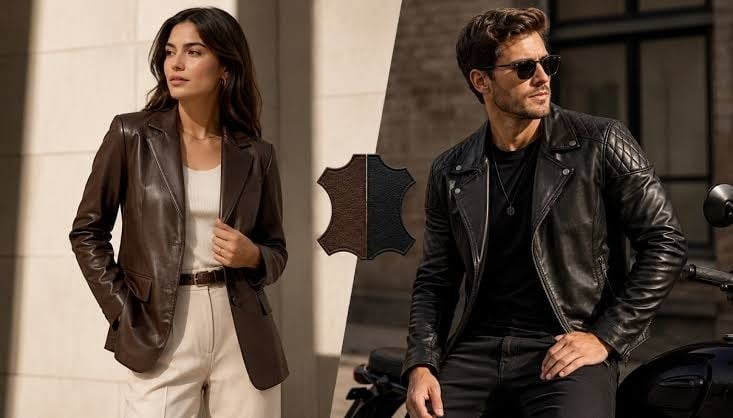
Most people buy a leather jacket the way they buy a coffee: quickly, based on how it looks in the moment. Then two winters later the collar is cracking, the lining is shredding, and the whole thing smells like a damp basement.
A good leather jacket should outlive most of your wardrobe. Here’s what to look at before you spend the money.
Start with the leather itself
The label matters more than the logo. You’ll usually run into four types.
Full-grain is the top layer of the hide, left mostly untouched. It’s the toughest and it ages beautifully, picking up a patina that makes each jacket look different over time. It’s also the priciest.
Top-grain is sanded slightly for a smoother finish. It’s a bit less durable but still a solid choice, and it often feels softer from day one.
Genuine leather sounds impressive but isn’t. It’s a lower layer of the hide, often coated to look uniform. It’s fine for a budget piece, but don’t expect it to last.
Bonded or “PU leather” is mostly fabric and plastic. It peels. Skip it if you want something for more than a season.
Lambskin vs cowhide
This is the question we hear most.
Lambskin is soft, light and drapes well. It suits slim, fashion-led cuts and feels comfortable almost immediately. The trade-off is that it scratches more easily and isn’t ideal for heavy daily wear.
Cowhide is thicker and stiffer. It takes a few weeks to break in, but once it does, it handles rain, rough use and years of wear with little fuss. If you plan to ride a motorbike or wear your jacket every day, cowhide is the sensible pick.
Pick a style you’ll still wear in ten years
Trends come and go, but a few shapes never really leave.
- Biker jacket: asymmetrical zip, snap collar, a bit of attitude. It works with jeans, dark trousers and even a dress.
- Bomber: relaxed, ribbed cuffs and hem, easy to throw on over a hoodie or shirt.
- Café racer: clean and minimal, with a straight collar and a single zip. The most versatile of the lot.
- Trench or long coat: more formal, great over tailoring for colder months.
If this is your first leather jacket, go for black or dark brown in a café racer or biker cut. You can’t really go wrong.
Check the details most people ignore
Before buying, run through this quick list:
- Stitching. It should be even and tight, with no loose threads at the seams.
- Zips and hardware. Heavy, smooth metal zips (YKK is a good sign) beat light, rattly ones.
- Lining. A cheap lining tears first. Look for cotton or a good-quality polyester.
- Fit across the shoulders. Sleeves can be altered, but shoulders can’t. If they pull when you reach forward, it’s the wrong size.
- Smell. Real leather smells earthy. A strong chemical smell usually means heavy coating or synthetic material.
Sizing for European weather
If you live in Northern or Central Europe, you’ll probably wear your jacket in cold, damp conditions for a good part of the year. Leave enough room for a thin knit or hoodie underneath, but not so much that the jacket looks boxy. In milder places like Spain or Italy, a closer fit works well, since you’ll mostly wear it over a t-shirt.
Looking after your jacket
Leather doesn’t need much, but it does need something.
- Wipe off dirt with a soft, slightly damp cloth.
- Condition it once or twice a year with a proper leather conditioner. Dry leather cracks.
- If it gets wet, let it dry naturally, away from radiators and hairdryers. Heat is leather’s worst enemy.
- Store it on a wide, padded hanger, not folded in a drawer, and never in a plastic bag.
Is it worth paying more?
Usually, yes. A well-made leather jacket costs more upfront, but spread over fifteen or twenty years the cost per wear is lower than a cheap jacket you replace every two seasons. And unlike most clothing, it looks better with age.
Buy once, buy well, and look after it. That’s really all there is to it.