

The Essentials Hoodie: Why This Simple Sweatshirt Became a Wardrobe Staple
Walk through any American high school hallway, college campus, or weekend farmers market, and you will see it. That muted, slightly oversized hoodie with the small, understated logo on the chest. It is not flashy. It does not scream for attention. Yet the Essentials Hoodie—specifically the Fear of God Essentials line—has quietly become one of the most recognizable pieces of casual wear in the United States.
But what is it about this particular garment that justifies the hype, the price tag, and the cultural staying power? It is not just another sweatshirt. For many, it represents a shift in how Americans approach everyday style: a desire for comfort without sacrificing a sense of polish.
The Design Philosophy: Clean, Boxy, and Intentional
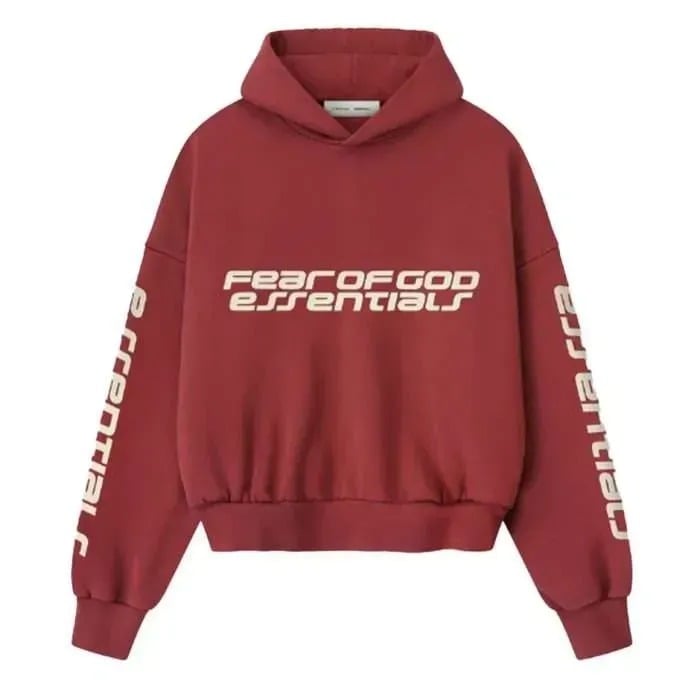
The first thing you notice about an authentic Essentials hoodie is the shape. Unlike a standard athletic sweatshirt that tapers at the waist or clings to the shoulders, the Essentials cut is deliberately relaxed and boxy . It features dropped shoulders, a wider chest, and a silhouette that hangs away from the body rather than hugging it.
This is not an accident or a sizing error. The brand, founded by Jerry Lorenzo, built its reputation on what teenagers and young adults often describe as a “clean” look . It is the kind of garment that looks put-together even when you have just rolled out of bed. The heavyweight fleece—often a blend of cotton and polyester weighing in around 380 GSM—gives the fabric a structure that holds its shape throughout the day . It does not sag or stretch out at the elbows like cheaper alternatives.
For a US audience accustomed to fast fashion that loses its form after three washes, this structural integrity is a significant part of the appeal. You are not just buying a logo; you are buying a garment that feels substantial the moment you take it out of the packaging.
The Real-World Fit: How to Get It Right
One of the most common sources of confusion for first-time buyers is the sizing. If you order your usual size, the hoodie will likely feel enormous. That is intentional . The brand designs its core pieces to be worn oversized.
However, “oversized” means different things to different people. If you want the exact look you see in the brand’s lookbooks—the slouchy, streetwear-inspired drape—you should stick to your true size . But if you are someone who prefers a cleaner, more traditional fit that does not swallow your frame, the consensus among seasoned buyers is to size down one full size .
For women, this is particularly important. Because the core line is designed as unisex and based on men’s sizing, a woman who typically wears a medium in women’s clothing may find that a small or even an extra-small in Essentials provides the intended relaxed look without completely overwhelming her proportions .
It is also worth noting how the hoodie behaves for different body types. For those with broader shoulders or athletic builds, the dropped-shoulder design is naturally flattering because it follows the line of the body rather than fighting it . For shorter frames, sizing down can help correct the body length, which can otherwise run a bit long . The key is to treat the sizing as a deliberate style choice rather than a standard measurement.
The “Clean” Aesthetic and American Youth Culture
The rise of the Essential hoodie in the US is not just about fabric and fit. It is a cultural signal. In interviews, teenagers have repeatedly used the word “clean” to describe the appeal . In a world of loud logos and chaotic prints, the small, rubberized “Essentials Fear of God” lettering on the chest feels restrained.
This aesthetic has made it particularly popular in environments where dress codes are strict but not entirely rigid. As one parent noted, the brand is often acceptable in private schools that ban other, more provocative streetwear labels . It occupies a unique middle ground: cool enough for the students, acceptable enough for the administration.
The price point, however, is a point of friction. With hoodies retailing anywhere from $120 to $200 depending on the style and retailer, it is a significant purchase for a teenager or a parent . This has inevitably led to a secondary market filled with counterfeits. If you are buying secondhand or from a third-party seller, the price is a major red flag. A brand-new authentic Essentials hoodie for $50 is almost certainly a fake .
How to Spot Quality (and Avoid the Fakes)
Because of the brand’s popularity, the market is flooded with replicas. Fortunately, the physical characteristics of an authentic piece are distinct enough that a careful inspection usually reveals the truth.
The most reliable indicator is the fabric weight and hand-feel. Authentic Essentials hoodies use a dense, heavy fleece that feels substantial and holds its shape. Fakes often use thinner, flimsier cotton blends that feel soft initially but lose their structure quickly . Run your hand inside the hoodie; the interior should feel brushed and warm, not scratchy or overly synthetic.
The stitching is another giveaway. Look at the seams along the cuffs, the waistband, and the inside of the hood. Authentic pieces feature precise, clean stitching with no loose threads or uneven seams . The cuffs themselves should be thick and resilient, not thin and overly stretchy.
Finally, check the hood. An authentic Essential hoodies has a double-layer hood that does not fully close at the top; this is a deliberate design choice . If the hood edges overlap perfectly when laid flat, you are likely looking at a counterfeit.
Caring for Your Hoodie: Simple Maintenance for Longevity
A heavyweight fleece hoodie is an investment, and it does not require complicated care to stay looking good. In fact, the opposite is true. The biggest enemies of this garment are high heat and aggressive washing.
To preserve the structure of the 380 GSM fleece, wash the hoodie inside out in cold water on a gentle cycle. Skip the fabric softener—it coats the fibers and reduces the natural breathability of the cotton blend. When it comes time to dry, either hang it to air dry or use the lowest heat setting possible. High heat is what causes the fabric to shrink, the seams to pucker, and the shape to distort.
If you treat it well, the hoodie will do something that few fast-fashion items can: it will actually get better with age. The heavyweight cotton softens over time without losing its form, making it one of those rare pieces that feels more personal the longer you own it.
The Bottom Line
The Essentials Hoodies is not a magic garment, but it is a remarkably well-designed one. It succeeds because it solves a specific problem: it offers the comfort of a sweatshirt with the intentional silhouette of a piece of streetwear. It does not try to do too much, and that is precisely why it works.
For an American consumer, the decision comes down to priorities. If you want a hoodie that feels substantial, looks sharp without being loud, and will hold its shape for years, this is a worthy consideration. Just be prepared to navigate the sizing intentionally and be vigilant about authenticity. When you get it right, it is the kind of hoodie you will reach for every single time the temperature drops.