




Choosing the right flooring is an important part of creating a comfortable, stylish and practical home. Flooring influences the overall appearance of an interior, affects everyday maintenance and contributes to the long-term value of a property. With several finishes and designs available, homeowners often find it difficult to decide which option best suits their requirements.
Engineered wood flooring has become a popular choice across the UK because it combines the natural appearance of real timber with a stable, multi-layer construction. From contemporary white finishes to traditional natural wood tones and protective lacquered surfaces, there are options to complement different interior styles.
But which finish should you choose? Understanding the differences between white, natural, and lacquered engineered flooring can help you make an informed decision.
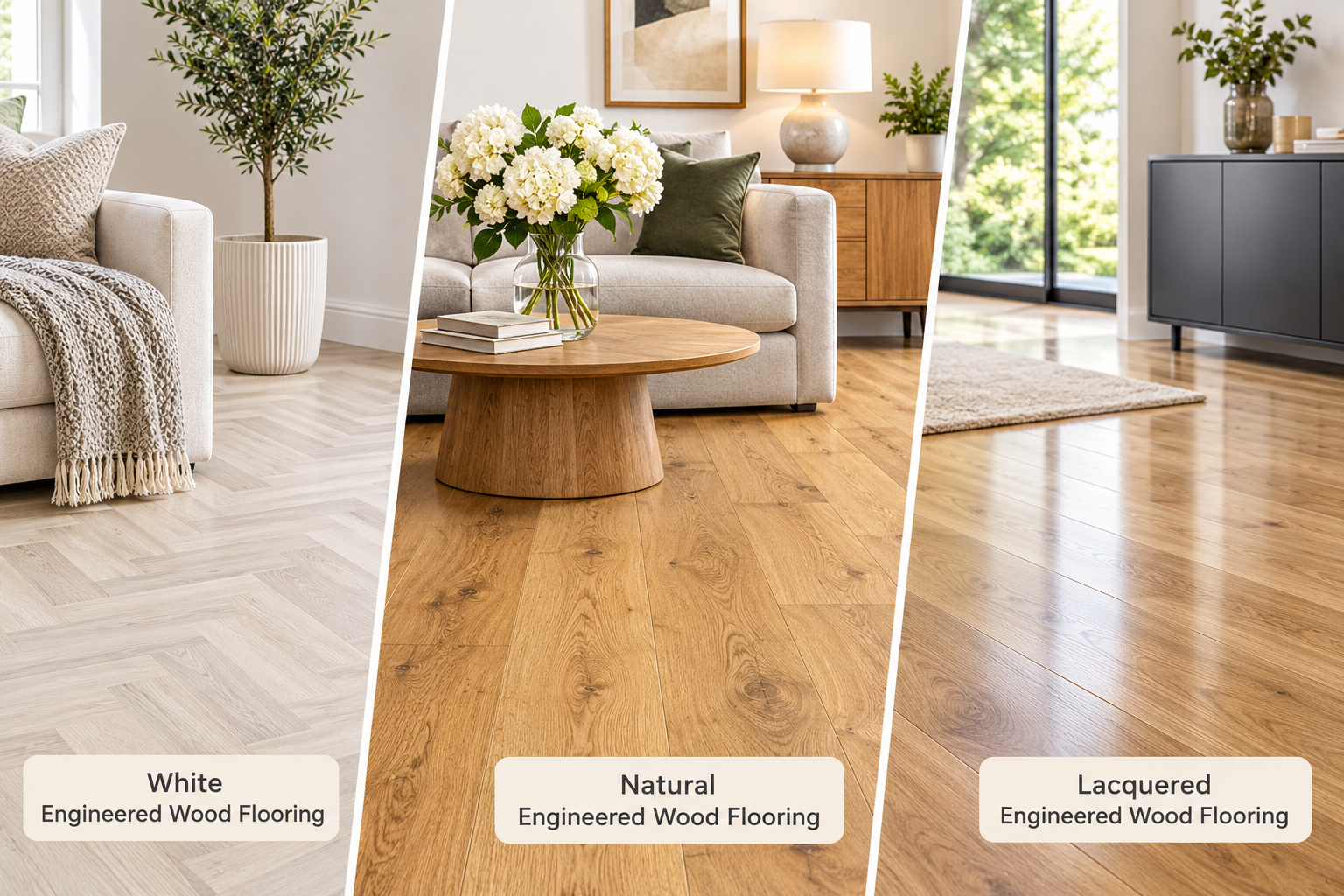
White Engineered Flooring: A Modern Choice for Brighter Interiors
These days, a lot of UK interiors lean towards light, airy, and not cluttered spaces. For homeowners who want a modern look but still keep the genuine warmth you’d expect from wood, white engineered flooring is a really solid pick.
The pale surface helps bounce daylight around, so smaller rooms feel a bit roomier and more friendly too. It also fits nicely with Scandinavian, minimalist, and contemporary styles – the clean-lines vibe.
White flooring can also match a lot of different interior bits, like
- White or neutral coloured walls
- Light oak furniture and natural timber accessories
- Grey, beige and cream upholstery
- Modern kitchens with simple cabinet work
- Minimalist decorative touches
One more good point is how flexible it is. White and pale timber finishes can look great in bedrooms, living rooms, dining areas, and those open-plan layouts that seem to be everywhere now.
That said, homeowners should think about how the finish reads in real-life lighting. Some whites lean cool underneath; others come with warmer tones that feel softer. It’s a good idea to order samples before you commit to anything, because it’s never quite the same once you put it in your own rooms.
Natural Engineered Wood Flooring: Timeless Appeal for Every Home
Natural wood flooring is still a favourite because it brings warmth, character, and a visual look that lasts. You get those authentic grain patterns, gentle colour shifts, and an organic texture that just feels inviting.
Also, compared with heavily processed options, natural finishes let the timber do the talking. So the wood stays the main feature rather than an artificial effect. From Victorian terraces and period houses to modern apartments and countryside properties, engineered wood flooring in the UK works in both traditional and contemporary homes.
Natural engineered wood flooring comes in different timber species, varying shades, and plenty of plank sizes. Oak is especially popular because it shows that distinctive grain, and it suits loads of styles.
You can pair it with traditional furniture, modern interiors, exposed brickwork, and even neutral decorating themes. And if later on you decide to swap furniture or change wall colours, the natural finish usually stays a good match, which is handy.
If you want an interior that doesn’t depend on every little trend changing, natural wood flooring is a practical option, and it still looks good over time.
Lacquered Engineered Flooring: Protection with a Refined Finish
Your floors still need to look great, but also deal with the daily chaos of a home, like shoes, kids, pets, and that random snack moment. When you go for lacquered engineered flooring, it can be a pretty practical option, not just a pretty surface thing.
A lacquered finish usually means a protective coating gets applied onto the wood surface. So it forms this shield and helps guard against everyday grime, small spills, and the usual surface wear that builds up over time. And, depending on what you choose, lacquered finishes can look anywhere from matt to satin, even gloss.
One big benefit of lacquered engineered flooring is that it can feel easier for routine maintenance. You sweep or vacuum regularly, ideally with a hard-floor attachment, and then you clean using a wood floor cleaner the manufacturer actually approves. That simple routine helps keep the appearance more consistent.
Lacquered flooring is especially a fit for:
- Busy living rooms and family spaces, where movement happens a lot.
- Dining areas, because foot traffic is constant.
- Hallways and entry spots, where dirt gets tracked in.
- Homes that want a tidy, refined final look.
Also, choosing the lacquer level is worth thinking about. Matt finishes look calmer and less noticeable, while satin and gloss finishes bring more surface shine and slightly more visual depth.
What Makes Engineered Wood Flooring Suitable for UK Homes?
In the UK, the seasons shift, temperatures change, and humidity can swing. Because of that, floor stability matters a fair bit. Traditional solid wood can expand or contract as the environment shifts.
The homeowners in the UK often consider engineered wood flooring, which is built in layers and helps with that whole stability issue. Typically, it has a real wood top layer bonded to several supporting layers, usually laid in different grain directions, so the board behaves more sensibly overall.
This layered setup generally helps it stay more dimensionally stable than solid timber, so it can work well in many indoor spaces.
Other key advantages of engineered wood flooring in the UK include:
- A genuine timber look: the surface layer is real wood, with natural grain patterns and texture.
- Design flexibility: you can select different wood species, colours, finishes, and even plank sizes.
- Versatile installation options: depending on the product, you might install it floating, glued down, or with suitable mechanical fixing.
- Compatibility with underfloor heating: many engineered wood products work with underfloor heating when you follow the manufacturer’s installation guidelines.
Before buying, check the recommended room conditions and the installation instructions carefully, and whether underfloor heating is supported for that specific product.
White, Natural or Lacquered: Which Finish Should You Choose?
Every flooring finish seems small, but it actually does a lot. They each bring their own benefits. What’s right for you depends on what your interior style is doing, how much upkeep you can handle, and even the everyday needs of your home.
| Flooring finish | Main advantage | Best suited for |
| White engineered flooring | Gives a brighter, more open look | Modern, minimalist interiors |
| Natural wood flooring | Brings warmth and a classic, lasting character | Both traditional and contemporary homes |
| Lacquered engineered flooring | Adds a protective surface coating, a shield | Busy household spaces |
Also, it helps to know these things are not always fully separate. In fact, white and natural engineered wood flooring can come with lacquered finishes too.
For instance, someone might go for whitewashed oak with a matt lacquer or choose natural oak but use a satin lacquer. That way there’s more flexibility; you’re not locked into just one look for one room.
Conclusion:
White natural and lacquered engineered wood flooring each come with their own little benefits for UK homeowners. Usually, white engineered flooring finishes help brighten up interiors. Natural timber brings that timeless warmth, while lacquered surfaces add one more layer of defence for day-to-day living.
The best choice will really depend on your property’s style, the way your household runs, and how much maintenance you want to handle. If you compare the construction quality, the surface treatment, and the installation requirements, you can land on flooring that balances looks, practicality, and long-term value.
Whether you’re refurbishing a traditional home or updating a more modern apartment, the right engineered wood flooring can genuinely change the feel of your rooms. It also gives you a solid base that will look appealing for years ahead.