



When an industrial filtration system begins losing performance, the effects rarely remain limited to the filter itself. Dust may escape into surrounding areas, airflow can become restricted, maintenance teams may need to interrupt production, and replacement parts may be required sooner than expected. For plants operating long shifts, these issues can turn routine maintenance into an expensive operational problem.
A well-selected Bag Filter helps industrial facilities manage particulate emissions while keeping filtration performance under control. However, reliable operation depends on several connected elements: filter media, airflow, cleaning mechanisms, dust discharge, operating temperature, and regular inspection. Replacing a worn component without identifying the underlying cause may solve the immediate problem but allow it to return.
GPT-INDIA works in industrial air pollution control, dust collection, and ventilation technology. Its product range includes bag filtration equipment and gas treatment solutions for industrial applications. Understanding how these systems work, how to select suitable filter bags, and when a separate gas treatment system is required can help businesses make better equipment and maintenance decisions.
How a Bag Filter Helps Maintain Industrial Production
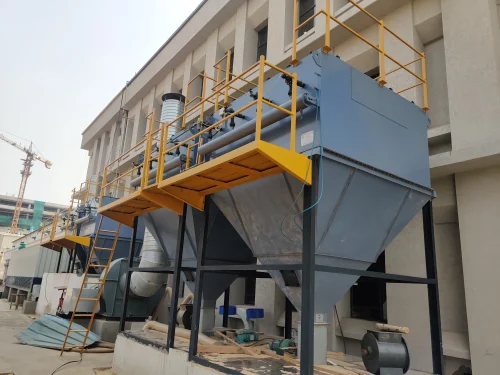
A Bag Filter, also known as a fabric filter or baghouse, removes particulate matter from a contaminated air or gas stream by passing it through suitable filter media. Particles are retained on the fabric surface while the filtered stream passes through the media.
As dust accumulates, it forms a layer that contributes to particle capture. Over time, this layer increases resistance to airflow, so the system must remove accumulated dust through an appropriate cleaning mechanism. Common cleaning arrangements include pulse-jet cleaning, reverse-air cleaning, and mechanical shaking.
The US Environmental Protection Agency explains that fabric filters can achieve high particulate collection efficiency, although actual performance depends on the filter design, operating conditions, and maintenance. Its guidance also discusses the relationship between dust accumulation, pressure drop, and filter cleaning. See the EPA overview of fabric filters.
For a production facility, the objective is not simply to capture dust once. The equipment must continue doing so throughout the operating cycle. A suitable design considers the dust load, particle characteristics, airflow requirement, temperature, humidity, and the chemical properties of the gas stream.
Why Filter-Bag Selection Deserves More Attention
Filter bags are among the most important components in a fabric filtration system because they form the surface through which the air or gas is filtered. The wrong media can create problems even when the collector housing and fan are otherwise suitable.
For example, high temperatures may damage a media type that is not designed for the application. Moisture or condensation can cause some dusts to stick to the fabric, making cleaning less effective. Abrasive particles may accelerate wear, while chemically aggressive conditions may affect the fabric or other components.
Before selecting replacement Filter Bags, manufacturers should establish what the process actually produces. The dust type, operating temperature range, moisture content, particle characteristics, cleaning method, and pressure conditions all influence media selection. Compatibility with the existing baghouse design is also important, including bag dimensions, attachment arrangements, and supporting cages where used.
Filter media should not be chosen on price alone. A lower-cost option that needs frequent replacement can increase labour requirements, maintenance interruptions, and waste. On the other hand, purchasing an expensive specialist fabric is not automatically beneficial if the operating conditions do not require it. The aim is to select media that suits the real application.
How to Evaluate Bag Filter Manufacturers
Comparing Bag Filter manufacturers starts with the process rather than the catalogue. A factory handling dry powder may have very different requirements from a facility treating hot process gas or material with moisture-sensitive characteristics.
An equipment supplier should understand the required airflow, expected dust loading, temperature range, available installation space, and operating schedule. For a system connected to multiple production points, the design should also account for how airflow demand changes when machines start, stop, or operate together.
The cleaning mechanism deserves particular attention. In a pulse-jet system, compressed-air pulses dislodge dust from the filter bags. The sequence controller, pulse valves, air supply, and filter media must work together as intended. If cleaning is ineffective, pressure drop may rise and airflow may deteriorate. Excessive or poorly adjusted cleaning can also contribute to premature wear.
Ask manufacturers how the proposed design addresses inspection access, dust discharge, replacement requirements, and routine performance monitoring. A good technical discussion should cover the entire filtration arrangement rather than focusing only on the collector’s dimensions or motor rating.
For new installations, it is sensible to confirm commissioning support, documentation, spare-part availability, and maintenance recommendations before finalising the purchase. These factors influence the practical ownership experience after the equipment enters service.
What to Check When Comparing Bag Filter Suppliers
When evaluating Bag Filter suppliers, share accurate information about the application and request a solution that reflects the actual operating conditions. General descriptions such as “high dust load” or “high temperature” are not always sufficient for selecting the equipment. More specific process information helps the supplier assess the design.
Ask how the proposed system will manage dust accumulation and maintain suitable airflow. Pressure-drop monitoring can help operators understand how resistance changes during operation and whether cleaning is performing as expected. Sudden or unusual changes may indicate a cleaning issue, damaged media, a leak, or a change in process conditions.
It is also worth checking how dust will be removed from the hopper and transferred to the next stage of handling. A well-designed filter can still experience operational problems if collected material builds up or discharge equipment does not operate correctly.
A supplier should also explain which maintenance tasks are expected, which components require periodic inspection, and what operating information should be recorded. These details help a factory plan maintenance rather than waiting until performance has noticeably deteriorated.
When Should Filter Bags Be Inspected or Replaced?
Filter bags do not have one universal replacement interval. Their service life depends on the media, the dust being collected, the operating temperature, moisture, cleaning conditions, mechanical wear, and how the system is maintained.
Signs that require investigation may include visible dust escaping from the outlet, unexpected pressure-drop changes, a decline in extraction performance, damaged bags, or dust appearing on the clean side of the filter system. These symptoms should be examined to identify the cause instead of automatically replacing every bag.
Inspection should include the filter media and its attachment points, supporting cages where applicable, seals, cleaning components, and relevant ductwork. A damaged seal or cleaning fault can affect performance even if the fabric itself appears to be in acceptable condition.
Maintenance records are particularly useful in facilities where production runs continuously or operates across multiple shifts. Recording pressure drop, temperature, cleaning-system behaviour, bag replacement dates, and recurring faults can help reveal patterns. If replacement bags repeatedly fail early, investigate whether the cause is abrasion, chemical incompatibility, condensation, incorrect installation, or unsuitable operating conditions.
The US EPA’s fabric-filter operation and maintenance guidance emphasises routine inspections and tracking operating conditions to identify potential problems early. The maintenance plan should always be adapted to the specific equipment and the manufacturer’s instructions.
Dust Collector Manufacturers: Looking Beyond the Main Unit
A collector does not operate independently. Its performance depends on the fan, ductwork, hoods or inlets, filter media, cleaning arrangement, and dust discharge components working as a coordinated system.
When comparing Dust Collector manufacturers, consider whether the proposed equipment matches the airflow and resistance of the complete installation. A fan that is unsuitable for the system can result in insufficient extraction or unnecessary energy consumption. Poor duct design may allow dust to settle before it reaches the collector, while air leakage can affect performance and control.
The dust characteristics also matter. Some processes generate fine particles, others produce abrasive material, and some involve sticky or moisture-sensitive dust. The collector and media must be suitable for the specific material rather than selected solely by industry category.
Safety should form part of the design discussion. Certain combustible dusts can create fire or explosion hazards under specific conditions. Facilities should assess the material and installation and determine the appropriate prevention, isolation, and protection measures with competent specialists. The required measures depend on the application and applicable regulations.
Choosing Dust Collector Suppliers for Long-Term Support
Reliable Dust Collector suppliers should be able to discuss installation requirements and ongoing service, not only the initial equipment quotation. For a plant manager, it is important to understand how quickly routine maintenance can be performed, how replacement components are identified, and what support is available if the system’s performance changes.
Check whether technical documentation explains normal operating parameters, inspection requirements, cleaning-system settings, and recommended maintenance procedures. The site team should know what readings to record and when a change warrants further investigation.
For an existing installation, share the available equipment details and describe the current problem before seeking a replacement. If the issue is repeated filter failure or poor airflow, replacing the complete collector may not be necessary. A technical assessment can help determine whether the underlying cause is media selection, airflow balance, cleaning, dust discharge, or a different process condition.
For a new project, provide the supplier with a realistic description of current production and anticipated expansion. Planning for future operating needs can reduce the risk of selecting equipment that becomes unsuitable as production grows.
How a Biogas Scrubber Differs from a Bag Filter
Bag filtration and biogas treatment address different contamination challenges. A Bag Filter primarily captures particulate matter, while a Biogas Scrubber is selected for a gas-treatment objective. The two should not be treated as interchangeable technologies.
Biogas can contain methane and carbon dioxide along with impurities such as hydrogen sulphide, water vapour, and other compounds depending on the feedstock and process. The required treatment depends on the intended use of the gas, the inlet composition, downstream equipment requirements, and applicable safety and quality specifications.
A suitable gas-treatment system may be required to reduce particular contaminants before the gas is used in energy generation or other processes. The treatment method must be chosen according to the contaminants present and the required outlet quality. Materials of construction, corrosion resistance, monitoring, and maintenance are important considerations because gas composition and operating conditions can vary.
A Biogas Scrubber does not replace a particulate filter where dust removal is needed, and a baghouse should not be assumed to remove gaseous contaminants simply because it filters the gas stream. In facilities that require both particulate control and gas treatment, each stage should be designed for its specific duty, with attention to process compatibility and safe operation.
Selecting Biogas Scrubber Manufacturers for the Right Application
When comparing Biogas Scrubber manufacturers, begin with a reliable analysis of the gas composition and the treatment objective. The required performance may differ depending on whether the treated gas will be used in an engine, boiler, upgrading process, or another application.
Manufacturers need to understand the inlet flow rate, expected contaminant concentrations, operating pressure and temperature, moisture conditions, and required outlet quality. They should also explain how the proposed system will be monitored and maintained, including how spent treatment media or by-products will be handled where applicable.
Corrosion protection deserves particular attention in gas systems that contain corrosive compounds or moisture. Materials, seals, instrumentation, and access for inspection should be suitable for the actual service conditions. The design should also account for safe handling of the gas and any hazardous constituents.
A suitable solution is one that meets the process requirement and can be operated reliably over time. Comparing only equipment size or initial price may overlook important differences in treatment capability, operating costs, maintenance needs, and safety provisions.
GPT-INDIA’s Approach to Industrial Air Pollution Control
GPT-INDIA, also known as Green Planet Technologies, works in industrial air pollution control, dust collection, ventilation, and exhaust technology. Its product portfolio includes Bag Filters, Filter Bags, dust collection equipment, scrubbers, and other industrial air treatment solutions.
For a filtration project, businesses should explain the process, material being handled, required airflow, operating temperature, available space, and maintenance expectations. These details help establish whether the requirement involves a new baghouse, replacement filter media, an upgrade to an existing installation, or a separate gas-treatment stage.
The most effective equipment choice comes from matching the system to the actual operating conditions. A clear technical assessment can help manufacturers compare suitable options, plan maintenance access, and reduce avoidable disruptions caused by filtration problems.
GPT-INDIA NAP Details
Green Planet Technologies (GPT-INDIA)
Office Address: 59/2/1, Site 4, Industrial Area, Sahibabad, Distt. Ghaziabad–201010, Uttar Pradesh, India
Phone: +91-9773500660
Email: info@gpt-india.com
For product information, visit the official GPT-INDIA website and discuss your industrial dust collection or gas-treatment requirements with the company.
Frequently Asked Questions
What is a Bag Filter used for?
A Bag Filter removes particulate matter from industrial air or gas streams using suitable fabric media. It is commonly used in manufacturing and processing environments where dust emissions need to be controlled.
How do I choose the right Filter Bags?
Consider the dust type, temperature, humidity, chemical exposure, particle characteristics, cleaning mechanism, and compatibility with the existing collector. Correct dimensions and attachment arrangements are also essential.
How can I tell when filter bags need replacement?
Visible dust leakage, damaged fabric, unusual pressure-drop changes, or declining extraction performance can indicate a problem. Inspect the system to identify the cause before deciding whether the bags need repair or replacement.
What should I compare when selecting Bag Filter suppliers?
Review technical suitability, airflow requirements, filtration media, cleaning arrangement, maintenance access, dust discharge, documentation, spare parts, and after-sales support. The equipment should be selected for the process rather than price alone.
Is a Biogas Scrubber the same as a Bag Filter?
No. A Bag Filter is designed primarily for particulate removal, while a Biogas Scrubber is selected to treat specified gas contaminants. Some facilities may require both technologies for separate treatment stages.
What information is needed to select a Biogas Scrubber?
The selection process should consider gas composition, flow rate, contaminant concentrations, operating conditions, required outlet quality, materials compatibility, and the intended use of the treated gas.
Conclusion
Reliable industrial filtration depends on the right equipment, suitable filter media, controlled airflow, and consistent maintenance. A Bag Filter can support particulate control, while well-matched Filter Bags help maintain filtration performance under the conditions for which they are designed. Supplier evaluation should therefore include the full operating system, not simply the initial equipment cost.
For facilities with biogas treatment requirements, a Biogas Scrubber addresses a different objective and must be selected according to gas composition and the required treatment result. By defining these needs clearly, manufacturers can make more informed decisions about filtration, maintenance, and industrial air pollution control. GPT-INDIA offers a starting point for discussing these requirements and evaluating suitable industrial solutions.