







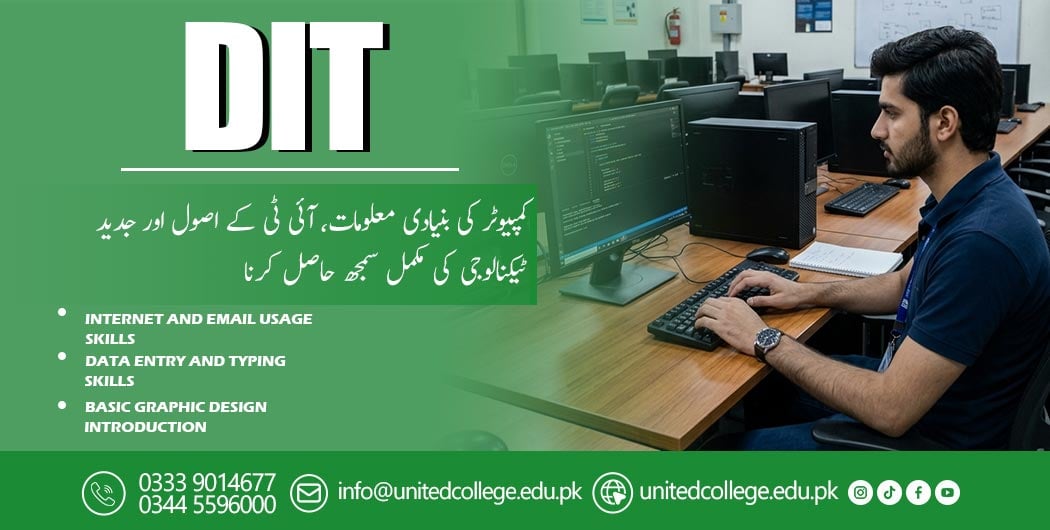
Build Practical Skills That Employers Can Use
Finding a suitable job in Pakistan can be challenging, especially for students and fresh graduates who have limited work experience. Many employers expect candidates to understand basic computer operations, prepare documents, manage records, and communicate through email. These tasks may seem simple, but they are important in offices, schools, hospitals, shops, and many other workplaces.
This is where DIT skills can make a difference. A Diploma in Information Technology helps learners develop useful computer knowledge and understand how digital tools are used in everyday work. For someone planning a career in an office or the IT field, these skills can provide a practical starting point.
The value of training depends on how well students apply what they learn. A certificate may support a job application, but practical ability, communication, experience, and a willingness to keep learning are equally important.
How DIT Skills Can Support Career Growth in Pakistan
Computer knowledge is useful across many industries. An office assistant may need to prepare letters, a shop employee may maintain sales records, and a school administrator may organize student information. In each case, computer skills can make daily tasks easier and more accurate.
A DIT qualification introduces students to common workplace tools and basic information technology concepts. It can help them prepare for entry-level roles while giving them a foundation for more specialized training.
For example, a student who learns Microsoft Excel can practise creating attendance sheets, recording expenses, and preparing simple reports. These tasks provide useful experience that can be demonstrated during a job interview.
However, completing a diploma does not guarantee employment or a particular salary. Students improve their prospects by combining their training with regular practice, a clear CV, and experience that matches the jobs they want.
Learn Computer Skills That Make Daily Work Easier
Develop Confidence With MS Office
Microsoft Office applications are commonly used for administrative and business tasks. During computer training, students can learn how to create documents in Word, organize information in Excel, and prepare presentations in PowerPoint.
These abilities can be useful for office assistants, data entry operators, school staff, receptionists, and administrative workers. A student who can prepare a clean report or organize a spreadsheet may be better prepared for the practical tasks expected in these roles.
Rather than memorizing menus and commands, learners should practise realistic activities. They can create a monthly expense sheet, format a business letter, or prepare a presentation about a familiar topic. Each task builds confidence and provides something practical to show a potential employer.
Improve Internet and Email Skills
Professional computer use involves more than opening applications. Employees often need to search for information, send attachments, manage email, and communicate clearly with colleagues or customers.
Students should learn to write suitable email subject lines, attach the correct files, recognize suspicious messages, and keep important documents organized. These habits help prevent mistakes and support professional communication.
Moreover, safe internet use is an important part of digital literacy. Learning to use strong passwords, protect personal information, and check the reliability of online information can help students work more responsibly.
Explore Job Roles That Match Your Skills
A DIT course can help learners prepare for different entry-level roles, depending on their abilities and the requirements of an employer.
Computer operator: This role may involve using office software, entering information, printing documents, and maintaining digital records.
Data entry operator: Data entry work requires careful typing, attention to detail, and the ability to check information for errors. Excel and other data-handling skills can be useful.
Office assistant: Office assistants may prepare letters, organize files, manage schedules, and support other administrative tasks.
Junior IT support assistant: People interested in technical work can build on their computer fundamentals and learn how to identify common software, hardware, and connectivity problems. Some employers may require additional training or experience.
Virtual assistant: Remote administrative work may include managing documents, updating spreadsheets, organizing information, and communicating with clients. Students need reliable internet access, professional communication, and the ability to complete tasks on time.
These are possible directions rather than guaranteed outcomes. Before applying, check each job advertisement carefully to understand the education, experience, and technical skills required.
Why Practical Training Matters More Than Memorizing Theory
Understanding a computer topic is useful, but being able to perform the task independently is even more valuable. Practical training allows students to apply classroom knowledge to common workplace situations.
For instance, a learner may understand what a spreadsheet does but struggle to use formulas. Regular practice can help them create totals, sort records, format cells, and check calculations. Similarly, practising document formatting can teach students to produce professional-looking reports without relying on someone else.
At United College of Technology (UCT), the DIT Course in Islamabad is presented as a program that combines computer subjects with practical exercises and assignments. Its listed subjects include computer fundamentals, MS Office, internet and web basics, and networking fundamentals.
Students considering the course should ask about current lab arrangements, practical assessment methods, class schedules, and the topics included in their selected batch. These details help them understand how the training will prepare them for their goals.
Choose the Right DIT Course in Islamabad
Choosing a training institute is an important step, particularly for students who are new to computers. Before enrolling, compare the course content, teaching approach, duration, fee, class timings, and certificate details.
The DIT Course in Islamabad at United College of Technology lists a six-month program summary with morning and evening options and a displayed fee of PKR 45,000. Course details can change, so confirm the current duration, total fee, available batches, and any additional charges directly with the institute before making a decision.
You can review the program information on the official DIT Course in Islamabad page.
Ask About the Certificate and Admission Process
Before joining, ask what certificate is awarded after successful completion and what requirements students must meet to receive it. If you need the qualification for a particular job or further study, check whether the relevant employer or institution accepts that certificate.
For admission, contact UCT to confirm the current entry requirements and required documents. Ask the admissions team for the application form, fee information, class schedule, and any identification or educational documents needed. Following the institute’s current instructions will help you complete registration correctly.
It is also sensible to ask whether students complete practical assignments or assessments. These activities can help you measure your progress and identify areas that need more practice.
Turn Your DIT Knowledge Into Experience
A common challenge for fresh graduates is explaining what they can actually do. You can address this by building a small portfolio of practice work during your training.
For example, create a formatted report in Word, a monthly budget spreadsheet in Excel, and a short presentation in PowerPoint. Organize these files in clearly named folders and check them for mistakes. If you are applying for an administrative role, these examples can help demonstrate your skills during an interview.
You can also look for appropriate internships, supervised work experience, or entry-level positions where you can use your computer knowledge. Keep a record of the tasks you complete and the software you use. As your experience grows, update your CV to reflect your real abilities.
In addition, develop communication, teamwork, punctuality, and problem-solving skills. Employers often need people who can follow instructions, ask sensible questions, protect workplace information, and finish tasks accurately.
Plan Your Next Step After Completing DIT
A diploma can provide a foundation, but technology changes and different jobs require different levels of knowledge. Once you understand your interests, consider learning a more specialized skill.
If you enjoy solving computer problems, explore further training in hardware maintenance or networking. If you prefer creative work, investigate graphic design or web design. If you like organizing information, build stronger spreadsheet and data-handling skills.
You do not need to study every IT subject at once. Choose one area, practise regularly, and set a realistic learning goal. For example, you might spend several weeks improving Excel skills before moving on to a new application.
The DIT Course in Islamabad can be a starting point for this process, but long-term progress depends on how you use the knowledge and what you learn next. Comparing job advertisements can also help you identify the skills employers request most often in your preferred field.
Before the FAQs, remember that technical careers do not all follow the same path. Some learners may benefit from additional IT training, while others may use their computer skills in administration, education, retail, or customer service. Choose further learning based on your interests and the requirements of your intended role.
Frequently Asked Questions
1. How can DIT skills help me get a job in Pakistan?
DIT skills can help you prepare for entry-level roles that involve computer use, document preparation, data entry, office administration, or basic IT support. Your chances depend on the employer’s requirements, your practical ability, communication skills, and experience. A diploma alone does not guarantee a job.
2. What subjects are usually taught in a DIT course?
Subjects can vary by institute, but common topics include computer fundamentals, MS Office applications, internet use, email, and networking basics. Some programs may include additional subjects or projects. Ask the institute for the current syllabus before enrolling.
3. What is the duration of the DIT Course in Islamabad at UCT?
UCT’s current course page displays a six-month program summary, while other course information may describe a different schedule. Confirm the exact duration and batch details with the admissions team before registering.
4. Does United College of Technology provide a certificate after DIT training?
UCT lists a certificate as part of its program information. Ask the institute to confirm the exact certificate awarded, the assessment or attendance requirements, and any applicable recognition details before admission.
5. Can I start freelancing after completing a DIT course?
You can explore suitable freelance tasks such as document formatting, spreadsheet preparation, presentation creation, and virtual assistance if you have the required skills. Start by practising, preparing work samples, and learning professional client communication. Freelance work is competitive, so finding clients or earning money is not guaranteed.
6. What should I learn after completing a DIT diploma?
Choose your next skill according to your interests and career goals. Networking, web development, graphic design, advanced Excel, and computer troubleshooting are possible areas to explore. Check the requirements for your preferred jobs and select training that fills your skill gaps.
Make Your Computer Skills the Start of Something Bigger
Career growth often begins with small, practical improvements. Learning to prepare accurate documents, manage spreadsheets, communicate through email, and solve basic computer problems can help you become more confident at work.
For students and job seekers in Pakistan, a DIT qualification can provide a useful starting point. Explore the course carefully, practise what you learn, and build examples that demonstrate your abilities. Most importantly, keep developing your skills after the course ends.
With a clear goal, consistent practice, and a willingness to learn, you can use your IT knowledge to explore suitable jobs and prepare for future opportunities. Your progress will depend not only on the qualification you earn, but also on the practical skills and experience you build along the way.