




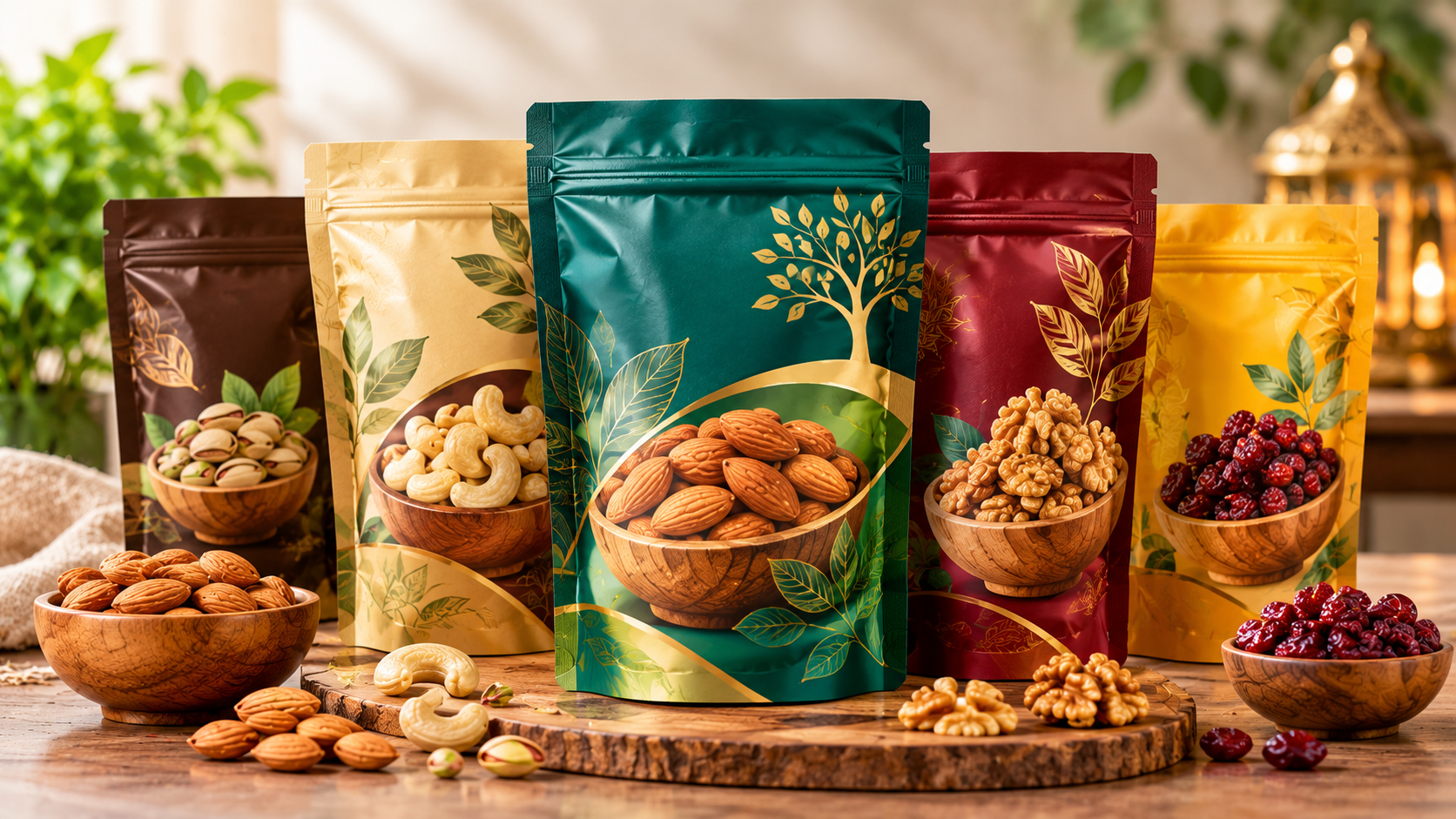
Walk through any grocery store and the dry fruit aisle looks like a wall of similar colours: browns, golds, and the occasional splash of green. Almonds are almonds, and shoppers cannot taste them through a package. So they judge by what they can see, which means design does a surprising amount of the selling. For brands that want to be remembered, thoughtful packaging is not decoration. It is a strategy.
The Shelf Is a Crowded Place
A customer glances at a shelf for a second or two before reaching for something. At that moment, your pack competes with dozens of others for attention. Clear colours, readable names, and a distinct look help a brand stand out without shouting. Products that look organised and confident also seem fresher and more trustworthy, even before a package is opened.
Where Pouch Choice Begins
Strong design starts with the right container. Well-chosen dry fruit packaging pouches combine a sturdy base so the pack stands upright, a zipper for repeated use, and barrier layers that guard against moisture and air. Stand-up formats suit almonds, cashews, and raisins because they display the front panel clearly, while flat or gusseted bags suit larger or economy packs. Decide the format first, since it determines how much space your design has.
Colour and Imagery That Signal Quality
Colour tells a story before any word is read. Deep greens and browns feel natural and earthy, gold and cream suggest richness, and bright accents can mark flavours or varieties. Photographs of the actual product look appetising when lit well, while simple illustrations can add personality. Avoid cluttering the front, because a few strong elements are easier to remember than many competing ones.
Telling the Product Story
Shoppers read packs in a glance, not in paragraphs. Good nut packaging design answers three questions quickly: what is this, why is it good, and how do I use it? Give the product name and variety the most space, add one short line about quality or origin, and place weight and key details where eyes naturally fall. Use the back for ingredients, storage tips, and nutrition information in a clean layout.
Windows That Build Trust
People like to see what they are buying. A clear window, even a small one, lets customers check size, colour, and freshness without opening the pack. It works especially well for products with attractive appearance, such as pistachios or mixed fruit. Keep the window sized so it supports the design instead of overpowering it, and make sure the visible product is neatly filled.
Protection That Backs Up the Promise
Beautiful packaging loses its power if the contents go stale. Dry fruits attract moisture from the air, which can soften nuts and change texture, and light and oxygen can affect taste over time. Multi-layer films that block these elements help products stay as intended, and sturdy seams prevent tears in transit. Describe your product and storage conditions to your supplier so the film structure is chosen with care.
Convenience Customers Notice
Convenience wins repeat purchases. Dry fruit zipper pouches let customers take a handful and close the pack again, which keeps contents fresh and avoids spills in kitchens and bags. A tear notch for easy opening and a flat base that stands on a counter add small comforts. Customers who enjoy using the pack are more likely to buy it again.
Gifting and Seasonal Packs
Dry fruits are popular gifts during festivals and family occasions, and packaging becomes part of the present. Special designs in richer colours, metallic touches, or themed artwork make a pack feel celebratory. Mixed assortments in matching pouches look generous on a table. Seasonal editions also give regular customers something new to talk about.
Consistency Across Your Range
A range of nuts, dried fruits, and mixes should look like one family. Consistent branded food packaging uses the same logo placement, typography, and colour logic, with a simple system to tell varieties apart, such as colour bands or icons. Shoppers who like one pack then recognise the next instantly, which makes it easier to expand the line later.
Making Production Match the Design
Design only succeeds if production delivers it faithfully. A maker of premium packaging pouches should help with artwork preparation, explain finishes such as matte or gloss, and provide proofs and samples before the full run. Ask about colour consistency across repeat orders, closure options, and how seals are tested. Clear communication at this stage prevents disappointment when the first delivery arrives.
Testing Before Launch
Before printing thousands of packs, test samples with real products. Fill, seal, and store a few for several weeks, check zippers after repeated opening, and see how the design looks under shop lighting. Show prototypes to friends or customers and listen to first impressions. Small changes now are cheap, while changes after printing are not.
Final Thoughts
Packaging for dry fruits works best when beauty, protection, and convenience move together. A clear design, a suitable pouch, and reliable production help a product look as good as it tastes. Brands that treat the pack as part of the product quietly earn attention, and with it a stronger place in the market.