



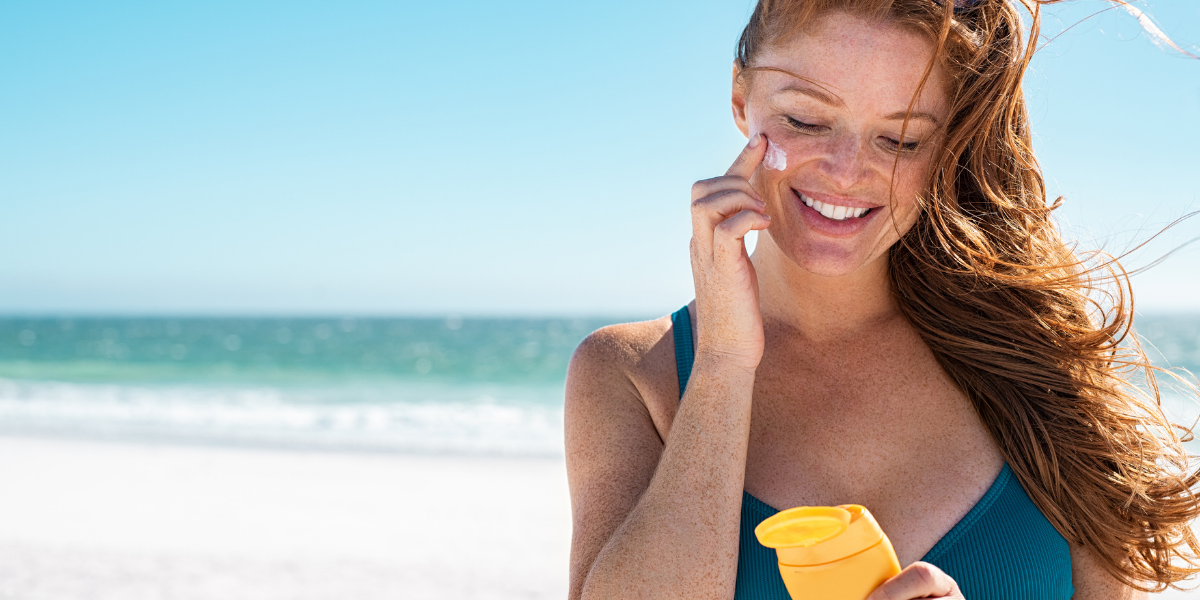
Because of its weather, Pakistan needs to make sure its people protect themselves from the sun every day. Your skin can be exposed to ultraviolet (UV) rays when you are driving to work, going to school, shopping outside, or just relaxing in the sun. A lot of people choose sunblock based on one number on the package: SPF. An SPF 50 product may look safer than an SPF 30 product, but does that number really tell you everything you need to know?
Understanding SPF and What It Actually Protects Against
What Does SPF Mean?
Sun Protection Factor is what SPF stands for. In controlled testing settings, it checks how well a sunscreen keeps your skin from getting sunburnt by ultraviolet B (UVB) rays. For instance, SPF 30 is supposed to protect against UVB rays better than SPF 15 when both are tested and used correctly.
However, not all sunscreens are effective at blocking all dangerous rays. How well they protect you depends a lot on how much you use and how often you reapply it.
The Difference Between UVA and UVB Rays
UVA and UVB rays have different effects on your skin because they are made up of different types of ultraviolet energy. UVB rays are mostly what cause sunburn, while UVA rays speed up the ageing process and cause wrinkles and age spots. Because both types can hurt skin, only protecting against one type is not enough for full sun protection. UVA rays can also get through regular window glass, which means they are important for people who spend time near windows or drive during the day.
UVA and UVB rays are like two different threats to your skin. One can make your skin turn red and burn, while the other can cause damage that you might not notice right away. Even if you don’t get a sunburn every time you go outside, that doesn’t mean your skin hasn’t been exposed to UV light. If you choose a broad-spectrum sunscreen, it will protect you from both types of UV light. If you spend a lot of time outside, like when you commute, shop, go to college, or work near sunny windows, make sure the product protects against a wide range of UV rays.
Why SPF Alone Is Not Enough
Why broad-spectrum protection is important
One of the most important things to look for in a sunscreen is broad-spectrum protection. In this case, it means that the product is made to protect against both UVA and UVB radiation, not just UVB sunburn. To find out how well a product protects against all types of UV damage, you can’t just look at its SPF number. Because of this, dermatologists say to choose sunscreen with broad-spectrum protection and an SPF of 30 or higher.
This is especially important if you are worried about dark spots, uneven skin tone, or getting old too quickly. There are many things besides sun exposure that can cause or make colour worse, including hormones, inflammation, genes, and more. If pigmentation is your main concern, a tinted broad-spectrum sunscreen with iron oxides may give you extra protection against visible light, which can make your skin darker.
But not everyone needs a tinted formula, and sunscreen can’t get rid of all causes of dark spots on its own. When looking for the best sunblock in Pakistan, you should think about both your main skin care concern and the product’s proven sun protection features.
Why Water Resistance Matters
Because it’s warm in Pakistan, people often sweat, especially when they’re travelling outside, walking between appointments, or working out. If you sweat a lot, sunscreen might not stay on your skin as well, so another thing you should look for is water resistance. It is tested to see if it keeps providing the protection it claims to for 40 or 80 minutes while swimming or sweating, depending on what it says on the package. However, this does not mean that the product works all day and that you do not need to reapply it.
If you work out, do work outside, or do other things that make you sweat a lot, you should choose a formula that doesn’t get wet. A comfortable daily sunscreen may be enough for someone who spends most of the day inside and doesn’t get wet or sweat much, as long as it meets all the other standards for protection. Keep in mind that no sunscreen is completely waterproof or resistant to sweat. Even recipes that say they won’t get wet need to be reapplied as directed and after swimming, heavy sweating, or drying off with a towel. The goal is to keep the protective layer even, not to think that applying it in the morning will make it last until the evening.
Tips on How to Pick the Best Sunblock in Pakistan
Should I get SPF 30 or SPF 50?
People often wonder if SPF 30 is enough or if SPF 50 is a better choice when they are shopping for sun protection. Both can work as long as they offer broad-spectrum protection and are used the right way. About 97% of UVB rays are blocked by SPF 30, and about 98% are blocked by SPF 50 under normal testing settings. In terms of percentages, the difference isn’t very big, but when used correctly, a higher SPF can give you an extra layer of protection. You can’t stay in direct sunlight forever with either rating.
What you do every day can help you make a choice. For everyday use, SPF 30 or higher is a good starting point. If you plan to be outside for a long time, SPF 50 might be a better choice. Water resistance and reapplication are also important for people who move a lot, work outside, or play sports outside. If you have a history of pigmentation or are following a dermatologist’s treatment plan, find out if a certain sunscreen is right for you. Don’t just pick a product based on the highest SPF it says it has. Read the whole label and pick a recipe that you can use every day.
| Feature | SPF 30 | SPF 50 |
| Approximate UVB filtration | 97% | 98% |
| Broad-spectrum protection | Check the label | Check the label |
| Suitable for everyday use | Yes, when properly applied | Yes, when properly applied |
| Reapplication needed | Yes | Yes |
| Water resistance | Must be checked separately | Must be checked separately |
The figures above describe approximate UVB filtration under standard testing conditions. They do not mean that SPF 50 lasts longer than SPF 30 or that either product completely blocks ultraviolet radiation.
Considering Your Skin Type
It matters what kind of skin you have because even a good sunscreen won’t help if it makes your skin feel bad and you don’t put it on. If you have oily skin, you might like lotions, gels, or fluid products that are light and don’t feel heavy or greasy. If your skin pores get clogged easily, look for products that say they are “non-comedogenic.” This means they are made so that they don’t clog pores as easily. However, everyone reacts differently, so a label by itself can’t promise that a product will never cause acne.
People with dry skin might feel better with a sunscreen that is a cream and has some moisturising properties. If you have sensitive skin, a formula with no scent might be a good place to start. Mineral sunscreens with zinc oxide or titanium dioxide are also good choices. Mineral sunscreens are a good choice for many people with sensitive skin.
If you have combination skin, you might like a light formula that doesn’t make dry spots feel tight and feels good on oily spots. If you don’t know what type of skin you have, add new items slowly and see a doctor if the irritation doesn’t go away.
It’s not important to find a recipe that works for everyone. Instead, find one that protects you well and feels good against your skin. When evaluating the best sunblock in Pakistan, pay attention to texture, finish, fragrance, and how the product behaves under your usual moisturizer or makeup. A sunscreen that blends well and feels comfortable is generally easier to use consistently than one that leaves a thick residue or causes discomfort.
Looking at the labels and ingredients
The SPF number on the front of a product doesn’t tell you everything it needs to. First, make sure that the sunscreen protects against a wide range of UV rays, has an SPF of 30 or higher, and, if you need one, a water-resistance claim. Read the list of chemicals to find active UV filters and any ingredients that you know are bad for your skin. Physical sunscreens often have mineral filters like zinc oxide and titanium dioxide. Chemical sunscreens, on the other hand, use different UV filters. Both types can work well as protection as long as they are made correctly and are used as directed.
Also, look at the expiration date, the state of the packaging, and the directions for how to use it. If you can, buy from a store with a good reputation or an official brand store. Also, be wary of products with labels that aren’t clear, prices that seem too low, or claims that don’t make sense. For example, sunscreen that says it’s waterproof is making a claim that experts say people shouldn’t trust. In the same way, no sunscreen can promise that your skin will never get dark spots or be damaged by the sun. Instead of big claims about instant fairness or full security, look for clear information about the product.
Another good thing to think about is whether the sunscreen fits in with the things you already do. If you use a moisturiser, acne treatment, or colouring product, look at how the layers fit together and see if any of the ingredients irritate your skin. You don’t have to instantly buy the most expensive sunscreen. A reasonably priced product that protects you, comes from a reliable source, and works well with your skin might be a better choice than an expensive one that you don’t use very often.
Common Mistakes to Avoid with Sunblock
It’s not enough to pick a good sunscreen. Even if the product has a high SPF rating, how well it protects your skin can depend on how you use it every day. People often make the mistake of applying too little. People often only put on a small amount because they don’t want their face to look greasy, but leaving on less than the recommended amount can make it less effective. If you think the formula is too thick when you use the recommended amount, try a different texture instead of counting on a thin layer.
Another mistake people make is thinking that sunscreen will work all day after only applying it once in the morning. The protective layer can be worn down by the sun, sweat, swimming, and drying off with a towel. Dermatologists usually say that you should reapply sunscreen every two hours when you’re outside, and sooner if you swim or sweat. Just make sure to follow the directions on the bottle.
Some people also don’t put on sunscreen when it’s cloudy because they think the sun isn’t as strong. Even when it looks cloudy, UV rays can still get through, so it’s still important to protect yourself from the sun. Some people forget to cover their neck, ears, temples, and the backs of their hands, even though these parts of their body may be seen a lot. If you wear makeup, keep in mind that SPF-containing makeup might not be applied enough to give you the protection it says it does, so it shouldn’t be used instead of a sunscreen.
How to Put on Sunscreen to Get More Protection
Picking the right sunscreen is just as important as using it correctly. Begin by washing your face, and then follow your normal skin care routine. If you need to, add a moisturiser. Apply sunscreen as the final step of your skincare process before makeup, unless the product instructions advise otherwise.
Follow the directions on the product and put on a thick, even layer on your face. Cover your eyebrows, ears, hairline, neck, cheeks, forehead, and nose. Do not forget the backs of your hands if they will be visible. Applying sunscreen only to the centre of your face can leave other areas unprotected, especially when you spend time travelling or walking outside.
Another important part of your routine is reapplication. If you stay outdoors, reapply approximately every two hours and sooner after heavy sweating, swimming, or towel drying, according to the label. Whether you need to reapply or not will depend on how much time you spend outside, how much sun you get, and whether the product has been rubbed off or washed off. Always keep in mind that sunscreen should not be used instead of other safety measures.
Make a simple routine for daily sun protection.
There is no need for a lot of expensive products in a good routine. The most important thing is to pick a sunscreen that you will actually use and then protect yourself from the sun in other ways.
- In the morning, wash your face, put on moisturiser if you need it, and finish with a broad-spectrum sunscreen.
- Before going outside, put on enough sunscreen to cover all skin that will be exposed and let it dry the way the product instructions say to.
- During the day, reapply as needed, especially after working out or being outside for a long time.
- When you’re outside for a long time: Cover up with a wide-brimmed hat, protective clothing, and sunglasses that block UV rays.
Instead of just using sunscreen, the World Health Organization says to wear protective clothing and stay out of direct sunlight.
Does Sunblock Help Prevent Dark Spots and Uneven Skin Tone?
Sunlight can cause dark spots, uneven skin tone, and some pigmentation problems to get worse. Regularly using a broad-spectrum sunscreen can help lower your UV exposure and stop your skin from getting darker from the sun. However, pigmentation can also be caused by changes in hormones, acne inflammation, some medications, and other skin conditions. In other words, sunscreen is a good way to avoid getting dark spots, but it’s not a cure-all for all of them.
If you’re mostly worried about colour, you might want to try a tinted sunscreen with iron oxides. These formulas can give you extra protection against visible light, which can make melasma and hyperpigmentation worse, especially if you have darker skin.
Instead of relying on claims that a product will whiten or brighten your skin right away, when you compare products, look for the best sunblock in Pakistan that meets your protection needs. If dark spots keep getting worse even though you protect your skin from the sun every day, a dermatologist can help you figure out what’s causing them and suggest the best way to treat them. Don’t use harsh products or mix strong active ingredients that you don’t know how they will react with your skin.
How to Get the Best Sunscreen in Pakistan
There are so many kinds of sunscreen out there that it can be hard to choose just one. Instead of relying only on ads, recommendations from influential people, or SPF, it’s easiest to compare products based on a few useful factors. First, make sure that the product has at least SPF 30 and broad-spectrum protection. Next, think about what you do every day to determine if you need water resistance and whether a light, cream-based, or tinted formula would work better for your face.
Price and availability are also important for practical reasons. When you run out of sunscreen, it’s easier to replace it with a cheap one, which helps you stick to your routine. However, don’t just look at price to decide how good a product is. Before you buy, look at the label, the date it expires, the list of ingredients, and the seller’s name. If the claims about the product aren’t clear or the source doesn’t seem trustworthy, look at another choice.
The best sunblock in Pakistan for many people will be one that protects against a wide range of UV rays, feels good in warm weather, and is simple to reapply. If you have sticky skin, you might like a light finish, and if you have dry skin, you might like a moisturising cream. Water defence may be very important if you spend a lot of time outside. There isn’t just one sunscreen that works best for everyone, so think about what kind of skin you have and what you do every day.
To Read More Blogs: Click Here
Last Words
If you live in Pakistan, is SPF enough for sunblock? No, SPF is important, but it shouldn’t be the only thing you think about. Broad-spectrum protection helps protect against both UVA and UVB radiation, while UVB protection only protects against UVB sunburn. How well a sunscreen covers you depends on how well it works with your skin, how well it stays on, how well you apply it, and how often you apply it.
To find the best sunblock in Pakistan, look for one with an SPF of 30 or higher, broad-spectrum protection, and a formula that works for your skin type and way of life. If you spend a lot of time outside or sweat a lot, you might want to choose something that won’t get wet. If you are worried about pigmentation, a tinted sunscreen with iron oxides may protect you even more from visible light.