




Introduction
Industrial glycols are important chemical raw materials used in manufacturing, chemical processing, and various industrial applications. Among the most widely used types are mono ethylene glycol (MEG), diethylene glycol (DEG), and triethylene glycol (TEG). Although these products belong to the same chemical family, each has distinct properties and applications that make it suitable for specific industrial requirements.
From polyester fibre production and antifreeze formulations to resin manufacturing and natural gas dehydration, glycols support a wide range of industrial processes. Understanding the differences between MEG, DEG, and TEG helps manufacturers choose the right product for their operations. Millennium Lubricant Refinery LLC offers high-purity glycol products for diverse industrial applications, including antifreeze, resins, and chemical synthesis.
What Are Industrial Glycols?
Industrial glycols are chemical compounds containing two or more hydroxyl groups. They are used in different manufacturing processes because of their physical and chemical properties, including water affinity, solvent characteristics, and suitability as chemical intermediates.
The selection of a glycol depends on its intended application, required purity, compatibility with other materials, and technical specifications. Manufacturers should review product documentation, including the Technical Data Sheet (TDS) and Certificate of Analysis (COA), before purchasing.
The three commonly used industrial glycols—MEG, DEG, and TEG—serve different purposes across the chemical, textile, automotive, and energy industries.
1. Mono Ethylene Glycol (MEG)
Mono ethylene glycol (MEG) is a clear, colourless, and nearly odourless liquid widely used as an industrial chemical raw material. It is particularly important in polyester manufacturing, antifreeze formulations, and industrial cooling applications.
Key Applications of MEG
Polyester fibre and resin manufacturing: One of the primary applications of mono ethylene glycol is the production of polyester fibres and polyethylene terephthalate (PET). These materials are widely used in textile manufacturing, packaging films, and plastic bottles.
Antifreeze and coolant formulations: MEG is commonly used in automotive antifreeze and industrial heat-transfer fluids. It helps lower the freezing point of water-based formulations and supports heat transfer in suitable cooling systems.
Chemical manufacturing: MEG is used as a raw material in selected chemical synthesis processes. Its suitability depends on the required formulation and manufacturing specifications.
Industrial applications: MEG is also used in certain industrial cooling and processing systems where its properties meet the operational requirements.
When purchasing MEG, manufacturers should consider purity, water content, and consistency to ensure the product meets their intended application requirements. Millennium Lubricant Refinery LLC supplies high-purity MEG for diverse industrial applications, subject to product specifications.
2. Diethylene Glycol (DEG)
Diethylene glycol (DEG) is a versatile chemical intermediate used in resin manufacturing, selected solvent applications, and the production of certain plasticizers. Its hygroscopic nature allows it to absorb moisture, making it useful in applications that require specific moisture-related properties.
Key Applications of DEG
Unsaturated polyester resin production: DEG is used in certain resin formulations to help achieve desired processing and product characteristics. These resins serve applications across construction, manufacturing, and composite materials.
Solvent applications: DEG is used in selected industrial solvent systems and chemical formulations. Its suitability depends on the required solvency, compatibility, and technical specifications.
Plasticizer manufacturing: DEG can be used as a chemical intermediate in the production of certain plasticizers, which help modify the flexibility and processing properties of materials.
Chemical synthesis: DEG is used in various chemical manufacturing processes as an intermediate or formulation component, depending on the intended product.
Industrial buyers should carefully evaluate DEG specifications and ensure compatibility with the final application. DEG is toxic if swallowed and must not be used in food, pharmaceutical, or personal-care applications unless specifically approved for the intended use. Product selection and handling should follow the applicable safety requirements.
3. Triethylene Glycol (TEG)
Triethylene glycol (TEG) is an industrial glycol valued for its hygroscopic properties and ability to absorb water. It is especially important in the natural gas industry, where it is used to remove moisture from gas streams before further processing, transportation, or distribution.
Key Applications of TEG
Natural gas dehydration: One of the principal applications of triethylene glycol is the dehydration of natural gas. TEG absorbs water vapour from natural gas in a dehydration system, helping reduce moisture content and the risk of operational problems associated with water.
Industrial solvent applications: TEG is used in selected industrial processes where its chemical and physical properties are suitable for the required formulation.
Chemical processing: TEG can be used in specialty chemical manufacturing and other industrial applications that require specific moisture-control or processing characteristics.
Moisture management: Its water-absorbing properties make TEG useful in applications where controlling moisture is an important part of the process.
When selecting TEG, natural gas processing facilities should evaluate purity, water content, operating conditions, and compatibility with the dehydration system. Consistent product quality is important for reliable industrial operations.
MEG vs DEG vs TEG: Understanding the Differences
Although MEG, DEG, and TEG are related compounds, their main applications differ.
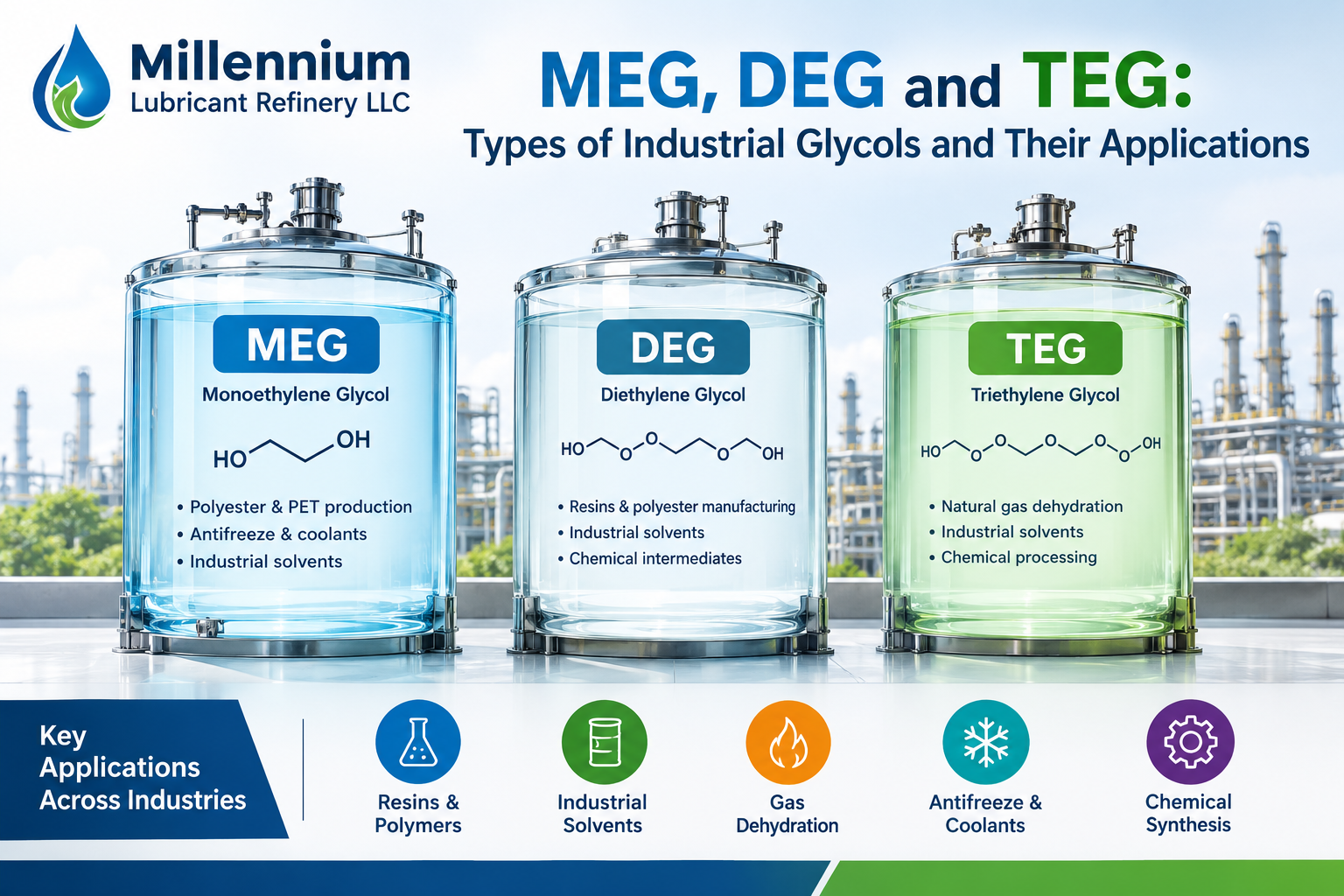
- MEG: Primarily used in polyester fibre and PET production, antifreeze formulations, and industrial coolants.
- DEG: Commonly used in selected resin formulations, solvent systems, plasticizer production, and chemical synthesis.
- TEG: Widely used in natural gas dehydration and selected industrial solvent and processing applications.
Choosing the correct glycol requires more than comparing product names. Manufacturers should assess application requirements, product purity, relevant safety information, and supplier documentation.
How to Choose a Reliable Glycol Supplier
Selecting a dependable glycol supplier is essential for maintaining consistent manufacturing quality and a reliable supply of raw materials. Before placing an order, industrial buyers should consider the following factors:
- Product quality: Check purity levels and technical specifications against your application requirements.
- Documentation: Request the relevant TDS, COA, and Safety Data Sheet (SDS).
- Application suitability: Confirm that the selected glycol meets the requirements of your manufacturing process.
- Supply reliability: Evaluate product availability, packaging options, and delivery schedules.
- Technical support: Choose a supplier that can provide clear product information and assist with specification-related queries.
Working with a reliable supplier can help manufacturers plan procurement more effectively and maintain consistent production standards.
Conclusion
Mono ethylene glycol (MEG), diethylene glycol (DEG), and triethylene glycol (TEG) are important industrial chemicals with distinct applications. MEG is widely used in polyester production and antifreeze formulations, DEG supports selected resin and chemical manufacturing processes, and TEG plays a key role in natural gas dehydration.
Understanding their properties and applications helps businesses select suitable products for their operational needs. Millennium Lubricant Refinery LLC provides high-purity glycol products for diverse industrial applications, including antifreeze, resins, and chemical synthesis. If you are looking for a reliable glycol supplier, visit the Millennium Refinery website to explore glycol solutions and enquire about product specifications for your industrial requirements.