







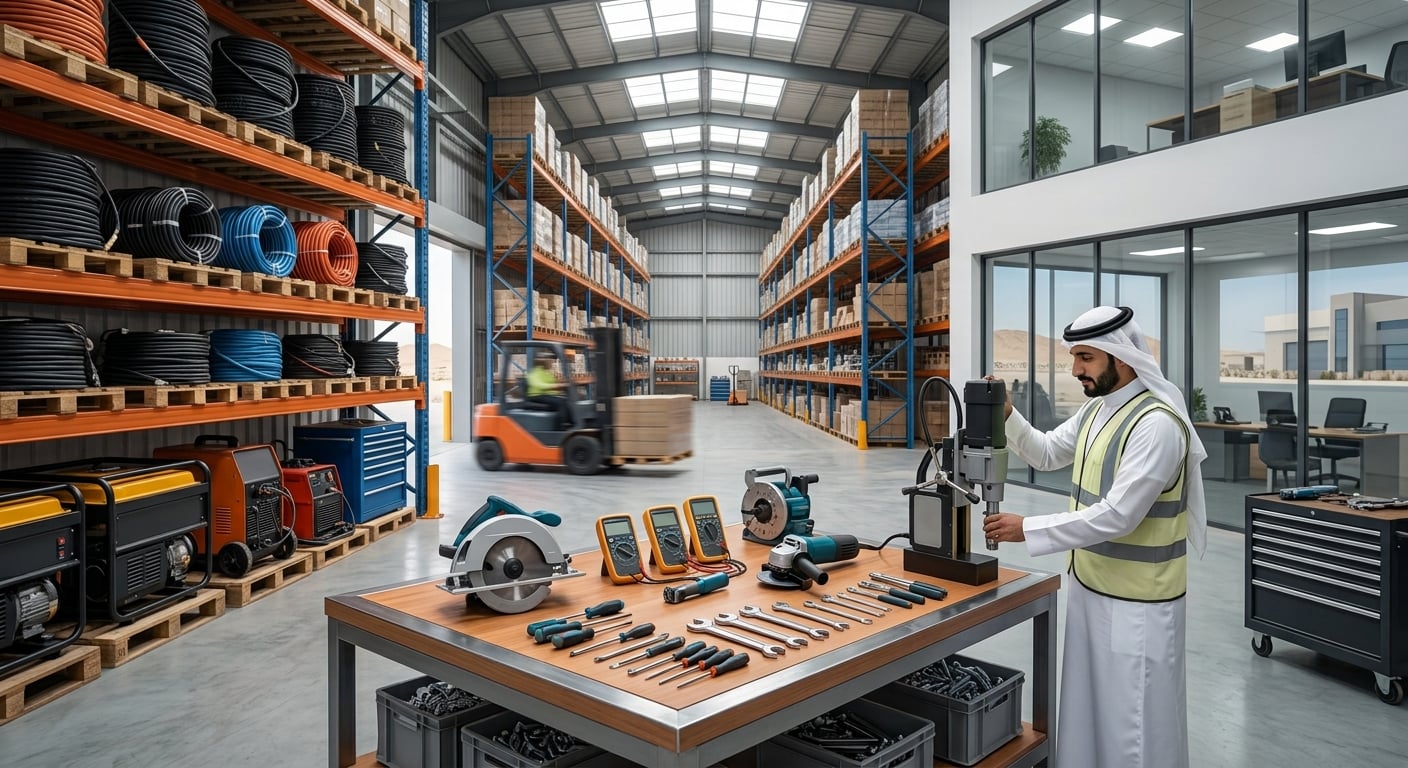
The United Arab Emirates has become a major hub for industrial development, manufacturing, construction, engineering, and maintenance services. Businesses across these industries depend on high-quality tools and equipment to maintain productivity, improve efficiency, and achieve consistent results. Choosing a reliable industrial tools supplier UAE is an important step for companies that require dependable products for their daily operations.
Industrial tools are essential for completing tasks such as cutting, drilling, measuring, fastening, grinding, and equipment maintenance. The right tools help professionals work safely, reduce unnecessary delays, and maintain high standards of workmanship. A trusted supplier can help businesses find suitable products according to their technical requirements, operational needs, and budget.
Importance of Industrial Tools in Modern Businesses:
Industrial tools support a wide range of commercial and technical activities. Manufacturing facilities use tools to produce components, while construction companies rely on them for installation, assembly, and repair work. Engineering workshops also need specialised tools for machining, fabrication, and equipment servicing.
Using suitable tools can improve work quality and reduce the risk of errors. Reliable equipment helps employees complete tasks more efficiently while maintaining consistency across different projects.
Businesses should select tools according to their intended applications. Factors such as material compatibility, operating conditions, durability, and ease of use can influence the performance of industrial equipment.
Why Choose a Reliable Industrial Tools Supplier UAE:
Selecting a dependable supplier can simplify purchasing and help businesses maintain a consistent supply of essential equipment. A professional reliable industrial tools supplier UAE should offer suitable product options, clear specifications, and helpful customer service.
Supplier reliability is particularly important for companies that depend on tools for regular production and maintenance. Delays in receiving essential equipment can interrupt operations and affect project schedules.
A trusted supplier can help customers identify appropriate products, understand technical specifications, and select tools that match their requirements. This support can make purchasing decisions more efficient and reduce the possibility of ordering unsuitable equipment.
Wide Range of Industrial Tools:
Industrial businesses require different types of tools depending on their operations. Common categories include hand tools, power tools, cutting tools, measuring instruments, fastening tools, and workshop accessories.
Hand tools such as spanners, pliers, screwdrivers, and hammers are useful for assembly and repair tasks. Power tools can support drilling, grinding, cutting, and other operations that require additional speed or mechanical assistance.
Measuring instruments help professionals verify dimensions and maintain accuracy, while specialised cutting tools support machining and fabrication activities.
Working with an experienced supplier helps businesses explore suitable product categories and select equipment for their particular applications.
Industrial Tools for Manufacturing:
Manufacturing companies rely on tools to maintain efficient production processes. Cutting, drilling, fastening, and measuring equipment are used throughout different stages of manufacturing.
The quality of these tools can influence production speed, dimensional accuracy, and the consistency of finished products. Unsuitable or worn-out equipment may cause delays, increase material waste, and lead to additional maintenance requirements.
Businesses should regularly assess their tooling requirements and replace damaged or unsuitable products when necessary. Sourcing appropriate tools from a dependable supplier can support smoother production and help maintain quality standards.
Tools for Construction and Engineering Projects:
Construction and engineering projects require equipment that can handle demanding working conditions. Workers use industrial tools for installation, assembly, drilling, fastening, and general maintenance.
Choosing the correct tool for each task helps improve efficiency and supports safer working practices. Equipment should be suitable for the material being processed and the conditions in which it will be used.
A reliable industrial tools supplier UAE can help contractors and engineering companies source products for different project requirements. Access to suitable tools can help teams organise their work more effectively and reduce unnecessary interruptions.
Importance of Quality and Durability:
Quality is an important consideration when purchasing industrial equipment. Tools that are designed for their intended applications can deliver more consistent performance when used and maintained correctly.
Durability also matters because many industrial tools are exposed to frequent handling, demanding workloads, and challenging environmental conditions. Products that wear out too quickly may require repeated replacement and increase operating costs.
Businesses should review product specifications, construction materials, manufacturer information, and recommended operating conditions before purchasing tools. Choosing products that meet the needs of the application can improve reliability and provide better long-term value.
Improving Workplace Productivity:
Workplace productivity depends on several factors, including employee skills, equipment availability, maintenance practices, and tool selection. The right equipment can help workers complete tasks with greater efficiency and consistency.
When suitable tools are readily available, employees can spend less time searching for replacements or working with inappropriate equipment. This can help minimise interruptions and support better project coordination.
Businesses should maintain an organised inventory of frequently used tools and monitor their condition regularly. Partnering with a reliable supplier can also help companies plan purchases and maintain access to essential equipment.
Industrial Tools for Maintenance and Repair:
Maintenance teams use industrial tools to inspect, repair, and service machinery, electrical systems, and mechanical components. These activities help businesses keep equipment operating efficiently and reduce the risk of unexpected breakdowns.
Common maintenance tools include spanners, sockets, screwdrivers, pliers, measuring instruments, and specialised repair equipment. The required selection depends on the machinery, industry, and maintenance procedures involved.
Having suitable tools available can help technicians respond to maintenance issues more quickly. Businesses should also follow equipment manufacturers’ instructions and workplace safety procedures when performing repairs.
Selecting the Right Tools for Your Application:
Before purchasing industrial tools, businesses should identify the tasks they need to perform. Different operations require different tool designs, sizes, capacities, and performance characteristics.
For example, metal fabrication may require specialised cutting and grinding equipment, while assembly work may depend on fastening tools and torque-control instruments. Precision inspection tasks require measuring equipment with suitable accuracy and resolution.
Customers should consider operating frequency, material type, working environment, and compatibility with existing equipment. Discussing these requirements with an experienced supplier can help narrow down suitable options.
Safety Considerations When Using Industrial Tools:
Workplace safety should always be a priority when selecting and using industrial tools. Equipment must be appropriate for the task and operated by personnel who understand the correct procedures.
Workers should inspect tools before use and avoid equipment that is damaged, defective, or unsuitable for the application. Where required, appropriate personal protective equipment should be worn, and manufacturer instructions should be followed.
Power tools should be used with suitable guards and accessories. Businesses should also provide relevant training and maintain clear procedures for storing, inspecting, and handling industrial equipment.
A quality-focused purchasing process can support workplace safety, although safe outcomes also depend on proper training, maintenance, and correct operation.
Cost-Effective Industrial Tool Purchasing:
Businesses often need to balance purchase costs with product quality and long-term performance. Selecting the cheapest tool may not always provide the best value if it requires frequent replacement or cannot meet operational demands.
A more effective approach is to compare specifications, expected service life, maintenance requirements, and suitability for the intended application. Reliable tools can help reduce avoidable downtime and support consistent working practices.
Companies should also consider the cost of replacing unsuitable products and the potential impact of equipment failure on project schedules. A dependable supplier can help customers evaluate available options according to their requirements and budgets.
Benefits of Working with a Local UAE Supplier:
Sourcing industrial tools locally can offer practical advantages to businesses operating across the UAE. Customers may find it easier to communicate their requirements, confirm product availability, and coordinate orders with a local supplier.
Local sourcing can also help businesses manage replenishment for frequently used tools. This is particularly useful for maintenance departments, contractors, workshops, and companies with ongoing operational needs.
Before choosing a supplier, businesses should review its product range, technical knowledge, customer service, and ability to meet delivery requirements. These factors can help establish a productive long-term business relationship.
Importance of Proper Tool Maintenance:
Regular maintenance helps keep industrial tools in suitable working condition. Cleaning, inspection, lubrication where recommended, and proper storage can reduce unnecessary wear and support reliable operation.
Tools should be stored according to manufacturer instructions and protected from moisture, contamination, and physical damage. Cutting edges and precision surfaces require particular care to prevent damage.
Damaged tools should be removed from service and repaired or replaced as appropriate. Establishing a maintenance routine can help businesses manage equipment more effectively and reduce unexpected interruptions.
Supporting Different Industrial Sectors:
The UAE serves a wide range of industrial sectors, including manufacturing, construction, automotive services, metal fabrication, logistics, energy, and facility maintenance. Each sector has its own equipment requirements and operational challenges.
A reliable industrial tools supplier UAE can help businesses identify products suited to these different working environments. From everyday hand tools to specialised workshop equipment, the right selection can support productivity and consistent performance.
Understanding the specific needs of each industry is essential when choosing products. Businesses should focus on application suitability, quality, availability, and technical support rather than relying on price alone.
How to Choose a Trusted Industrial Tools Supplier:
When evaluating potential suppliers, businesses should consider several important factors. These include product quality, range of available tools, clear technical information, customer support, stock availability, and purchasing terms.
It is also useful to verify product specifications and manufacturer details before placing an order. For specialised equipment, customers may need additional information about compatibility, accessories, warranties, or maintenance requirements.
A supplier that communicates clearly and understands industrial applications can make procurement easier. Establishing a relationship with a dependable supplier may also simplify future orders and support long-term planning.
Conclusion:
Industrial tools are essential for manufacturing, construction, engineering, fabrication, and maintenance operations throughout the UAE. Choosing suitable equipment helps businesses improve productivity, maintain quality, support workplace safety, and manage operating costs.
Working with a reliable industrial tools supplier UAE allows companies to source tools that match their technical and operational requirements. By evaluating product quality, durability, application suitability, maintenance needs, and supplier support, businesses can make informed purchasing decisions and build a dependable foundation for their industrial activities.