







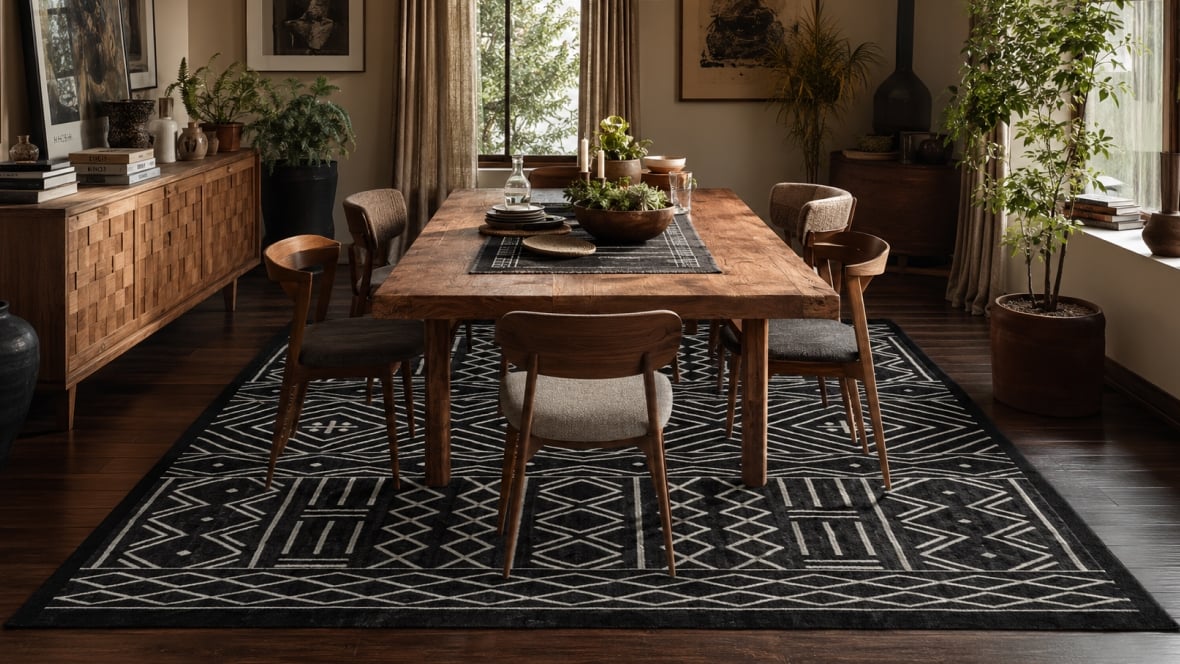
Choosing a rug for dining table use is trickier than it looks. The rug must fit the table, handle moving chairs and stay clean after meals. However, with a few simple rules, you can get it right the first time. In this guide, you will learn the right size, the best shape and the most practical materials. You will also see how style changes the look of the room.
Why a dining room rug matters
A rug does more than add colour. First, it defines the dining area, especially in an open-plan home. Second, it softens noise when chairs move. Third, it protects the floor from scratches. As a result, the room feels warmer and more finished.
However, a dining area is also a messy place. Crumbs and spills are part of daily life. So, practical choices matter just as much as looks.
Get the size right
Size is the most important step. Measure your table first. Then add at least 60 cm on every side. This allows chairs to stay on the rug when someone pulls them out. If the chairs catch the edge, the rug will curl and trip people.
Therefore, always go bigger rather than smaller. For example, a table that is 180 cm long needs a rug at least 300 cm long. When you buy a rug for dining table spaces, take a tape measure with you.
Next, mark the rug’s outline on the floor with painter’s tape. Then pull out a chair to test it. This simple check saves a lot of regret.
Choose the best shape
Shape should follow the table. A rectangular table suits a rectangular rug. A round table suits a round or square rug. In addition, an oval table works with an oval or rectangular rug. Matching shapes looks tidy.
However, you can also choose a different shape for contrast. A round rug under a rectangular table can look soft and modern. Just make sure every chair still sits on the rug.
Pick a practical material
Next, think about the material. A dining room needs a rug that is easy to clean. Flat weaves and low piles work best. Thick, shaggy rugs trap crumbs and make chairs wobble.
Wool is durable and naturally resists stains. Synthetic fibres are often cheaper and simple to wipe clean. In contrast, delicate silk and very pale rugs show every mark. So, choose a tough material in a pattern that hides small spills. A rug for dining table areas should also be thin enough for chairs to slide easily.
Match the style to your room
Style comes last, but it still matters. If your dining room is traditional, classic rugs are a natural fit. Their familiar borders and soft patterns suit wooden tables and warm lighting. They also hide marks well.
On the other hand, a modern room often looks better with minimalistic rugs. Plain textures and quiet tones keep the focus on the table and the people around it. In both cases, choose colours that link to your walls, curtains or chairs. For more background on how the space is usually arranged, see this overview of the dining room.
A quick checklist for choosing a rug for dining table spaces
Before you buy, run through this list:
- Measure the table and add 60 cm on every side.
- Match the rug shape to the table shape.
- Choose a low pile or a flat weave.
- Pick a pattern that hides crumbs.
- Test the size with a chair pulled out.
- Add a thin rug pad.
Keep your dining rug looking good
Finally, keep the rug in good shape. Vacuum it once or twice a week. Blot spills straight away. Also, avoid rubbing, because rubbing pushes stains deeper. Rotate the rug every few months to share the wear. Use a thin rug pad to stop it slipping.
With regular care, a good rug lasts for years.
Final thoughts
Choosing a rug for dining table spaces comes down to four things: size, shape, material and style. First, measure the table and add 60 cm on each side. Next, match the shape and pick a durable material. Then choose a style that suits your room. Get these four right, and your dining area will feel comfortable, tidy and complete.