





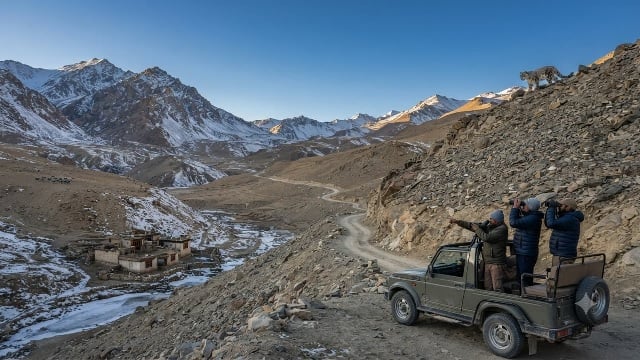
Ladakh has become increasingly popular among wildlife enthusiasts looking for opportunities to spot the elusive snow leopard. Often described as one of the most difficult animals to observe in the wild, this high-altitude predator inhabits some of the most remote landscapes of the Himalayas. The growth of organised snow leopard safaris has also created new interest in snow leopard trekking, although the two experiences are quite different.
What Is a Snow Leopard Safari?
On a snow leopard safari, you travel through known wildlife areas with experienced local guides and wildlife experts. Most of the time, you use vehicles to reach good spots, then spend time watching rocky slopes, valleys, and ridges for any sign of movement.
This method works especially well in winter, when snow leopards come down to lower areas to find prey. Safaris mean you do less tough walking and can cover more ground.
How Is Snow Leopard Trekking Different?
Snow leopard trekking focuses more on exploring the mountains on foot. Instead of using vehicles, trekkers walk along marked trails and remote paths while looking for signs of wildlife.
A snow leopard trek in Ladakh can be more physically challenging. Trekkers have to handle high altitude, cold weather, steep slopes, and long walks. Still, moving at a slower pace can help you feel more connected to the landscape.
Trekking also means you need to acclimatise carefully. If you spend time at high altitude without getting used to it first, you risk altitude sickness. That’s why it’s important to plan for gradual acclimatisation.
Which Experience Offers Better Wildlife Viewing?
There’s no guarantee you’ll see a snow leopard with either option. These animals are solitary, blend in well, and are always hard to spot. Whether you see one depends on the weather, prey movement, and other conditions.
Safari vehicles let you cover more ground and reach well-known wildlife areas comfortably. Trekking, on the other hand, lets you explore quieter places on foot and notice tracks, paw prints, and other signs of animals.
Local guides are helpful for both safaris and treks. They know the land and animal habits, which helps visitors find possible sighting spots without disturbing the wildlife.
What Does This Mean for Trekkers?
High-altitude wildlife safaris haven’t replaced traditional trekking. Instead, they offer another way to enjoy Ladakh’s wilderness.
If you’re mainly interested in wildlife photography, you might prefer a safari. If you want to combine wildlife watching with hiking, snow leopard trekking could be more rewarding. Some trips even mix walking with vehicle-based wildlife searches.
No matter which option you choose, it’s important to act responsibly. Keep a safe distance, stay quiet, and follow the rules to avoid disturbing animals and their habitats.
Why Local Expertise Matters
Ladakh’s terrain can be unpredictable, especially in winter. Local trekking teams know how to handle changing weather, mountain paths, and the challenges of travelling at high altitude.
Dream Land uses local knowledge to plan trips in the region, combining an understanding of the terrain with practical travel planning. Knowing the villages, trails, and wildlife areas is especially helpful when organising a snow leopard trek in Ladakh, where conditions can change fast.
Involving local people also helps communities by providing jobs for guides, drivers, cooks, and those who run accommodations. This way, wildlife tourism is more connected to the people living in these high-altitude areas.
Conclusion
Snow leopard safaris and trekking give you different ways to experience Ladakh’s amazing wilderness. Safaris are more comfortable and let you move around easily, while trekking is more hands-on and active. You might not see a snow leopard, but both options help you appreciate the fragile Himalayan ecosystem.
If you’re deciding between the two, think about your fitness, comfort, interest in wildlife, and the kind of mountain adventure you want. With good planning and respect for the environment, either option can make your trip to Ladakh’s snow leopard country unforgettable.
focuses more on exploring the mountains on foot. Instead of using vehicles, trekkers walk along marked trails and remote paths while looking for signs of wildlife.
A snow leopard trek in Ladakh can be more physically challenging. Trekkers have to handle high altitude, cold weather, steep slopes, and long walks. Still, moving at a slower pace can help you feel more connected to the landscape.
Trekking also means you need to acclimatise carefully. If you spend time at high altitude without getting used to it first, you risk altitude sickness. That’s why it’s important to plan for gradual acclimatisation.
Which Experience Offers Better Wildlife Viewing?
There’s no guarantee you’ll see a snow leopard with either option. These animals are solitary, blend in well, and are always hard to spot. Whether you see one depends on the weather, prey movement, and other conditions.
Safari vehicles let you cover more ground and reach well-known wildlife areas comfortably. Trekking, on the other hand, lets you explore quieter places on foot and notice tracks, paw prints, and other signs of animals.
Local guides are helpful for both safaris and treks. They know the land and animal habits, which helps visitors find possible sighting spots without disturbing the wildlife.
What Does This Mean for Trekkers?
High-altitude wildlife safaris haven’t replaced traditional trekking. Instead, they offer another way to enjoy Ladakh’s wilderness.
If you’re mainly interested in wildlife photography, you might prefer a safari. If you want to combine wildlife watching with hiking, snow leopard trekking could be more rewarding. Some trips even mix walking with vehicle-based wildlife searches.
No matter which option you choose, it’s important to act responsibly. Keep a safe distance, stay quiet, and follow the rules to avoid disturbing animals and their habitats.
Why Local Expertise Matters
Ladakh’s terrain can be unpredictable, especially in winter. Local trekking teams know how to handle changing weather, mountain paths, and the challenges of travelling at high altitude.
Dream Land uses local knowledge to plan trips in the region, combining an understanding of the terrain with practical travel planning. Knowing the villages, trails, and wildlife areas is especially helpful when organising a snow leopard trek in Ladakh, where conditions can change fast.
Involving local people also helps communities by providing jobs for guides, drivers, cooks, and those who run accommodations. This way, wildlife tourism is more connected to the people living in these high-altitude areas.
Conclusion
Snow leopard safaris and trekking give you different ways to experience Ladakh’s amazing wilderness. Safaris are more comfortable and let you move around easily, while trekking is more hands-on and active. You might not see a snow leopard, but both options help you appreciate the fragile Himalayan ecosystem.
If you’re deciding between the two, think about your fitness, comfort, interest in wildlife, and the kind of mountain adventure you want. With good planning and respect for the environment, either option can make your trip to Ladakh’s snow leopard country unforgettable.