



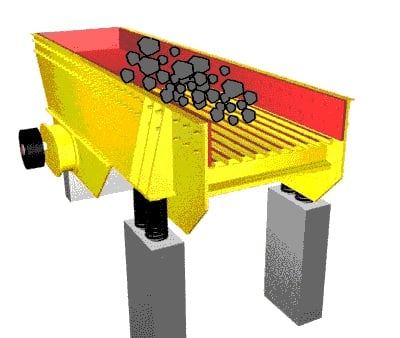
In bulk material handling industries, many machines are used to make the production process more efficient and easier to handle. Among these machines are vibrating feeders. These vibrating feeders are used in different industries such as mineral processing, cement, steel, chemical processing, and power generation.
In industrial processing, there are many stages where the consistent feeding of material is necessary. A vibrating feeder helps manage that movement by using controlled vibration to transport bulk materials along a trough.
In this article, let’s learn what a vibrating feeder is, how it works, and where it is used.
What Is a Vibratory Feeder?
A vibratory feeder is an industrial machine that uses vibration to move materials from a hopper, bin, stockpile, or other storage point to downstream equipment. It helps regulate the amount of material entering the next stage of a production process.
These feeders provide controlled, continuous feeding of material and are commonly used to supply material to crushers, conveyors, vibrating screens, and other processing machines. The feeder’s design and operating settings depend on the material being handled, the required feed rate, and the conditions of the process.
Main Types of Vibratory Feeders
There are mainly two types of vibrating feeders: electromagnetic and electromechanical feeders.
- Electromagnetic Feeders: These feeders are commonly used for lighter materials such as fine powders, granules, and dosing applications. They are especially suitable when feed-rate control is an important requirement.
- Electromechanical Feeders: These feeders use vibrating motors to generate vibrations that move the material. They are suitable for heavier materials and higher-capacity applications.
To choose the right type of your industry, the choice should depend on the material, throughput, required control, and working conditions.
How Do Vibratory Feeders Work?
The general processing of vibrating feeders is simple; they work by generating controlled vibrations that move the material forward. However, the exact working process depends on the type of feeder:
-
Electromagnetic Vibrating Feeder Working Process
An electromagnetic feeder uses an electromagnet and a controlled electrical supply to produce vibration. The vibration moves material along the trough in small, repeated movements. The feed rate can be adjusted using a silicon-controlled rectifier (SCR) controller, allowing operators to regulate material flow according to process requirements.
-
Electromechanical Vibrating Feeder Working Process
An electromechanical feeder uses vibrating motors, commonly arranged as a pair of counter-rotating motors, to generate controlled movement. Their combined action produces vibration that moves material along the trough. Depending on the model, the feed rate may be fixed or adjustable through a variable frequency drive (VFD).
In both designs, the vibration moves material toward the discharge point, helping maintain a steady supply to the next machine.
Where Are Vibratory Feeders Used in Industry?
Vibrating feeders are used in every industry where bulk material needs to be supplied at a controlled rate, such as:
-
Mineral Processing
Most mineral processing plants use feeders to move the crushed minerals and other bulk materials from hoppers or storage bins to crushers, conveyors, and screens. A controlled feed helps maintain a steady flow of material through the processing line.
-
Cement Industry
In cement processing, bulk materials need to move between storage and processing equipment. That’s where vibrating feeders are use to regular the movement of suitable materials and help maintain a consistent supply to downstream machinery.
-
Steel Industry
Steel processing operations may require controlled feeding of bulk materials to different stages of production. Vibratory feeders can be selected according to the material characteristics, required capacity, and operating conditions.
-
Chemical Processing
Chemical plants may handle powders, granules, and other bulk solids that need controlled feeding. Electromagnetic feeders can be useful for applications requiring adjustable, measured material flow, provided the feeder is compatible with the material and operating environment.
-
Power Generation
Vibratory feeders can be used in suitable bulk-material handling systems within power generation facilities. Their selection depends on the material being handled and the required feed rate.
Important Features to Consider
If you are considering buying vibrating feeders for your applications you must consider these factors:
- Feed Rate: You must consider how much material you want to feed in the machine in a given period of time.
- Material Characteristics: Your material characteristics such as the particle size, bulk density, abrasiveness, etc., affects what the right configuration for your feeder should be.
- Trough Dimenstions: Trough width and length should suit the material volume and available installation space.
- Drive Type: From electromagnetic and electromechanical drives, select the right one for your application.
- Feed-rate Control: An SCR controller or VFD may be appropriate depending on the feeder design.
- Wear Protection: Abrasive materials may require suitable liners, such as AR400 wear-resistant liners.
- Installation Arrangement: Floor-mounted or suspended spring-supported configurations can be considered according to the plant layout.
Overall, you should consider these factors according to your requirements, application, and working conditions.
Reliable Vibrating Feeder Solutions from Vibro Flux Equipments
Vibro Flux Equipments is a leading vibrating screen manufacturer in India. They offer both types of vibrating feeders, including many different machines such as vibrating tables, bin vibrators, screen seperators etc.
Their available configuration of vibrating feeders include trough widths from 150 mm to 1,200 mm and capacities ranging from 1 tonne per hour to over 500 tonnes per hour, depending on the model and application. Furthermore, they understand different applications requirements and match their machines to those requirements.
Conclusion
A vibratory feeder helps maintain controlled material movement between storage points and processing equipment. Its performance depends on selecting the appropriate drive type, feed rate, trough dimensions, and construction for the material and application.
If you are looking for a vibrating feeder for your application, contact Vibro Flux Equipments. They provide a detailed quote while keeping up with the communication. Furthermore, their services goes beyond the delivery of the equipment.