





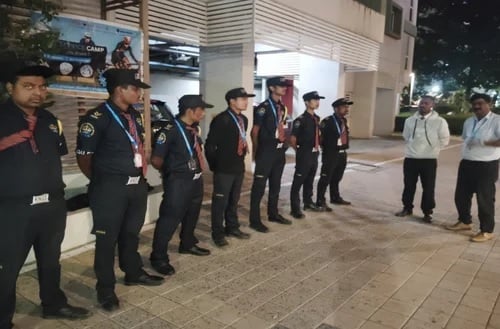
A security contract explains what the security provider, the client, and the guards are responsible for at a property. Although the details can vary based on the type of property and its risks, most contracts cover the services offered, working hours, reporting steps, and the standards expected from the security team.
A professional security guard agency usually starts by visiting the site and learning about its unique security needs. This could be a residential building, office, shop, warehouse, construction site, hotel, or industrial facility. The assessment helps decide how many guards are needed, what shifts they will work, and what their duties will be.
Manned Guarding and Access Control
Manned guarding is one of the main services provided. Guards can be placed at entrances, exits, reception areas, parking lots, or other key spots. They usually watch for movement around the property and make sure their presence is clearly seen.
Access control is also important. Guards check visitors, employees, contractors, and delivery staff before letting them in. Depending on the place, they might keep a visitor log, check IDs, and give out temporary passes.
Patrolling and Premises Monitoring
Contracts often include regular patrols of the property. These patrols can happen at set times or follow a plan based on risk. Guards check areas that might be at risk, look for anything unusual, and make sure doors, gates, and restricted areas are locked.
On larger properties, patrols might include several buildings, parking lots, and the outer edges of the site. Some contracts also require guards to use patrol logs or digital systems to record what they see.
Emergency Response and Incident Reporting
Security staff are expected to act quickly if there is an incident like unauthorised entry, theft, vandalism, a disturbance, or a safety issue. They usually follow set procedures, call the right authorities or emergency services if needed, and help keep people and property safe until more help arrives.
Incident reporting is an important part of most contracts. Guards might write down the time, place, people involved, and what they did, so the client has a clear record.
Specialised Security Requirements
Some clients require additional services based on their circumstances. These can include event security, crowd management, residential security, industrial security and escort duties. Where there is a specific personal protection requirement, a personal security bodyguard may be assigned instead of, or alongside, conventional guarding personnel.
A security guard agency might also offer trained staff for executive protection, depending on what it can provide and the law. These services usually have their own terms for duties, deployment, and confidentiality.
What Clients Should Check
Before signing, clients should read the contract closely. Key details to check are the number of guards, shift times, duties, how supervision works, what happens if a guard needs to be replaced, uniforms, equipment, reporting rules, and what to do if problems arise.
The contract should also make payment terms, contract length, ending conditions, liability, and how to handle complaints or service issues clear. Good documentation helps avoid confusion once the service starts.
A Practical Approach: Crest Force India
Crest Force India is a good example of a security provider where it’s important to know exactly what services are included in the contract. Their security plans depend on the client’s needs, whether it’s protecting a property, managing access, or providing personal protection. When comparing providers, looking at how they deploy guards, train staff, supervise, and report can give clients a better idea than just looking at prices.
Conclusion
Clear expectations between clients and service providers are intended to be established through security contracts. The precise package should take into account the risks and operational requirements of the property, including guarding, access control, patrols, emergency response, and incident reporting. For specialised requirements, a personal security bodyguard can provide an additional layer of protection. Reviewing every contractual responsibility carefully helps ensure that security arrangements remain practical, transparent and suited to the environment being protected.