




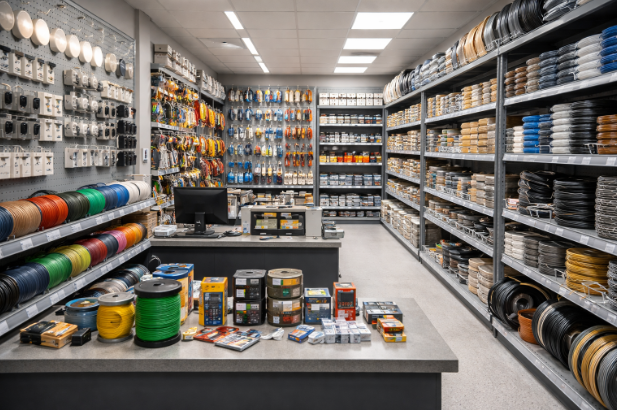
Complex construction projects—such as hospitals, data centers, manufacturing facilities, mixed-use developments, and large commercial campuses—require a level of coordination and technical precision that far exceeds that of standard builds. These projects involve intricate electrical systems that are extensive, highly regulated, and deeply integrated with mechanical, digital, and operational infrastructure. Power reliability, safety, and performance are non-negotiable. In this environment, commercial electrical suppliers are essential partners in ensuring projects are delivered on time, on budget, and to specification.
As construction complexity increases, the role of commercial electrical suppliers has evolved significantly. No longer limited to basic material fulfillment, they now serve as strategic contributors throughout the project lifecycle, supporting planning, procurement, execution, and long-term system performance.
Managing Complexity in Electrical Systems
Complex projects involve a broad and interconnected range of electrical components. These often include power distribution equipment, lighting and lighting controls, backup and emergency power systems, automation platforms, energy monitoring, EV charging infrastructure, and renewable energy integration. Each system must operate reliably on its own while also functioning seamlessly with the broader building ecosystem.
Coordinating these systems across multiple phases, buildings, and stakeholders is a major challenge. Commercial electrical suppliers help manage this complexity by consolidating sourcing across manufacturers and product categories. By serving as a centralized coordination point, suppliers ensure system compatibility, reduce fragmentation, and maintain consistency across large installations.
This centralized approach minimizes the risk of mismatched components, installation conflicts, or performance gaps that can emerge when materials are sourced independently. For projects involving thousands of SKUs and long timelines, supplier coordination is critical to maintaining continuity.
Supporting Tight Schedules and Phased Delivery
Construction schedules for complex projects are often compressed, highly sequenced, and sensitive to delays. Electrical work typically intersects with multiple trades, meaning that late material deliveries can create cascading impacts across the project schedule.
Commercial electrical suppliers support schedule adherence through advanced logistics planning, inventory management, and phased delivery coordination. By staging materials according to construction milestones, suppliers ensure that products arrive when needed—reducing jobsite congestion, minimizing material handling, and keeping crews productive.
Many suppliers now use digital tools to track availability, lead times, and backorders in real time. This enhanced visibility allows project teams to anticipate risks, adjust sequencing, and make informed decisions before delays escalate. In today’s volatile supply environment, this level of predictability is a significant advantage.
Providing Technical Expertise and Value Engineering
Electrical systems in complex construction projects must meet strict performance, safety, and regulatory requirements. Commercial electrical suppliers bring valuable technical expertise that supports engineers, contractors, and developers throughout the design and construction process.
Suppliers assist with product selection, specification review, and value engineering, helping teams identify solutions that meet technical requirements while controlling costs. Their deep knowledge of manufacturer offerings enables them to recommend alternatives when availability, pricing, or lead times become issues—without compromising compliance or performance.
Early supplier involvement is especially valuable. By identifying potential challenges during design or preconstruction, suppliers help reduce rework, change orders, and delays later in the project. This proactive contribution improves both cost certainty and schedule reliability.
Mitigating Supply Chain Risks
Supply chain volatility has become one of the most significant risks facing complex construction projects. Material shortages, extended lead times, and global manufacturing disruptions can threaten project viability and financial outcomes.
Commercial electrical suppliers mitigate these risks by maintaining diversified supplier networks and strategic inventory levels. When disruptions occur, they can often identify approved substitute products that meet specifications and performance standards. This flexibility helps projects maintain momentum despite external challenges.
For large-scale and mission-critical projects—particularly those with public funding or fixed delivery deadlines—this supply chain resilience is indispensable.
Supporting Innovation and Future-Ready Design
Complex projects increasingly incorporate advanced technologies such as smart lighting, automation systems, energy monitoring platforms, and electrified infrastructure. These technologies improve efficiency, sustainability, and operational insight but also introduce additional layers of complexity.
Commercial electrical suppliers support innovation by providing access to the latest technologies and helping project teams understand how these systems integrate with traditional electrical infrastructure. Their guidance ensures compatibility, scalability, and long-term performance.
This support helps ensure that projects are not only functional at completion but also adaptable to future upgrades, regulatory changes, and evolving operational needs.
Enhancing Safety and Compliance
Safety and compliance are critical priorities in complex construction environments, particularly in regulated sectors such as healthcare, industrial manufacturing, and data centers. Electrical systems must comply with evolving codes, standards, and inspection requirements.
Commercial electrical suppliers help ensure compliance by providing certified products, technical documentation, and guidance on proper installation practices. Their familiarity with regulatory requirements reduces inspection issues, improves safety outcomes, and enhances long-term system reliability.
By supporting compliance from design through installation, suppliers help protect both workers and building occupants.
A Critical Partner in Complex Construction
Complex construction projects demand more than materials—they require coordination, expertise, foresight, and resilience. Commercial electrical suppliers deliver value by simplifying procurement, managing risk, and supporting advanced electrical systems throughout the project lifecycle.
As projects grow in scale, sophistication, and technological intensity, the role of commercial electrical suppliers becomes increasingly essential. Their ability to align logistics, technical knowledge, and supply-chain stability makes them critical partners in achieving successful project delivery and long-term performance.