





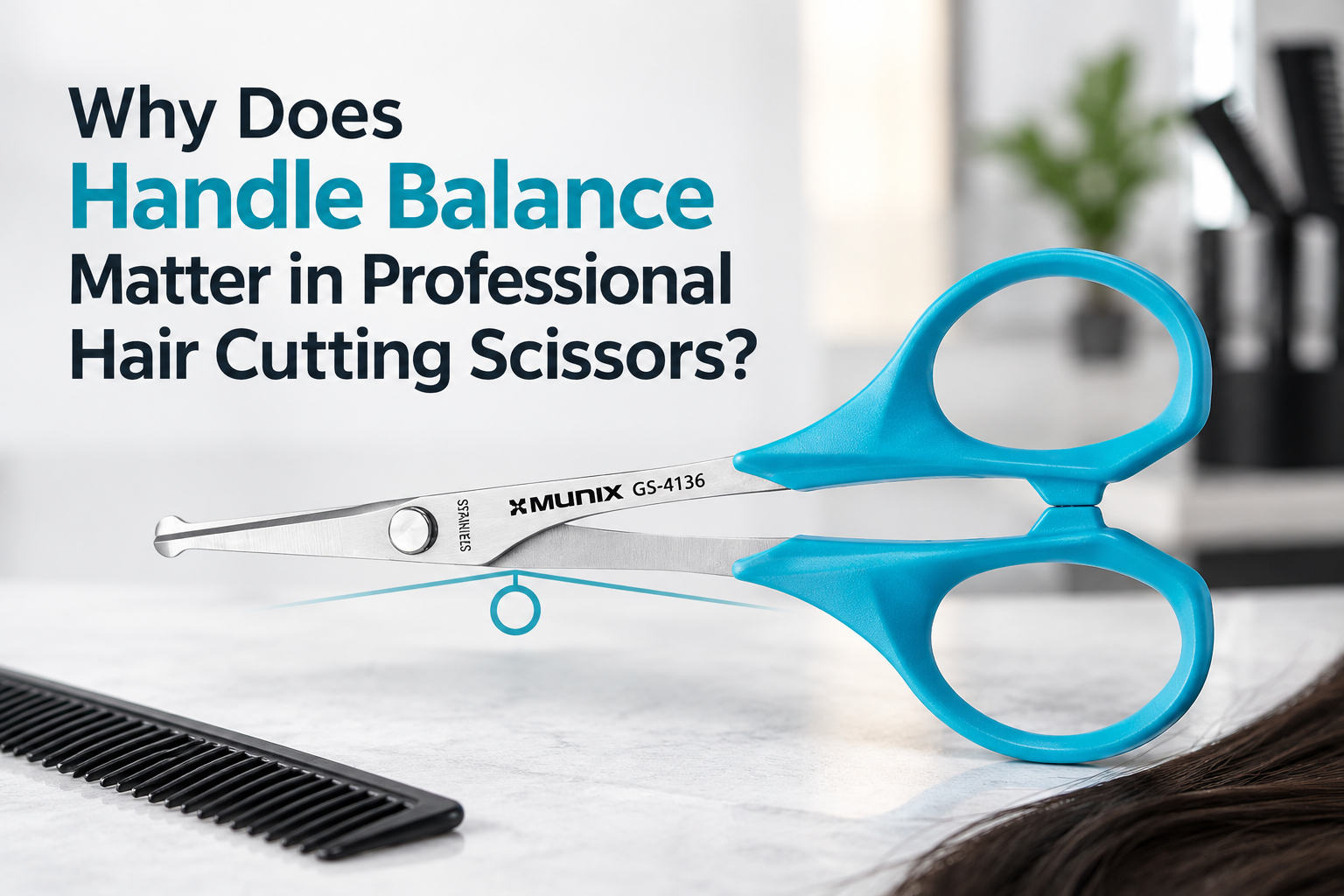
Professional hair cutting involves more than blade sharpness. The way scissors sit in the hand, distribute their weight, and respond to finger movements can influence cutting precision, comfort, and control. One important factor behind these characteristics is handle balance. When scissors feel balanced, a hairdresser can guide the blades more naturally, maintain a comfortable grip, and perform repeated cutting movements with greater consistency.
Handle balance in hair cutting scissors refers to how the weight is distributed between the handles, pivot point, and blades. If the weight feels concentrated in one area, the user may need to make additional adjustments to control the tool. This can become noticeable during detailed techniques such as point cutting, layering, and trimming around the ears or neckline.
For salon professionals, trainees, and independent hairdressers in Ludhiana, understanding handle balance can help when evaluating professional hair cutting scissors. It is particularly relevant when comparing different designs or choosing a hair cutting scissors kit for regular salon work.
Munix KGOC is included here as a relevant industry keyword, while the focus remains educational rather than promotional. Understanding how balance, ergonomics, blade design, and hand positioning work together helps readers make informed decisions based on their individual cutting techniques and comfort requirements.
What Is Handle Balance in Hair Cutting Scissors?
Handle balance describes how the weight of a pair of scissors is distributed and how that weight feels when the tool is held and operated.
The pivot, blades, finger rings, and handle design all contribute to the overall feel. Two pairs of scissors with similar lengths and weights can feel different because their weight distribution and handle geometry are not identical.
How Does Handle Balance Work?
When a hairdresser opens and closes scissors, the fingers guide the handles while the thumb controls movement through a small, repeated range of motion. The blades must respond smoothly without requiring unnecessary gripping force.
A well-balanced design can help the scissors feel stable during these movements. However, balance is subjective. A design that feels comfortable to one professional may feel awkward to another because hand size, grip style, and cutting technique vary.
Does Balance Depend Only on Weight?
No. Total weight and balance are related, but they are different characteristics.
- Weight describes how heavy the scissors feel overall.
- Balance describes how that weight is distributed.
- Ergonomics describes how comfortably the tool fits and moves in the hand.
- Blade action describes how smoothly the cutting edges open and close.
Evaluating all four characteristics provides a clearer picture of how professional hair cutting scissors may perform during everyday use.
How Does Handle Balance Affect Cutting Precision?
Handle balance can influence how easily a hairdresser controls the blade tips and maintains a consistent cutting angle.
During precision work, small movements matter. If scissors feel awkward or unstable, the user may compensate by tightening the grip or changing finger positions. These adjustments can make delicate cutting movements more difficult to repeat consistently.
Control During Detailed Haircuts
Balance is particularly relevant when performing:
- Point cutting to soften blunt edges.
- Layering to create different lengths and movement.
- Fringe trimming, where small adjustments are necessary.
- Neckline detailing and work around the ears.
- Texturising techniques that require controlled blade placement.
The benefits depend on the individual’s technique and the design of the scissors. Handle balance does not automatically guarantee a precise haircut, but it can support more controlled tool handling.
Why Does Consistency Matter?
Hair cutting often involves repeating similar movements across several sections. Scissors that feel predictable can help a professional maintain a consistent working rhythm.
For example, a stylist working on a layered haircut may need to change hand positions frequently. Comfortable weight distribution can make these transitions feel more natural, although training, sectioning, and blade sharpness remain equally important.
Why Does Handle Balance Matter for Hand Comfort?
Hairdressers frequently perform repeated opening and closing movements throughout the working day. Scissors that require excessive gripping or awkward wrist positioning may contribute to hand fatigue.
Handle balance is one factor that can influence how much effort is needed to guide the tool. Handle shape, finger-ring size, thumb-ring position, and the resistance of the pivot also affect comfort.
The Relationship Between Balance and Fatigue
If scissors feel too heavy at the blade end, the user may perceive that the tool pulls forward. If the handles feel disproportionately heavy, the scissors may seem less natural to manoeuvre. These are subjective sensations rather than universal rules, and individual preferences differ.
A comfortable design may help the user maintain a relaxed grip and avoid unnecessary tension.
However, balanced scissors cannot eliminate every source of discomfort. Poor technique, prolonged repetitive work, an unsuitable handle size, and insufficient breaks may also contribute to fatigue.
What Should Professionals Look For?
When assessing hair cutting scissors, consider:
- Whether the handles fit comfortably without forcing the fingers apart.
- Whether the thumb can move naturally during opening and closing.
- Whether the scissors feel stable when held horizontally.
- Whether the wrist remains in a comfortable position during cutting.
- Whether the pivot moves smoothly without excessive resistance.
Persistent pain, numbness, or tingling should not be ignored. Adjusting technique, taking appropriate breaks, and seeking professional medical advice when needed may be important.
How Do Handle Designs Influence Balance?
Different handle designs change how scissors fit the hand and how their weight feels during use.
Symmetrical Handles
Symmetrical or opposing handle designs place the finger rings in a relatively traditional arrangement. Some hairdressers prefer this familiar grip, while others find it less comfortable for prolonged work.
Offset Handles
Offset handles position the thumb ring differently from the finger ring. This can support a more relaxed thumb position for some users and may reduce the need to raise the elbow or extend the thumb excessively.
Crane-Style Handles
Crane-style designs use a more pronounced offset intended to support a lower, more relaxed arm position. Comfort still depends on the individual’s hand proportions, technique, and the particular scissor design.
No handle style is suitable for everyone. Professionals should assess how the handle interacts with their natural grip rather than choosing a design based on appearance alone.
How Should You Evaluate a Hair Cutting Scissors Kit?
A hair cutting scissors kit may contain cutting scissors, thinning scissors, a comb, a cleaning cloth, adjustment accessories, or other maintenance items. The exact contents vary between kits.
When evaluating a hair cutting scissors kit, do not assume that having multiple tools guarantees suitability for professional work. Each component should be assessed according to its intended use, construction, and comfort.
A Practical Evaluation Checklist
Before selecting a kit, consider the following factors:
- Handle fit: Check whether the finger rings accommodate your hand comfortably.
- Weight distribution: Hold the scissors in your normal working position and assess whether they feel stable.
- Blade alignment: Inspect the cutting edges for visible damage or misalignment.
- Pivot action: Check whether opening and closing feel controlled rather than excessively loose or stiff.
- Blade length: Choose a length appropriate for your hand size and intended cutting techniques.
- Maintenance requirements: Confirm that the scissors can be cleaned, adjusted, and serviced appropriately.
- Intended use: Distinguish between tools designed for cutting hair and ordinary household scissors.
The keyword Munix KGOC can be used naturally when discussing hair cutting scissors and related kit considerations. Regardless of the manufacturer, the same practical evaluation principles apply.
What Should Hairdressers in Ludhiana Consider?
Hairdressers in Ludhiana work across different salon environments, from independent studios to busy commercial establishments. The demands placed on scissors may vary according to the number of clients, cutting styles, and working hours.
For professionals who perform frequent haircuts, comfort and maintenance deserve particular attention. A tool that feels manageable during a brief demonstration may feel different after extended use.
When evaluating hair cutting scissors locally, consider the following:
- Test the scissors using safe, appropriate methods before regular use.
- Compare handle designs rather than relying only on overall weight.
- Check whether sharpening and servicing are available.
- Follow suitable cleaning and disinfection procedures between clients.
- Select tools according to your training level and cutting requirements.
Local availability should not replace an assessment of fit, cutting action, and maintenance needs. These factors are more useful than relying on general product claims.
How Can Proper Maintenance Preserve Scissor Performance?
Even well-designed scissors can become difficult to control if they are dirty, damaged, or incorrectly adjusted.
Hair fragments and product residue may accumulate around the blades and pivot. Inadequate maintenance can affect smooth movement, while an unsuitable tension setting may make opening and closing more difficult.
Recommended Maintenance Practices
- Clean and disinfect scissors according to the manufacturer’s instructions and applicable salon hygiene requirements.
- Dry the tool thoroughly after cleaning to reduce the risk of corrosion.
- Apply suitable lubricant to the pivot when recommended.
- Check screw tension and avoid making unnecessary adjustments.
- Store scissors in a protective case when not in use.
- Arrange professional sharpening when the cutting action deteriorates.
Maintenance cannot correct an unsuitable handle design, but it can help preserve the intended operation of the scissors.
Conclusion
Handle balance is an important consideration when choosing professional hair cutting scissors because it influences how the tool feels during movement, how easily the blades can be guided, and how comfortably the scissors fit the user’s working style.
For salon professionals and trainees in Ludhiana, a thoughtful assessment should include handle ergonomics, weight distribution, blade length, pivot action, and maintenance requirements. When selecting a hair cutting scissors kit, evaluate each tool individually instead of relying solely on the number of accessories or general product descriptions.
Whether researching professional scissors or exploring information associated with Munix KGOC, focus on practical suitability and informed comparison. Taking time to assess these factors can help you choose tools that support your technique, comfort, and everyday salon requirements.
FAQs
1. Why is handle balance important in professional hair cutting scissors?
Handle balance influences how weight feels across the blades and handles. It can affect stability, control, and perceived comfort during repeated cutting movements. A suitable balance helps the user guide the tool naturally, although blade sharpness, technique, and handle fit also influence performance.
2. Are lighter hair cutting scissors always more comfortable?
No. Lighter scissors may feel easier to manoeuvre, but weight distribution and handle ergonomics are equally important. A slightly heavier pair may feel more stable to some professionals, while others may prefer a lighter design. Comfort should be assessed individually.
3. How can I check whether my hair cutting scissors are balanced?
Hold the scissors in your usual working position and perform controlled opening and closing movements. Notice whether the tool feels stable, whether the thumb moves naturally, and whether you need to grip tightly. Also assess handle fit and pivot resistance before deciding whether the balance suits you.
4. What should a hair cutting scissors kit include?
A kit may include cutting scissors, thinning scissors, a comb, a cleaning cloth, and maintenance accessories. Contents vary, so check each item’s intended use and quality. For professional work, appropriate blade construction, comfortable handles, reliable cutting action, and access to maintenance are more important than the number of accessories.
5. Does handle balance matter for beginner hairdressers in Ludhiana?
Yes. Beginners benefit from learning how handle fit, balance, and blade control affect their technique. Practicing with suitable scissors can help develop consistent movements and comfortable hand positioning. Training, safe handling, and regular maintenance remain essential regardless of the tool selected.