






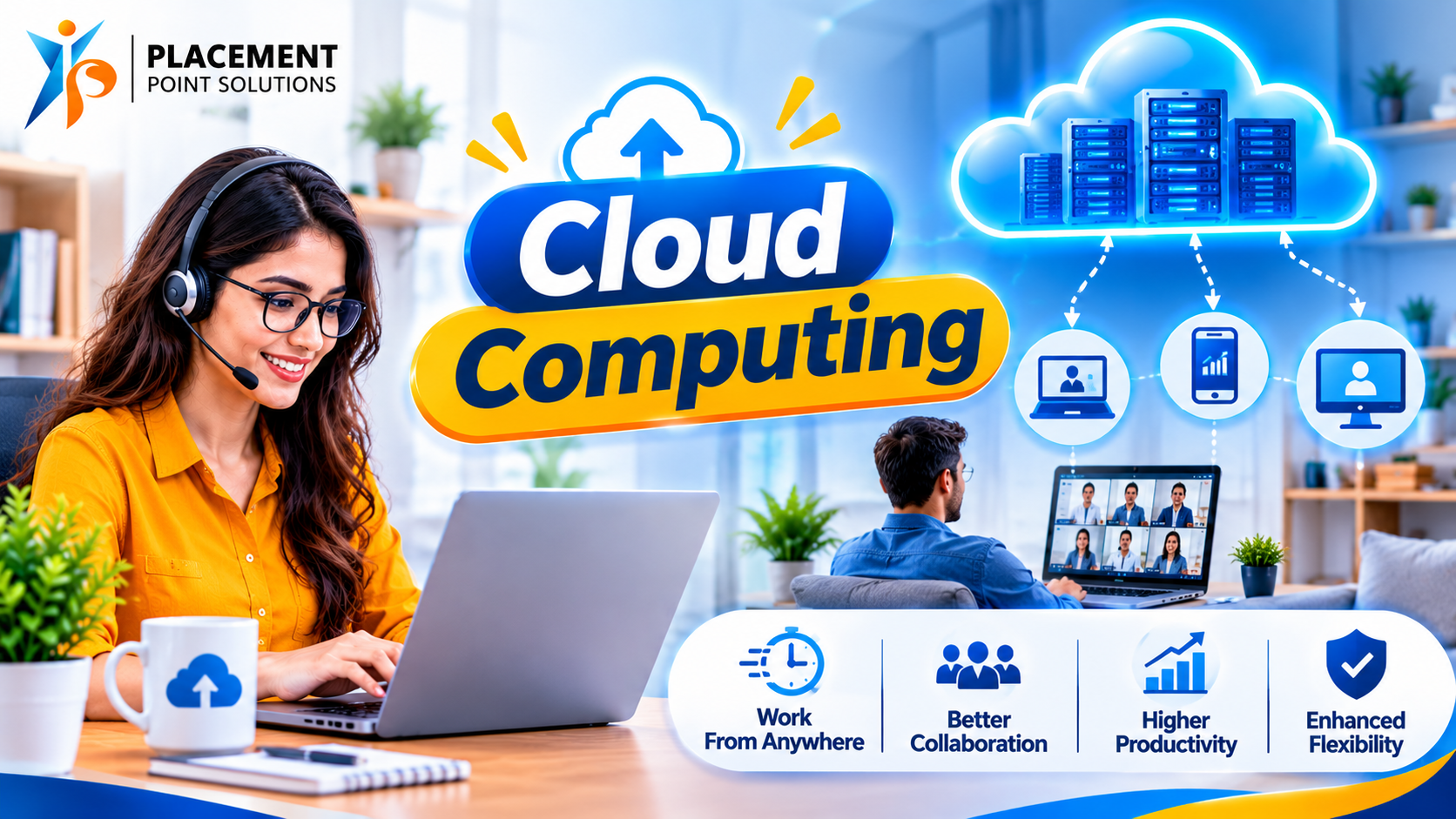
Remote work has become an important part of modern business operations. Many organisations now allow employees to work from home or different locations using digital tools and online platforms. However, managing files, sharing information, accessing applications, and communicating with team members can become challenging without proper technology. Cloud computing provides solutions that make remote working easier, faster, and more flexible.
Cloud computing allows employees to access applications, documents, databases, and business resources through the internet without depending on a specific computer or office network. It helps organisations improve collaboration, reduce infrastructure costs, and maintain productivity. As businesses continue adopting flexible working environments, cloud technologies are becoming essential for efficient remote operations.
1. Understanding the Role of Cloud Computing in Remote Work
Cloud computing provides internet-based services such as data storage, application hosting, computing power, and networking. Instead of storing all information on individual computers, businesses can use cloud platforms to manage their resources centrally.
Employees can access the required files and applications from different locations using authorised devices. This flexibility allows teams to continue their work without being physically present in an office.
Numerous services that facilitate distant company activities are offered by platforms like Google Cloud, Microsoft Azure, and Amazon Web Services (AWS). Learning these technologies through a Cloud Computing Course in Chennai can help individuals understand cloud infrastructure, storage management, and deployment techniques used in modern organisations.
2. Improving Team Collaboration and Communication
Successful remote work requires effective communication. Employees working from different locations need reliable platforms to share information, discuss projects, and coordinate tasks.
Cloud-based collaboration tools make these activities easier by allowing multiple employees to work on shared documents, attend virtual meetings, and exchange information in real time.
Some commonly used collaboration platforms include:
- Google Workspace for document sharing and online collaboration.
- Microsoft Teams for meetings and team communication.
- Slack for instant messaging and project discussions.
- Zoom for virtual meetings and video conferences.
These platforms help employees stay connected and complete their tasks without unnecessary communication delays.
3. Providing Easy Access to Files and Applications
One of the primary advantages of cloud computing is the capacity to access data from multiple locations. Important business documents can be retrieved by employees without the need to rely on office computers or tangible storage devices.
Cloud storage services allow organisations to store files securely and provide authorised access to employees. Documents may be viewed, edited, and shared by team members as needed.
For example, a marketing employee working from home can access campaign reports, update project documents, and share completed files with colleagues through cloud platforms. This improves workflow flexibility and reduces delays in daily operations.
4. Enhancing Data Security for Remote Employees
Data security is an important concern for organisations that support remote working. Employees accessing business information through personal networks and devices may create potential security risks.
Cloud computing platforms provide several security features to protect business information. These include data encryption, identity verification, access controls, and security monitoring.
Organisations can also implement multi-factor authentication and role-based access permissions to ensure that employees access only the information required for their responsibilities.
Regular security updates and data backups further help businesses protect important files and maintain reliable operations.
5. Reducing IT Infrastructure and Operational Costs
Traditional office environments require physical servers, storage devices, networking equipment, and regular maintenance. These requirements can increase operational expenses, particularly for small businesses.
By offering processing and storage resources via internet services, cloud computing lessens the need for substantial physical infrastructure.
Businesses can select cloud resources based on their requirements and pay for the services they use. This approach helps organisations manage IT budgets more effectively.
Remote employees can also use cloud-based applications without requiring expensive office hardware. As a result, businesses can reduce infrastructure expenses while supporting flexible working arrangements.
6. Supporting Productivity Through Automation
Cloud computing supports automation by reducing repetitive tasks and improving daily business workflows. Organisations can automate file backups, software updates, data synchronisation, and application deployment.
For example, cloud-based project management systems can automatically update task statuses and notify team members about important activities.
Automation helps employees spend less time on routine administrative work and more time completing important responsibilities. It also improves consistency and reduces the possibility of manual errors.
7. Popular Cloud Technologies Used for Remote Work
Several cloud technologies help businesses create efficient remote working environments. Understanding these platforms can help IT professionals manage cloud resources and support distributed teams.
Some popular cloud technologies include:
- Amazon Web Services (AWS): Provides cloud storage, computing, networking, and application hosting services.
- Microsoft Azure: Supports virtual machines, cloud applications, databases, and business infrastructure.
- Google Cloud Platform: Offers data storage, computing, analytics, and application development services.
- Docker: Helps package applications into containers for consistent deployment.
- Kubernetes: Supports container management and application scaling.
Along with cloud technologies, businesses also depend on data analysis to understand employee performance, project progress, and operational activities. Learning through a Data Analytics Course in Chennai can help aspiring professionals develop skills in data interpretation, reporting, and business decision-making.
8. Future of Cloud Computing in Remote Work
The future of remote work will increasingly depend on cloud technologies, automation, Artificial Intelligence, and advanced collaboration platforms. Businesses are exploring hybrid cloud environments and intelligent cloud services to improve flexibility and operational efficiency.
AI-powered cloud applications can support automated workflows, analyse business information, and improve communication between distributed teams. Cloud security technologies are also developing to provide stronger protection for remote employees and business resources.
As more organisations adopt flexible working models, professionals with cloud computing knowledge will have opportunities to explore roles in cloud administration, cloud engineering, DevOps, and infrastructure management.
Choosing a Best Training Institute in Chennai can help learners build practical knowledge of emerging technologies through structured learning, hands-on exercises, and real-time project exposure.
Conclusion
Cloud computing contributes significantly to the efficacy of remote work by making information simpler to access, increasing security, reducing operational costs, and enhancing communication. It allows employees to collaborate from different locations while maintaining productivity and business continuity.
As organisations continue adopting remote and hybrid working environments, cloud technologies will become increasingly important. Developing practical knowledge of AWS, Microsoft Azure, Google Cloud, and automation tools can help aspiring professionals prepare for opportunities in the growing cloud computing industry.