



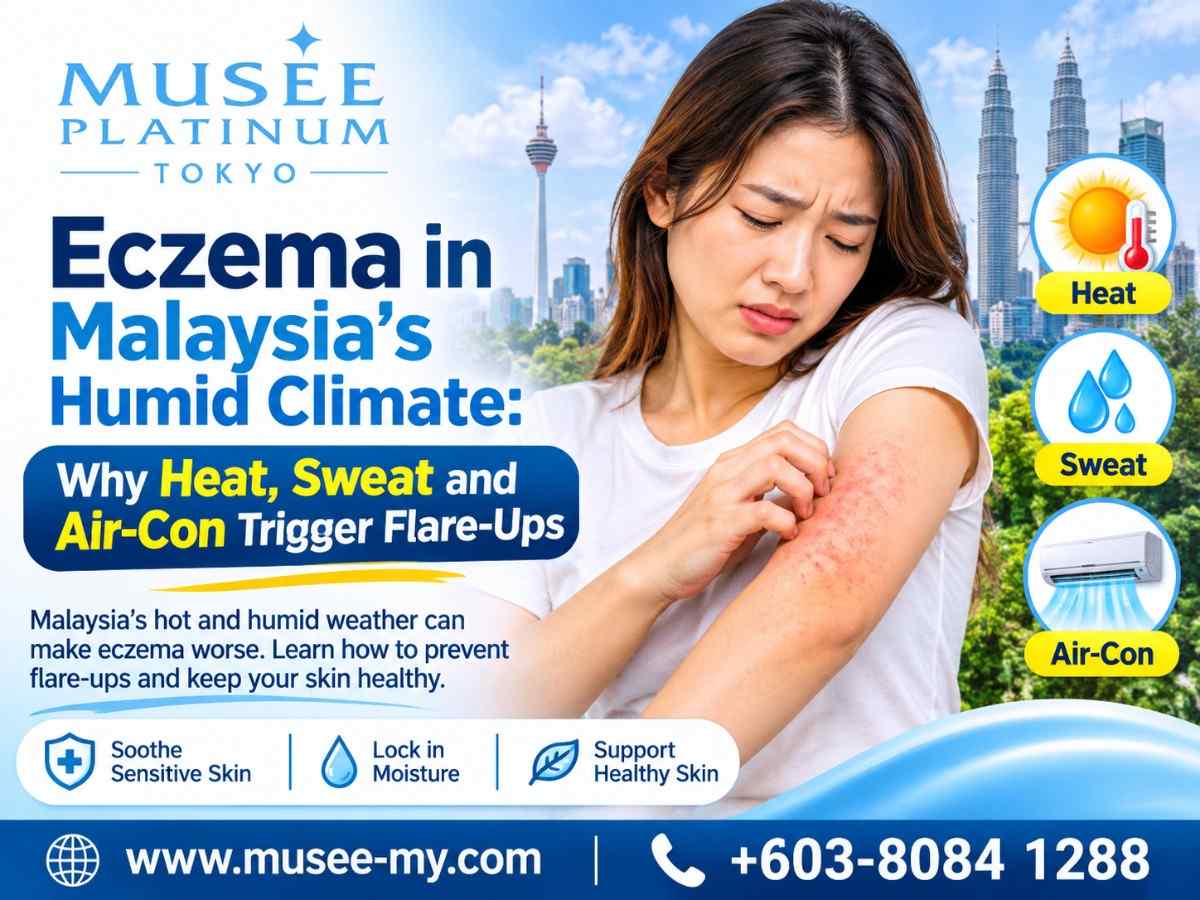
In Malaysia’s tropical climate, eczema flare-ups are caused by a combination of heat, sweat and sudden changes into air-conditioned environments. Sweat raises skin pH and introduces irritants directly onto a compromised skin barrier. Air conditioning also dehumidifies the air, so you lose more water. The best way to find out the best eczema treatment for Malaysian skin is to manage these triggers in a consistent routine that is climate aware.
If you’ve tried following eczema advice from international sources and still struggle with flare-ups, there’s a good reason. Most of that content is written for temperate climates. Malaysia’s daily cycle of outdoor heat, sweat, and then stepping into a cold, dry office or mall creates a skin stress loop that generic guides simply don’t address.
Why Malaysia’s Climate Makes Eczema Harder to Control
Malaysia sits close to the equator, with average humidity levels between 70% and 90% and temperatures consistently above 30°C. This combination puts eczema-prone skin under constant pressure. The skin barrier — already weakened in eczema sufferers — is forced to respond to rapid environmental shifts multiple times a day.
Unlike seasonal eczema common in colder countries, eczema in Malaysia is a year-round condition. There’s no “winter break” or dry spell that offers the skin time to recover. The triggers are present every single day.
The Sweat Problem Is More Complex Than It Looks
Sweating is one of the most underappreciated eczema triggers in tropical climates. When sweat sits on the skin, it doesn’t just irritate — it actively disrupts the skin’s acid mantle. Studies have shown that sweat contains sodium, lactic acid, and urea, which can lower the skin’s pH tolerance threshold in already-sensitised individuals.
An eczema sweat flare up often begins within minutes of physical activity or simply being outdoors. The itch-scratch cycle starts, the skin barrier breaks down further, and inflammation sets in. For parents of young children, school recess or sports periods are common trigger windows.
How Air Conditioning Triggers Eczema — Not Just the Heat
Most people assume air conditioning helps eczema by cooling the skin. In reality, air conditioning dry skin eczema is a well-documented problem. Air-conditioned spaces in Malaysia — offices, shopping centres, schools — typically maintain relative humidity between 40% and 55%, a sharp drop from outdoor conditions.
This sudden shift draws moisture out of the skin’s surface layers. For someone with eczema, whose transepidermal water loss (TEWL) is already elevated, prolonged exposure to air conditioning accelerates dryness, tightness, and cracking — particularly on the arms, legs, and behind the knees.
The transition itself is a trigger. Moving from hot, humid outdoor air into a cold, dry interior shocks the skin. If this happens several times a day — which it does for most working adults and school-going children in Malaysia — the cumulative effect is significant.
Practical Daily Routine for Tropical Climate Eczema Care
Managing tropical climate eczema care requires adjusting both products and habits to reflect local conditions. Here’s a routine that works with Malaysia’s environment rather than against it.
Morning: Prepare Before You Step Outside
- Shower with lukewarm water — not cold, not hot. Hot water removes the skin’s natural oils faster than you think.
- Pat dry gently and apply a fragrance-free, ceramide-based moisturiser within three minutes of stepping out of the shower. This locks in hydration before the skin loses it.
- If you’ll be in air conditioning for most of the day, apply a slightly thicker emollient to exposed areas like arms and legs.
- Use a broad-spectrum sunscreen if spending time outdoors. Sun exposure worsens inflammation in eczema-prone skin.
Midday: Manage the Sweat-to-AC Transition
- If you’ve been sweating outdoors, rinse or gently wipe skin with clean water before entering an air-conditioned space. Don’t let sweat dry on the skin.
- Keep a travel-sized, alcohol-free hydrating mist or barrier-repair lotion in your bag for reapplication after commutes.
- Wear loose, breathable clothing — cotton or bamboo fabrics reduce friction and allow sweat to evaporate more evenly.
- Avoid tight waistbands, collar edges, or synthetic materials that trap heat against skin.
Evening: Repair and Restore
- Shower again to remove sweat, pollutants, and accumulated irritants from the day.
- Apply your primary treatment product — whether a topical corticosteroid (as prescribed), a non-steroidal barrier cream, or a medicated moisturiser — immediately after cleansing.
- Use a richer emollient at night, when the skin naturally repairs itself.
- If sleeping in air conditioning, consider a humidifier to maintain room humidity above 50%, or use a slightly heavier overnight cream to compensate for the dry air.
Understanding Your Personal Eczema Triggers in Malaysia
Not every person with eczema responds identically to the same triggers. Eczema triggers Malaysia can vary depending on age, occupation, and lifestyle. A delivery rider faces different exposure than an office worker or a child in school.
Keeping a simple trigger log for two to three weeks is surprisingly effective. Note the time, location, activity, and what you ate before each flare-up. Patterns usually emerge within the first fortnight. Common Malaysian-specific triggers include:
- Spicy foods and hawker-stall dishes high in preservatives or MSG
- Haze periods (common between June and October) which raise particulate matter in the air
- Chlorinated water in public swimming pools
- Prolonged use of wet fabrics — including school uniforms after PE
- Certain laundry detergents popular in Malaysian households that contain harsh surfactants
When to Seek Professional Treatment
A good skincare routine manages day-to-day flare-ups, but it isn’t a substitute for clinical treatment when eczema is moderate to severe. If your skin is weeping, bleeding, heavily infected, or consistently disrupting sleep, professional intervention is essential.
Dermatologists and aesthetic clinics in Malaysia now offer a range of treatment options beyond basic corticosteroid creams. These include:
| Treatment Type | Best For | Notes
|
|---|---|---|
| Topical corticosteroids | Acute flare-ups | Short-term use under medical supervision |
| Calcineurin inhibitors | Sensitive areas (face, neck) | Non-steroidal, suitable for long-term maintenance |
| Barrier repair treatments | Chronic dryness and mild eczema | Strengthens skin’s natural defence layer |
| Light therapy (narrowband UVB) | Moderate-to-severe, widespread eczema | Available at specialist clinics |
| Advanced clinical facials | Facial eczema and sensitive skin | Tailored protocols for eczema-prone skin types |
If you are unsure which treatment level suits your condition, a skin consultation is always the right first step. Self-medicating with over-the-counter products alone delays proper diagnosis and can allow secondary infections to develop.
Small Habit Changes That Make a Real Difference
Beyond products and clinical treatments, several low-cost daily habits significantly reduce flare-up frequency for people living in Malaysia’s climate:
- Drink adequate water — dehydration worsens skin barrier function, and Malaysia’s heat accelerates fluid loss
- Change bed linens weekly and use hypoallergenic covers to reduce dust mite exposure, a major indoor allergen in humid homes
- Keep fingernails short to reduce skin damage from unconscious scratching during sleep
- Avoid showering more than twice daily with soap, as over-cleansing strips the skin barrier
Musee Platinum Tokyo Malaysia offers professional skin care treatments designed for sensitive and eczema-prone skin, with consultations tailored to local climate conditions. If you’ve been managing symptoms on your own without consistent results, speaking with a skin specialist can help you find an approach that actually fits your lifestyle and environment. Visit the Musee Platinum Tokyo Malaysia homepage to learn more about their services.
Frequently Asked Questions
Why does my eczema get worse in Malaysia’s humid weather?
The sweat that is produced is a lot, because it is so humid and that puts irritants on the skin, like lactic acid and sodium. This throws the pH balance of the skin out of whack and weakens an already compromised barrier, triggering inflammation and the itch-scratch cycle that characterizes eczema flare-ups in tropical climates.
Can air conditioning actually make eczema worse?
Yes. Malaysia’s air-conditioned interiors dry out the indoor air considerably, robbing the skin of moisture. In people with eczema and a high rate of transepidermal water loss, long exposure to dry cool air causes a feeling of tightness, cracking and increased sensitivity, particularly on the limbs and face.
What is the best eczema treatment for people living in Malaysia?
The best eczema treatment in Malaysia is the combination of a climate-adapted skincare routine — regular moisturizing, trigger avoidance and barrier repair — with professional treatment when needed. There are a variety of topical medications prescribed by dermatologists, from basic clinical skin therapies for tropical, eczema prone skin types.
How do I stop eczema from flaring up after sweating outdoors?
After outdoor activity, wash away or lightly wipe off sweat from the skin as soon as possible. Reapply a fragrance-free moisturizer before going into air-conditioned spaces. Loose and breathable cotton clothing also helps to reduce the accumulation of sweat and friction which are two key contributors to eczema sweat flare-ups in Malaysia.
Are there specific eczema triggers unique to Malaysia?
Yep. In Malaysia, common triggers are seasonal haze, chlorinated pool water, spicy or processed hawker food, synthetic school uniforms and laundry detergents with harsh surfactants. Humidity in Malaysia is a favorite for dust mites, and they are a significant indoor allergen that often worsens eczema symptoms in both adults and children.
When should I see a doctor for eczema instead of managing it at home?
If your eczema is weeping, infected, bleeding or waking you regularly at nite, seek professional advice. Mild symptoms can be treated at home, but moderate to severe eczema requires clinical treatment, including prescription topicals, light therapy or specialist skin consultations, to prevent long-term skin damage.