





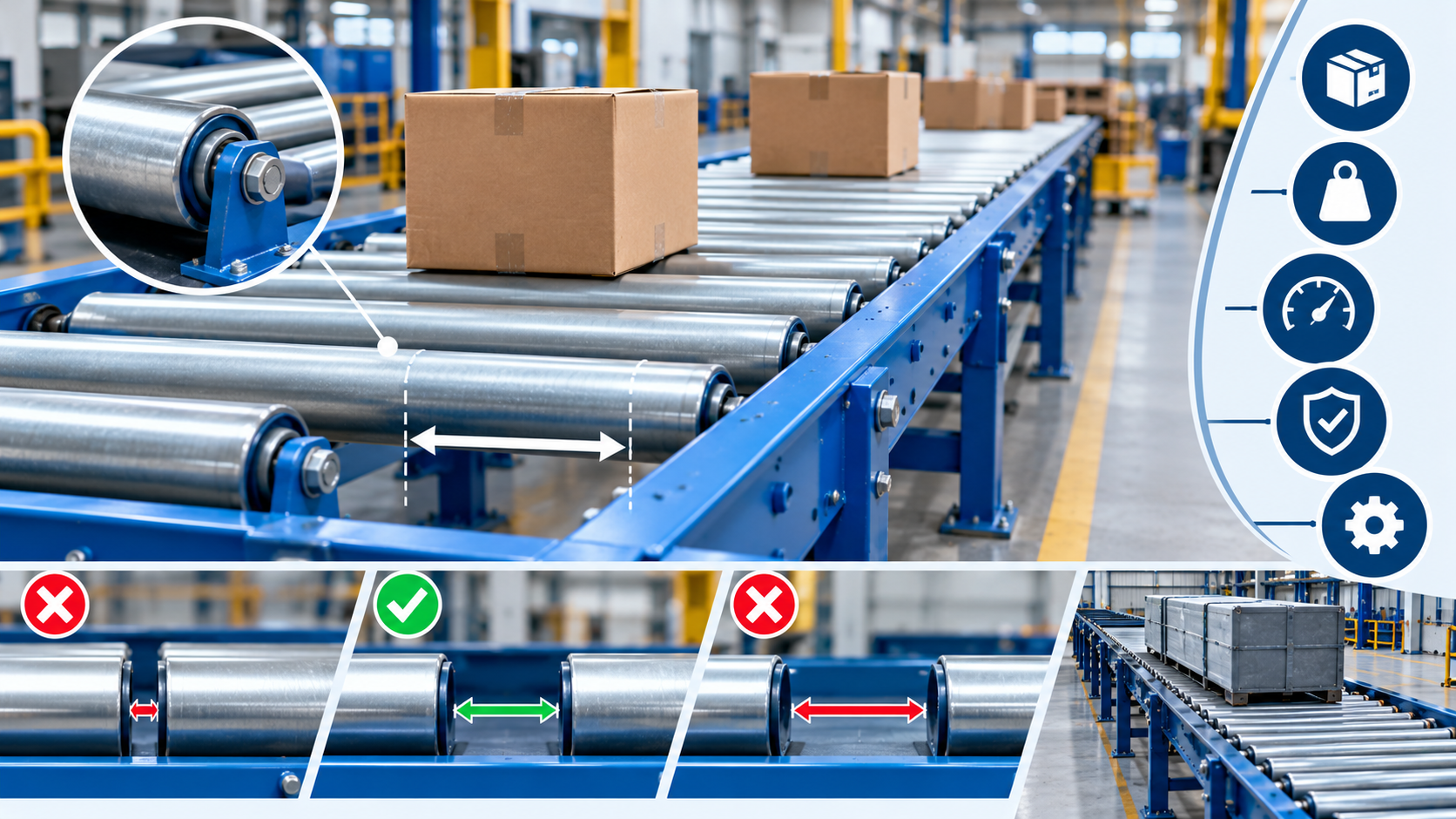
Conveyor roller spacing depends on product dimensions, weight, base construction, and conveyor design. Confirm the required spacing with the conveyor supplier based on the products and operating conditions.
People Also Ask
What Are Roller Centers on a Conveyor?
Roller centers are the distance from the center of one roller axle to the center of the next. They are the standard way to state conveyor roller spacing.
Should Roller Spacing Match My Typical Product Size?
Include the shortest product in the spacing review. Also assess product weight, base construction, and orientation during travel. Larger products still require an application review.
Is Closer Roller Spacing Always Better?
No. Closer spacing changes component requirements and cost. Ask the supplier to confirm suitable spacing for product support and conveyor operation.
Review roller spacing when investigating product handling problems. Assess it alongside roller condition, alignment, and conveyor setup. This guide explains what sets roller centers. It also covers pallets, drums, curves, and load capacity. For the wider supplier evaluation, see the material handling conveyor playbook.
What Determines Conveyor Roller Spacing?
Review the dimensions, weight, and bottom surfaces of all products expected on the line, including the shortest item. Key factors include:
- Shortest product length: Check every SKU, not only your high volume items.
- Product weight: Confirm how the load reaches the rollers through the product base and contact points.
- Bottom surface: Ask the supplier to assess base rigidity and whether flexible packaging requires a different conveying surface.
- Conveyor type: In powered roller conveyors, the drive design can limit available spacing options.
How Should Product Support Guide Roller Spacing?
Ask the supplier to confirm product support throughout travel, including transfers and changes in orientation. Use the conveyor manufacturer’s application guidance to confirm suitable roller centers.
Provide product dimensions and expected travel orientations. Include any rotation that occurs during operation. For the roller decisions that sit alongside spacing, see our guide to specifying conveyor rollers for industrial facilities.
What Spacing Suits Pallets and Drums?
Pallets and drums require a spacing review based on their actual contact surfaces and load characteristics. For pallets, include bottom board orientation in the review alongside construction, condition, weight, and contact points. Provide pallet drawings or photographs showing bottom boards, runners, and travel orientation. Ask the supplier to assess how board gaps, pallet construction, and travel orientation affect support on the proposed roller arrangement.
For drums, provide base geometry, weight, and travel orientation. Confirm conveyor suitability for each pallet or drum application. If your facility handles mixed pallet types, confirm that the proposed configuration suits each type.
How Does Spacing Change on Curves?
Ask the supplier to review curve geometry, roller arrangement, gaps, product dimensions, and tracking requirements together. Confirm product support throughout the curve, including the expected travel path near the outer rail.
Can Spacing Cause Product Tipping or Drift?
Yes. Roller centers that are too wide for the product can cause tipping, jams, and skewing. A corner that catches can rotate a carton and push it toward a side rail. Include product height, base dimensions, and observed movement in the spacing assessment.
Spacing is not the only suspect, though. Drift can also come from a frame that is out of level or from misaligned rollers. Ask whether side guides suit the packaging and conveyor configuration. Heinrich Brothers Inc. offers conveyor installation and repair services when the cause needs a closer look.
Does Closer Spacing Raise Load Capacity?
Closer spacing does not raise total conveyor capacity on its own. Assess roller loading from the actual contact pattern. Confirm capacity against the manufacturer’s ratings for the complete conveyor configuration.
The rest of the system still sets limits:
- Support spacing: Check frame capacity against the manufacturer’s specified support arrangement.
- Axle capacity: Confirm the axle rating for the proposed roller assembly and mounting arrangement.
- Roller construction: Diameter, wall thickness, bearings, and axle design determine what each roller can carry.
Heinrich Brothers Inc. reviews these factors together when helping customers select new or replacement conveyor rollers.
Need Help Setting Roller Centers for Your Line?
Heinrich Brothers Inc. supplies conveyor rollers and material handling conveyor systems and supports customers from equipment selection through installation. Contact Heinrich Brothers Inc. to request a conveyor roller quote for your line.
Frequently Asked Questions
Can I Add Rollers to an Existing Conveyor to Tighten Spacing?
Check the frame design and manufacturer guidance before changing roller spacing. Confirm whether the proposed modification is suitable.
Does Roller Diameter Affect Spacing?
Yes. Rollers with a larger diameter need more room, which limits how close the centers can be.
What Spacing Works for Small or Soft Packages?
Ask the supplier whether the package needs closer roller spacing or another conveying surface, such as a belt.
When Should I Review My Roller Spacing?
Review spacing whenever you add new SKUs, change packaging, or bring in new pallet types. A smaller item may require a different spacing arrangement.
What Information Do I Need for a Spacing Recommendation?
Have your shortest product length, heaviest load, bottom surface type, and curve locations ready. For pallet lines, note the bottom board orientation too.