



Many commercial structures and mechanical assemblies rely on SS 304 fasteners to hold heavy components together. These are basic hardware parts. You see them in manufacturing plants and commercial construction sites every day. They form the mechanical joints in structural frames and machinery. Buyers choose 304 Grade Stainless Steel fasteners because they resist corrosion well. They have good physical strength. The pricing is also affordable compared to other marine-grade metal options. Builders and mechanical engineers specify them on their blueprints frequently. The metal performs well under standard weather exposure and daily physical wear.
What are SS 304 Fasteners?
SS 304 fasteners are mechanical parts that consist of austenitic stainless steel. The raw metal alloy contains roughly 18 percent chromium and 8 percent nickel. That specific chemical composition creates a physical barrier against rust. The metal forms a thin invisible oxide layer on the outside. This stops oxygen from reaching the underlying iron core. These stainless steel 304 fasteners can handle oxidation and mild chemicals. You will find them in mostly non-saltwater environments. The non-magnetic nature of the austenitic structure is also helpful in specific electrical and panel installations.
Chemical Composition and Material Properties
The metal composition defines how the hardware performs under mechanical stress.
- Chromium: This element forms a passive layer on the surface. It stops rust from spreading into the core of the bolt.
- Nickel: This adds toughness. It maintains the austenitic structure at different temperature ranges.
- Carbon: Kept low in 304 and 304L variants. This prevents carbide precipitation during welding processes.
- Manganese: Helps maintain the internal structure and adds tensile strength to the finished part.
The properties of this metal grade are practical for general commercial use.
- Corrosion resistance: Handles water, steam, and mild chemicals.
- High tensile strength: Bears heavy mechanical loads without breaking.
- Durability: Lasts a long time in standard industrial environments.
- Temperature resistance: Works in both high heat and moderately low heat applications.
- Excellent formability: The metal is easy to shape into complex thread patterns.
Common Types of Stainless Steel 304 Fasteners
Different jobs need specific fastening methods. A single industrial assembly might use several types of hardware on the same machine.
Stainless Steel Bolts and Nuts
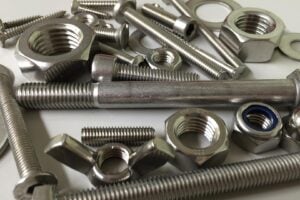
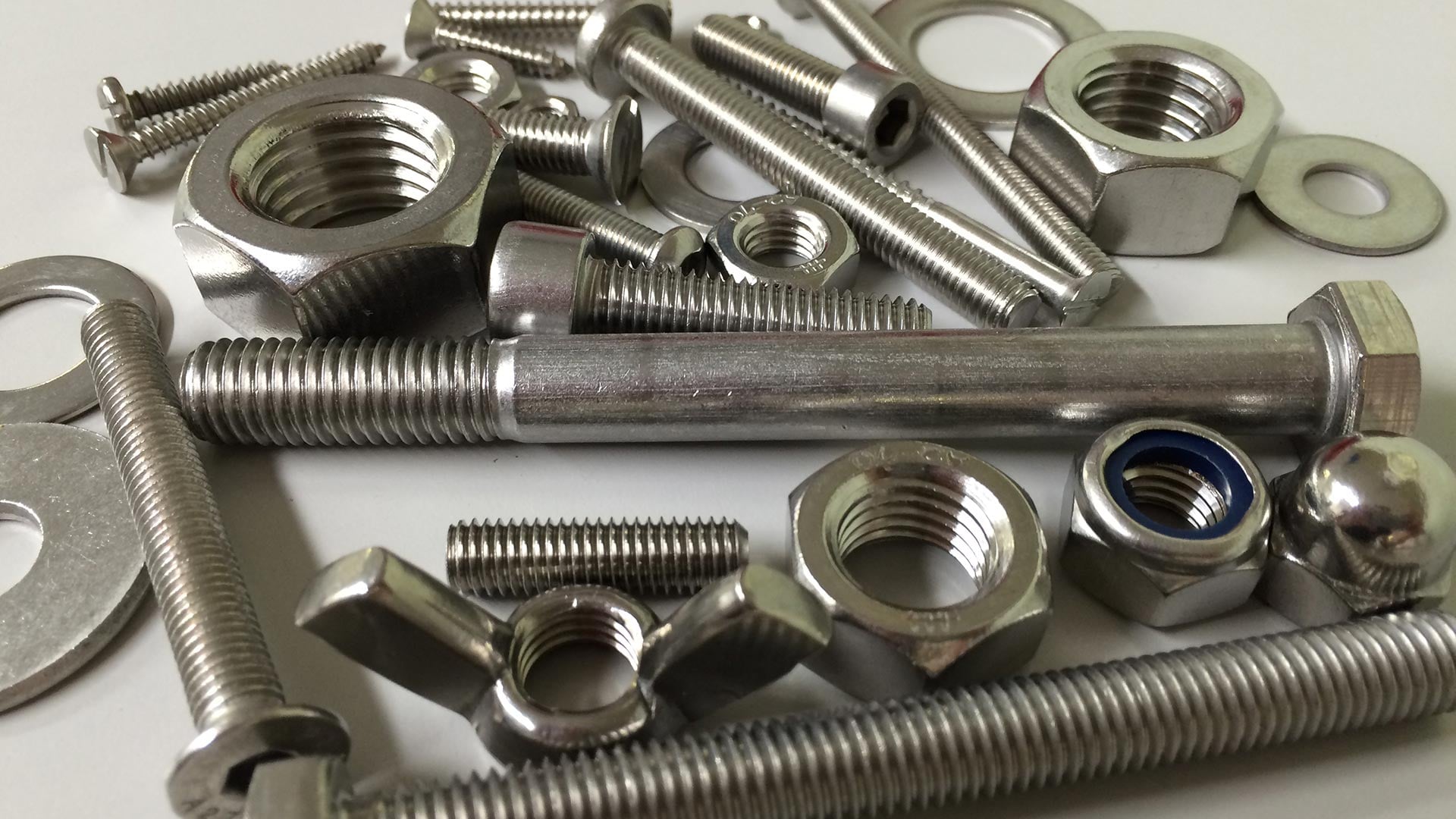
These are the standard parts for securing heavy joints. You always use them together to clamp two materials. Stainless steel bolts and nuts come in several distinct shapes.
- Hex bolts: The heads have six sides. Workers tighten them with standard wrenches or heavy impact drivers.
- Carriage bolts: These have a smooth rounded head and a square neck. The square part fits securely into wood or slotted metal. This stops the bolt from turning.
- Eye bolts: There is a circular loop on one end instead of a solid flat head. People use them to attach steel cables for lifting.
- Lock nuts: These resist loosening under heavy machine vibration.
- Wing nuts: You can tighten these by hand. Two metal wings stick out from the sides.
Stainless Steel Washers
A bolt needs a washer to work correctly in most setups. Stainless steel washers sit directly between the bolt head and the base surface.
- Flat washers: These spread the physical clamping load over a larger area. This stops the bolt head from crushing the base material.
- Spring washers: They have a split and a slight twist. The metal pushes back against the nut. This creates mechanical tension.
- Lock washers: These have external or internal teeth. The sharp teeth dig into the metal surface.
Screws
Screws cut their own threads or fit directly into tapped holes.
- Self-tapping screws: These drill their own threads into thin metal or wood sheets. Workers use them extensively in sheet metal fabrication.
- Machine screws: These have uniform straight threads. You thread them into pre-tapped holes in thick metal plates.
- Socket head screws: These sit flush with or below the metal surface. Workers use an Allen key to turn them.
Stud Bolts and Threaded Rods
These are solid metal rods with threads running along the entire length. There is no solid head on either end. Plumbers and piping engineers use them in large flange connections. Pressure equipment assemblies require them to bolt heavy pipe joints together.
Anchors and Rivets
Anchors secure heavy fixtures to concrete floors or masonry walls. You can drill a hole in the concrete, insert the anchor, and expand it with a wrench. Rivets join thin metal sheets permanently. You can use a rivet gun to compress the tail section. Construction and fabrication projects depend on these.
Uses of SS 304 Fasteners in Different Industries
This specific metal grade fits many sectors due to its balance of initial cost and physical performance.
- Construction and infrastructure: Builders use them in steel handrails, exterior building facades, and structural supports.
- Food processing: The metal does not react with food acids. Factories use them to bolt together heavy conveyor belts and mixing vats.
- Pharmaceutical equipment: Cleanrooms need non-corrosive hardware. Pill presses and chemical mixers use 304 grade parts.
- Marine and coastal structures: They handle mild dampness. Inland docks and lake structures use them. Extreme ocean salt usually requires 316 grade.
- Chemical processing: The material survives direct exposure to mild industrial chemicals.
- Automotive industry: Mechanics use them in vehicle exhaust systems and custom frame fabrication.
- General engineering: Fabrication shops use them for daily equipment building.
Benefits of Stainless Steel 304 Fasteners
The choice of 304 grade comes down to practical factors for project managers.
- Excellent corrosion resistance in normal environments: Rain, humidity, and regular washdowns do not cause fast rusting.
- Hygienic and easy to clean: The smooth metallic surface does not harbor bacteria.
- Strong and durable: The solid parts handle physical stress and torque very well during assembly.
- Attractive finish: The bright metal looks clean on exposed architectural joints.
- Easy availability and cost-effectiveness: Most hardware suppliers stock this exact grade. It costs less than premium specialty alloys.
- Low maintenance requirements: The parts do not need regular oiling or painting.
Standards and Specifications
Industrial hardware must meet exact physical dimensions to fit together correctly.
- ASTM F593: This specification covers the strict chemical and mechanical requirements for stainless bolts.
- ASTM A193: This standard applies specifically to alloy and stainless steel bolting materials for high-temperature service environments.
- DIN, ISO, and BS standards: These international metric standards dictate the exact head size, shank length, and thread pitch.
Common thread types vary based on the mechanical need. Coarse threads are for fast assembly in dirty environments. Dimensional standards dictate the exact tolerance limits.
How to Select the Right SS 304 Fasteners
Picking the correct hardware stops assembly failures on the factory floor.
- Consider load requirements: Calculate the sheer force and tensile force the joint will take.
- Environmental exposure: Ensure the area only has mild chemicals or water.
- Type of application: Decide if the joint needs to be removable.
- Size and thread specifications: Match the bolt diameter and thread pitch exactly to the corresponding nut or tapped hole.
- Compliance requirements: Check local building codes or plant safety rules. Inspectors look for standard grade markings.
Conclusion
Stainless steel 304 fasteners are versatile and reliable components for many industrial applications. Choosing the right type matters for basic structural integrity. You must select the correct bolts, nuts, and washers based on the specific mechanical load and the physical environment. These hardware parts deliver long-lasting performance and strong cost efficiency for tight construction budgets. Companies like Vision Alloys supply these exact components to fabrication shops and builders. The right hardware secures the final assembly properly.