


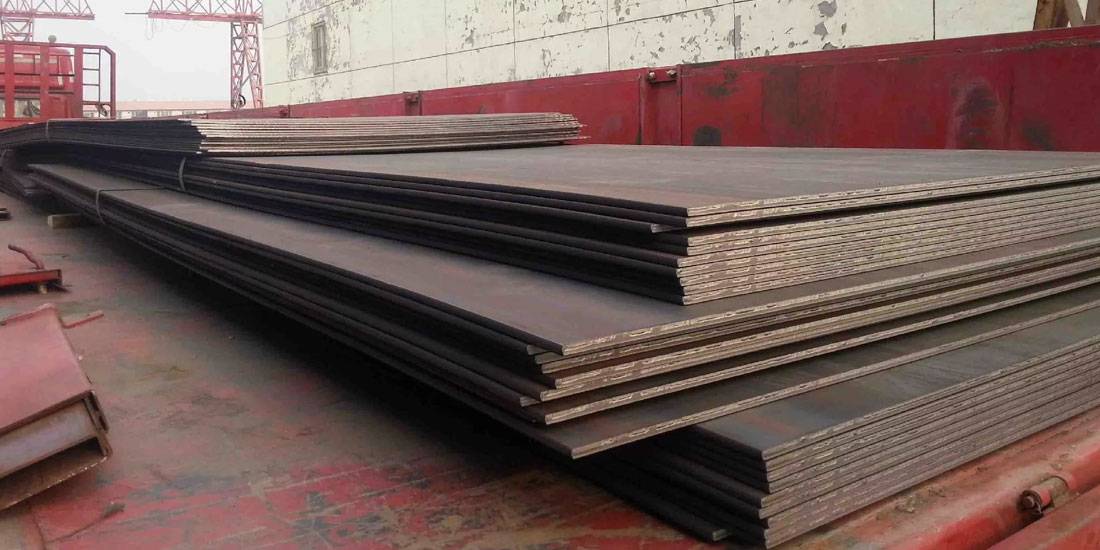
Choosing the right High Tensile Plate starts with matching four things to the job: yield strength, plate thickness, operating environment and fabrication method. Steel fabricators, mining contractors and heavy machinery builders rely on these plates to carry loads that would deform ordinary mild steel. Construction frames, excavator buckets, crane booms, trailer chassis and industrial equipment all depend on correct grade selection. Picking the wrong one costs money twice: at fabrication, then again in service.
What Is a High Tensile Plate?
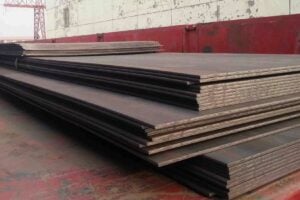
A High Tensile Steel Plate is a flat rolled product with a minimum yield strength above 300 MPa, achieved through controlled chemistry and heat treatment rather than added thickness. Mild steel such as ASTM A36 holds 250 MPa minimum yield and 400 to 550 MPa tensile strength. High tensile grades start where that ends. ASTM A572 Grade 50 delivers 345 MPa yield, and quenched and tempered grades reach 690 MPa.
Three properties define performance: yield strength, ultimate tensile strength and notch toughness, measured by Charpy V-notch testing at sub-zero temperatures. Chemistry controls all three. Niobium, vanadium and titanium refine grain size without the carbon that damages weldability. Quenching and tempering then build a fine martensitic structure.
A 690 MPa plate carries the same load as mild steel at roughly half the thickness.
Key Factors to Consider When Choosing a High Tensile Plate
Six factors decide whether a plate performs in service: load capacity, thickness, grade specification, operating environment, fabrication behaviour and certification. Weighing all six avoids the two common outcomes: premature failure, or an unnecessarily expensive plate.
Required Strength and Load Capacity
Load assessment begins with the design stress, not the plate catalogue. Calculate the maximum static and dynamic load, apply the safety factor, then work back to a minimum yield value. Fatigue governs long before yield under cyclic loading.
Plate Thickness and Dimensions
Thickness governs section modulus and structure weight together. A higher grade at 10 mm often replaces mild steel at 16 mm, cutting weight by a third. Mill widths run to 3,000 mm, so confirm sizes before the design locks in.
Steel Grade and Material Specifications
Grade selection follows the standard governing the project: ASTM, EN, IS or JIS. S355JR under EN 10025-2 suits general structural work, while S690QL under EN 10025-6 covers high strength duty. Match the grade the design engineer nominated.
Operating Environment
Service conditions dictate more than strength alone. Coastal and chemical exposure calls for a weathering grade such as ASTM A588, or a coating system. Abrasive service needs surface hardness, and duty below minus 20°C requires a verified Charpy value.
Weldability and Fabrication
Weldability depends on carbon equivalent value. Above a CEV of 0.45, the plate needs preheat, controlled interpass temperature and low hydrogen consumables. Confirm bending radii too: high strength grades need a minimum radius three to four times plate thickness.
Quality Certifications and Testing
Material test certificates to EN 10204 3.1 confirm that the delivered plate matches the ordered grade. The certificate records heat number, chemical analysis, tensile results and impact values. Traceability protects the fabricator at third party inspection.
The correct plate satisfies the full application requirement, not the highest tensile strength available.
Common Grades and Types of High Tensile Steel Plates
High Tensile Steel Plates fall into four families, separated by how the strength is produced: structural, HSLA, wear resistant and quenched and tempered. The application and the governing standard decide which family applies.
- Structural steel plates. Bridges, building frames and columns use grades such as S355 and ASTM A572 Grade 50. Both deliver 345 to 355 MPa yield with sound weldability.
- High-strength low-alloy (HSLA) plates. Weight sensitive structures use HSLA grades, where micro-alloying with niobium and vanadium raises strength at low carbon levels. Trailer builders cut tare weight and gain payload.
- Wear-resistant plates. Abrasion resistant grades run from 400 to 500 HBW surface hardness. Crusher liners, bucket lips and chute plates use them, though hardness restricts cold forming.
- Quenched and tempered plates. Crane booms and pressure retaining structures call for grades such as ASTM A514 or S690QL, rated at 690 MPa yield with Charpy toughness verified to minus 40°C.
Properties vary by mill and standard, so verify the datasheet before ordering.
Industrial Applications of High Strength Steel Plates
Industrial High Strength Plates serve five sectors where load, weight and wear decide the design. Each sector draws on a different property: tensile strength for structures, hardness for mining, toughness for lifting equipment.
- Construction. Bridge girders, column base plates and framework members carry sustained load. S355 and A572 Grade 50 cover most of this work.
- Mining. Crusher bodies, screen decks and dump truck bodies face impact and abrasion together. Wear grades at 450 HBW extend liner life.
- Heavy machinery. Machine frames, excavator arms and boom sections use quenched and tempered plate to keep section size down under dynamic load.
- Transportation. Tipper bodies, trailer chassis and container frames use HSLA plate. Every kilogram removed converts into payload.
- Material handling. Crane structures, lifting beams and support frames demand verified impact toughness, since brittle fracture in a lifting member carries safety risk.
The grade follows the engineering specification in each case, not the sector.
Common Mistakes to Avoid When Selecting High Tensile Plates
Six selection errors account for most plate related failures and cost overruns on fabrication projects. Five surface before the plate reaches the shop floor. The sixth appears only in service.
- Buying on price alone. A plate without a valid test certificate transfers risk to the fabricator. Rework costs more than the saving.
- Over-specifying strength. A 690 MPa grade where 355 MPa suffices adds cost, preheat requirements and forming difficulty with no structural gain.
- Ignoring thickness and load data. Substituting a thinner plate of higher grade without recalculating deflection creates a stiffness problem, even where strength is adequate.
- Overlooking environmental exposure. High strength does not mean corrosion resistant. Uncoated plate in marine service loses section thickness steadily.
- Skipping certificate verification. An unverified mill certificate leaves the heat number untraceable, which fails third party inspection.
- Neglecting welding procedure. Quenched and tempered grades lose their tempered properties when heat input runs too high. Qualify the procedure before production.
Review the technical datasheet against the design drawing, and consult a qualified materials or welding engineer for fatigue, impact or low temperature service.
Conclusion
Correct selection of a High Tensile Plate rests on six inputs: strength, grade, dimensions, operating environment, fabrication method and certification. Weigh all six against the design drawing rather than the price list. Source from a supplier who can provide mill test certificates, traceability and documented compliance with the standard your project specifies.