







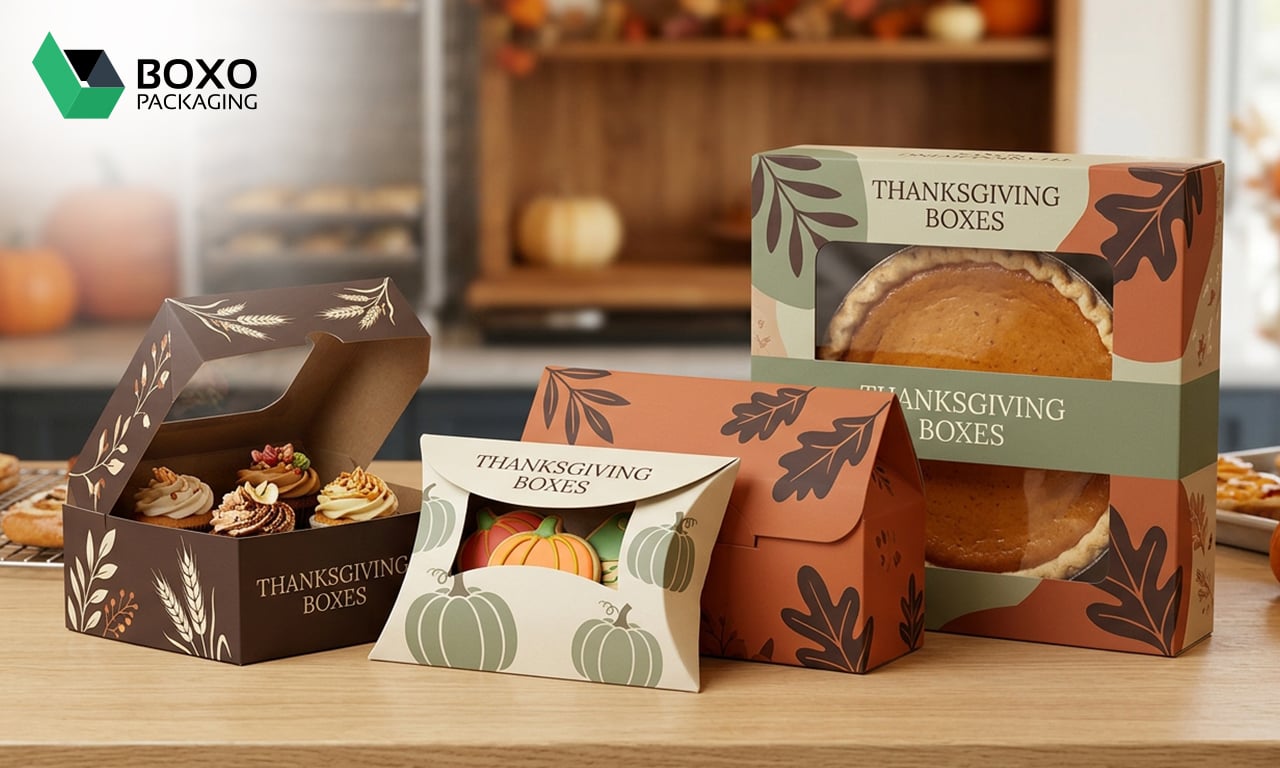
A seasonal box can gather a household gift, organize a table-ready assortment, or help distribute individually wrapped favors. For Thanksgiving Boxes, the useful distinction is between a shared container and a package intended for one recipient. The arrangement should make the contents understandable without requiring the host to unpack everything first.
Imagine a community dinner where volunteers distribute small gratitude gifts after the meal. A shared carton might hold several individually packaged favors, while each guest receives only one. Designing these two levels together can prevent counting errors and unnecessary handling.
Let distribution shape the interior layout
Begin with the moment of handover. If a volunteer needs to reach into the box repeatedly, a deep carton with a narrow opening can be inconvenient. A shallow tray or display-style carton may provide clearer access, provided it supports the actual contents.
If the gift goes to one household instead, a partitioned carton may be more useful. A recipe card, wrapped confection, and small keepsake should each remain visible enough to explain the set. A divider can keep the card from slipping beneath the other pieces.
Plan the distribution setup around four questions:
- Can the contents be counted quickly before the event begins?
- Is the intended recipient or household clearly identified?
- Will the box fit on the actual collection table?
- Can a volunteer remove one favor without disturbing the rest?
Gift trays and display boxes are related options for open access. A lidded gift carton offers a different experience when the whole assortment leaves with one recipient. Choose between them by following the handover rather than judging an empty package in isolation.
Avoid seasonal decoration that complicates reuse
A short gratitude message can carry the theme without covering the structure in event-specific information. If leftover cartons may serve another gathering, a removable band or separate message card can keep the base package more flexible. That is a planning choice, not a claim about environmental performance.
Do not describe a carton as recyclable merely because it looks like paper. Ask about its complete construction and the collection arrangements in the destination market. Windows, coatings, attachments, and mixed components deserve attention before an environmental statement is printed.
For food gifts, identify whether the seasonal box touches the food or only surrounds sealed packages. FDA guidance treats suitability as a matter of the substances and intended use; a general decorative purpose does not establish food-contact suitability.
A project discussion with Boxo Packaging can start with a simple distribution sketch showing the master carton, individual favors, and labels. That gives the designer a more useful brief than an isolated photograph of an autumn pattern.
With Thanksgiving Boxes, the strongest practical result may be a clear shared container rather than a heavily decorated one. Once the group arrangement works, the individual package can carry a quieter, more personal message.
Pillow Packaging for Small Place-Setting Favors
The curved shape offers a compact enclosure for lightweight gifts such as a folded thank-you note and a small fabric token. In Pillow Packaging, bowed panels and inward-folding ends form the enclosure without a separate lid. The shape suits an individual presentation when the item fits comfortably inside.
At a place setting, the package occupies a different role from the shared carton. It should be easy to recognize as a gift, simple to move aside during the meal, and uncomplicated to take home. Oversized decoration can interfere with all three.
Fit the note and token as one bundle
A stiff card can dictate the required size even when the gift itself is soft. Try the complete arrangement, including tissue or a ribbon if either is planned. Fold both ends closed and look for pressure marks where the card corners meet the curved panels.
A smaller, softly folded note may work better than forcing a large card into a narrow cavity. If the message needs substantial space, a flat sleeve or an envelope may be more suitable. Keep the package’s geometry in mind instead of treating every internal dimension as a rectangle.
Check the finished favor against these points:
- The note should stay readable without being sharply creased.
- The token should not push an end flap back open.
- A name label should sit on a readable central area.
- The recipient should remove the contents without pulling hard.
For a fragile ornament, a small gift box with a supporting insert may be the safer design direction to test. For a flat photograph or bookmark, a sleeve box can avoid unnecessary curved space. The individual object’s needs should decide the format.
Make assembly calm enough for event preparation
Event favors are often packed in batches near the gathering date. Small details become significant when repeated: a ribbon that slips, tissue caught in every second flap, or labels that require precise alignment. Rehearse the full assembly before committing to the final materials.
Set out the components in packing order and complete several samples consecutively. This is not about chasing a claimed speed improvement. It is a practical way to discover which step causes avoidable handling or mistakes.
For Pillow Packaging containing wrapped sweets, retain the appropriate primary wrapper unless a suitable food-contact construction has been verified. The curved exterior should not be assumed to provide a moisture barrier or a sealed food enclosure simply because both ends are folded shut.
A personal name or brief message can finish the favor without obscuring the opening. Leave enough unprinted space for the recipient to understand the form. A small package succeeds here by fitting the occasion and the object, not by competing with the table setting.