



A flooring decision can influence a room long after the renovation is finished. It affects how the space looks, how it feels underfoot, how easily it can be maintained, and how well it handles everyday activity. As interior design has become more focused on combining visual appeal with practical performance, newer flooring formats have started attracting attention from homeowners, designers, and renovation professionals.
WPC vinyl flooring is one of those options. Built around a wood-plastic composite core and finished with a decorative vinyl surface, it offers a different approach to the familiar wood-look floor. The product category has become especially interesting for people who want the character of wood-inspired design while considering the demands of active rooms.
For anyone researching WPC flooring, the most useful place to start is not with color or pattern but with construction. Understanding how the material is built explains why it can feel different from conventional vinyl and why it has found a place in a variety of modern interiors.
What the Composite Core Changes
The core is one of the defining characteristics of WPC flooring. Instead of relying on a conventional vinyl construction alone, WPC products incorporate a wood-plastic composite layer within the plank.
That construction contributes to the stability and feel of the flooring. The surface can still reproduce the appearance of natural timber, but the underlying structure gives the plank a different physical character.
For homeowners, this distinction is useful because flooring performance does not come from the decorative layer alone. The core, wear layer, dimensions, installation system, and subfloor all influence how the finished floor behaves.
WPC should therefore be considered as a complete flooring system rather than simply a particular type of printed vinyl.
Why Comfort Matters on Hard Floors
Hard surfaces are often selected for their clean appearance and ease of maintenance, but comfort can become an issue in rooms where people spend long periods standing or walking. The construction of WPC flooring can provide a more resilient sensation underfoot than some traditional hard flooring materials. That characteristic can make it appealing in kitchens, family rooms, dining spaces, and other active areas.
Comfort is especially relevant in homes where the floor is used throughout the day. Someone preparing meals in a kitchen may stand for extended periods, while children may spend considerable time playing in a family area. A floor does not have to be soft like carpet to contribute to a comfortable environment. Its structure, surface texture, and overall feel can all influence the experience.
Where WPC Fits Into an Open-Plan Home
Open-plan design has created a new challenge for flooring. Several functional areas may share one continuous space, so the floor needs to connect them visually.
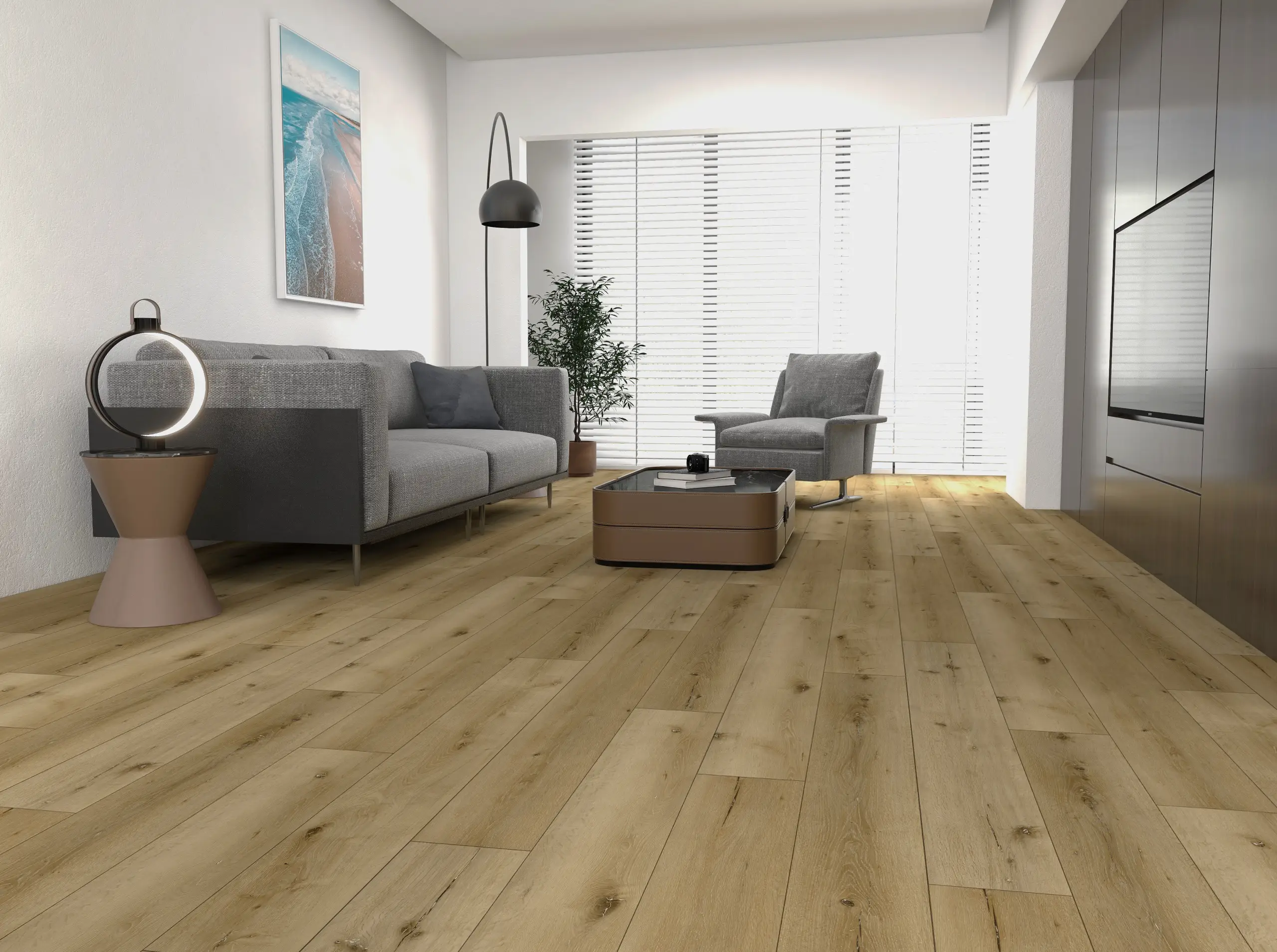
A wood-inspired WPC plank can provide that continuity. The appearance can move naturally from a kitchen into a dining area and then toward a living room without creating an abrupt visual break.
This makes the flooring part of the architectural design rather than a separate finishing decision.
Color selection becomes important in these layouts. Warmer tones can soften modern cabinetry and furniture, while cooler shades can reinforce a minimalist aesthetic.
The right choice depends on the rest of the interior, but the broad range of wood-inspired designs available in WPC flooring provides considerable room for experimentation.
Moisture Resistance and Real-World Household Conditions
Kitchens, laundry areas, entry spaces, and other parts of a home can encounter spills and moisture during normal use. This has made moisture-related performance an important consideration when people compare hard flooring materials.
When researching waterproof vinyl flooring options, homeowners should examine the actual specifications of the product rather than assuming that every vinyl floor performs identically.
WPC products can be attractive for rooms where moisture resistance is a consideration, but installation still matters. The subfloor needs to be suitable, seams and transitions need to be handled correctly, and manufacturer requirements should be followed.
A flooring product should always be selected according to the conditions of the room rather than relying on a broad category label.
The Design Freedom Behind WPC Flooring
One of the strengths of modern vinyl flooring is the variety of visual options available. WPC is not limited to one particular shade of brown or one interpretation of timber.
Manufacturers can reproduce different grain patterns, plank widths, colors, and surface effects. This gives designers the ability to create anything from a rustic appearance to a cleaner contemporary look.
Some interiors benefit from subtle variation, while others work better with a highly consistent pattern.
The flooring can also be coordinated with architectural features. A warm wood-look floor may complement exposed beams or natural cabinetry, while a cooler finish can work with painted surfaces and contemporary fixtures.
WPC Compared With Traditional Hardwood
Natural hardwood has qualities that make it unique. Its grain, variation, and tactile character come from real wood, and many homeowners choose it specifically for those qualities.
WPC offers a different proposition. Its strength lies in combining a wood-inspired visual appearance with characteristics associated with manufactured flooring.
This distinction is important when comparing the two. WPC is not intended to replicate every characteristic of solid wood; instead, it provides an alternative for people whose priorities include practical maintenance, moisture considerations, design flexibility, or installation requirements.
The better choice depends on the project. A homeowner who values the authenticity of natural timber may prefer hardwood, while someone prioritizing versatility may find WPC more appropriate.
Why Busy Households May Consider WPC
A busy household can be hard on flooring. Foot traffic is constant, furniture moves, and accidental spills are unavoidable.
This is where practical flooring characteristics become particularly valuable. WPC can be considered for active spaces where homeowners want a floor that looks refined without demanding an elaborate maintenance routine.
Cleaning remains necessary, of course. Dirt and grit should be removed regularly, and cleaning products should be compatible with the flooring manufacturer’s recommendations.
The important point is that flooring should work with the household rather than require people to change how they live.
Installation Still Deserves Attention
The quality of a finished floor depends on more than the material itself. Installation can affect appearance, stability, and long-term performance.
Before installing WPC flooring, the subfloor should be assessed for levelness, cleanliness, and suitability. Any required preparation should be completed before the planks are installed.
The manufacturer’s installation instructions should also determine how the flooring is handled, including expansion requirements and transition details.
Taking these steps seriously can help prevent avoidable problems and allow the flooring to perform as intended.
WPC for More Than One Interior Style
The versatility of WPC makes it useful beyond a single design trend. A traditional home can use a warm oak-inspired finish, while a contemporary property might use a pale or gray-toned plank.
That adaptability matters because flooring is a long-term design decision. Furniture and wall colors can change much more easily than the floor.
A flexible flooring style therefore gives homeowners more freedom to update other elements of the interior later.
Sam’s Flooring is one source where customers can explore different flooring categories and compare materials according to the requirements of their projects.
Looking Beyond the Surface
A flooring sample can tell you a lot about color and appearance, but it does not tell the entire story. Construction, thickness, wear protection, installation method, and intended use all deserve consideration.
WPC vinyl flooring illustrates why looking beneath the visible surface matters. Its composite construction is part of what gives the product its particular characteristics.
Homeowners who understand those characteristics can make better decisions and avoid choosing flooring simply because it looks attractive in a sample.
Final Thoughts
WPC vinyl flooring has earned attention because it brings together several qualities that modern interiors often demand. Its wood-inspired appearance provides design flexibility, while its composite construction offers a distinct feel and practical characteristics for everyday spaces.
It is not the universal answer for every room or property, but it can be a strong option when the priorities include comfort, design variety, manageable maintenance, and appropriate moisture performance.
The best flooring decision comes from matching the material to the space. When construction, appearance, installation, and daily use are considered together, WPC becomes much more than another wood-look flooring trend.