






Quick Answer:
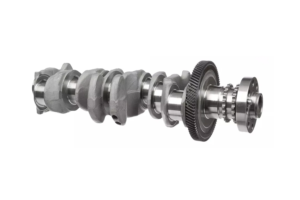
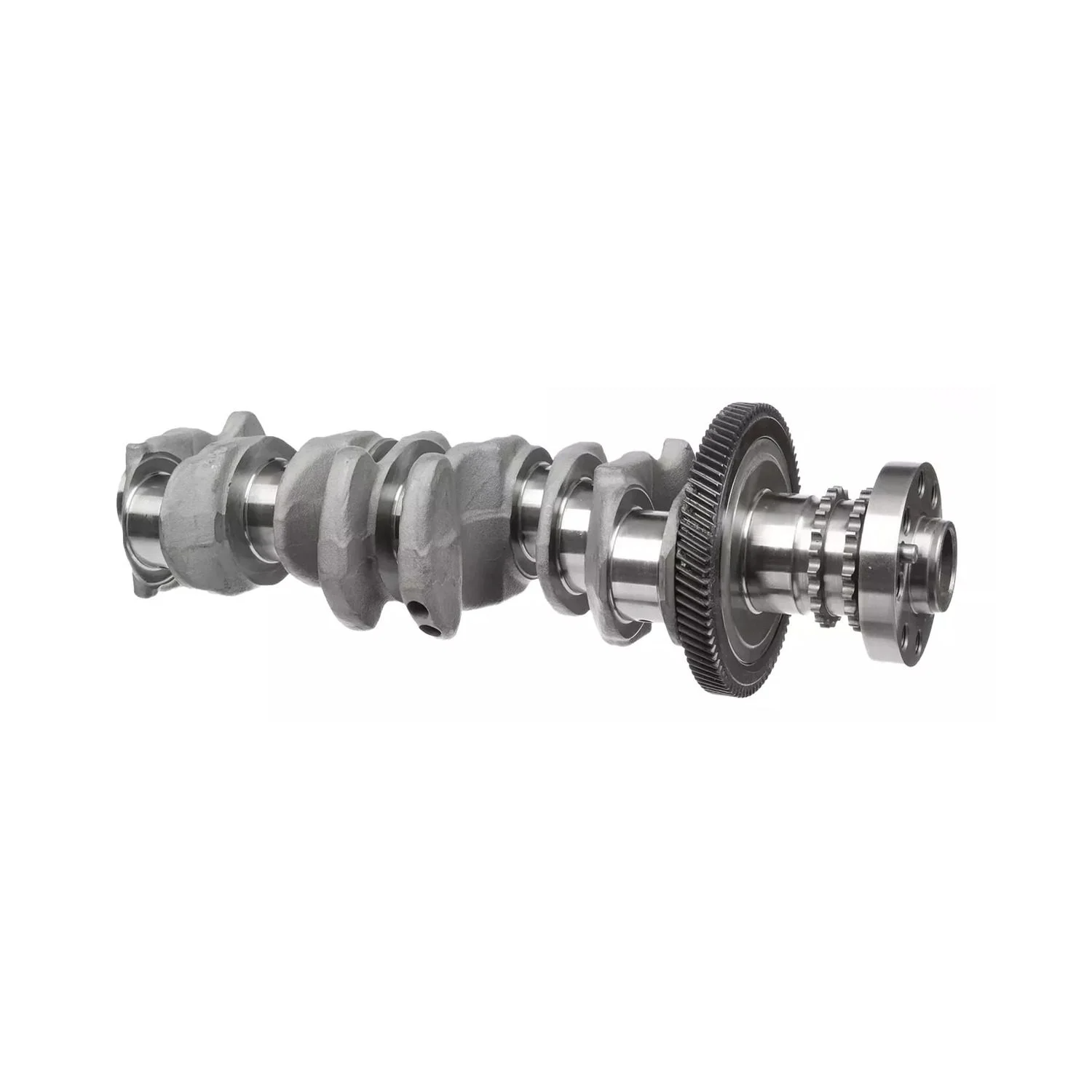
A BMW N47 forged crankshaft replacement is required when oil starvation, extended service intervals, or failing connecting rod bearings score the crankshaft journals beyond safe polishing tolerances on BMW 2.0-litre diesel engines (N47D20). Common symptoms include a deep lower-engine knocking noise under acceleration, metallic debris in the oil filter, and hot-idle low oil pressure warnings. Rebuilding an N47 bottom end safely requires fitting a new forged crankshaft alongside fresh main and rod bearings, a new oil pump, rear timing chain components, and clean oil galleries.
The 2.0-litre BMW N47 four-cylinder diesel engine powers hundreds of thousands of UK vehicles across the 1 Series, 3 Series, 5 Series, X1, and X3 line-ups. While it delivers strong fuel economy and everyday torque, high-mileage units are susceptible to lubrication breakdown and bottom-end bearing damage. Sourcing a precision-balanced BMW 2.0d N47 crankshaft rather than attempting to salvage a heat-damaged original crank gives workshops and owners a reliable foundation for a long-lasting engine rebuild.
Why Does the BMW 2.0d N47 Engine Suffer Crankshaft and Bearing Damage?
Crankshaft failure on the N47D20 rarely begins as a structural flaw in the forging itself—instead, it almost always follows hydrodynamic oil film breakdown at the big-end connecting rod bearings. Once metal-to-metal contact occurs between the bearing shell and journal, friction temperatures spike and score the steel surface within seconds.
Several common workshop causes drive N47 bottom-end wear:
-
18,000-Mile Long-Life Oil Intervals: Extended service schedules allow soot accumulation and diesel fuel dilution from DPF regeneration cycles to thin the engine oil, weakening protection under high low-RPM torque loads.
-
Timing Chain Guide Debris in the Sump: As upper or lower N47 timing chain guides wear down, broken plastic fragments fall into the sump and partially block the oil pickup strainer, starving the crankshaft journals of oil pressure.
-
Worn Oil Pump Rotors: High-mileage oil pumps lose internal tolerance, causing oil pressure to drop at hot idle and starving the furthest connecting rod journal first.
-
Heavy Boost Before Oil Warm-Up: Accelerating hard while engine oil is still cold and overly viscous restricts oil flow through narrow bearing clearances.
| Repair Approach | Surface Hardness & Geometry | Bearing Clearance Control | Workshop Reliability | Recommended Scenario |
| New Forged Crankshaft | Full factory-depth induction hardening and true roundness | Exact OEM clearance with standard-size shells | High (built for 100,000+ miles with regular oil care) | Spun rod bearings, deep journal grooves, or blue heat tinting |
| Regrinding Worn Crank | Risks cutting through shallow surface-hardened layer | Relies on aftermarket undersize bearing tolerances | Low to Moderate (higher risk of repeat knock) | Ultra-light micro-polish only (under 0.01 mm wear) |
| Used Salvage Crank | Unknown fatigue and thermal stress history | Requires crack testing and journal measurement | Uncertain | Budget rebuilds only after full magnetic crack inspection |
How Can You Tell If Your BMW N47 Crankshaft or Rod Bearings Are Failing?
Identifying bottom-end wear early prevents a spun bearing from damaging the engine block or snapping a connecting rod:
-
Rhythmic Bottom-End Knocking: A deep metallic knock from the lower block that increases in tempo with engine RPM, typically loudest around 1,500 to 2,500 RPM under light throttle.
-
Metallic Glitter in the Oil Filter: Cutting open the pleated oil filter cartridge reveals copper, bronze, or silver bearing material suspended in the oil.
-
Low Oil Pressure Warning at Hot Idle: Flickering or persistent oil pressure alerts once the engine reaches full operating temperature.
-
Excessive Connecting Rod End-Play: Once the sump is dropped, noticeable lateral or vertical play when checking connecting rod big ends by hand.
Which Components Must Be Replaced With a BMW N47 Forged Crankshaft?
Fitting a brand-new crankshaft into an engine block contaminated with old bearing shavings will destroy the new shells almost immediately. A complete N47 bottom-end overhaul replaces all connected wear and lubrication parts together:
-
Main Bearings, Rod Bearings & Thrust Washers: Install new standard-size bearings and verify oil clearances across every journal using Plastigauge before final torque.
-
New Oil Pump & Pickup Strainer: Never reuse an oil pump after bearing failure; microscopic metal debris embeds inside the pump housing and circulates straight into the new crank journals.
-
Rear Timing Chain Kit: Because the N47 timing drive sits at the rear of the block next to the transmission, bottom-end disassembly is the ideal time to fit OEM timing chain and belt kits with fresh guides and hydraulic tensioners.
-
Oil Cooler / Heat Exchanger: Replace the oil filter housing cooler whenever bearing debris is found, as metal flakes become trapped inside its narrow internal cooling fins.
-
Full Gasket Set, Seals & Stretch Bolts: Fit new front and rear crankshaft oil seals, sump gaskets, and single-use torque-to-yield main cap and conrod bolts.
Fitment Verification Tip: Before ordering, confirm your exact engine variant (
N47D20A,N47D20C, etc.) and cross-reference your 17-digit VIN or stamped OEM crankshaft number (11217803479/11218515071) to ensure exact counterweight and sensor ring compatibility.
How Do You Protect a Rebuilt BMW N47 Engine From Repeat Failure?
Simple post-rebuild maintenance habits protect your new crankshaft and bearings over the long term:
-
Cut Oil Change Intervals in Half: Replace engine oil and filter every 6,000 to 8,000 miles (or 12 months) rather than waiting for 18,000-mile dash reminders.
-
Use BMW LL-04 Synthetic Oil: Always fill with BMW Longlife-04 approved 5W-30 or 0W-30 fully synthetic oil suited to DPF-equipped diesel engines.
-
Prime Oil Pressure Before First Startup: Disable fuel injection and crank the engine until clean oil pressure reaches the filter housing before firing the cylinders.
For garages and vehicle owners sourcing verified replacement parts in the UK and worldwide, BMS Automotive supplies OEM-spec crankshafts, timing kits, and internal rebuild components with pre-dispatch VIN and registration checks.
Frequently Asked Questions About BMW N47 Crankshafts
Why is regrinding a spun BMW N47 crankshaft risky?
N47 crankshaft journals rely on a thin surface-hardened outer layer to withstand high diesel combustion loads. Grinding away scored metal often removes that hardened layer, leaving softer underlying steel that wears rapidly against new bearing shells.
Do you have to remove the engine to replace a BMW N47 Forged crankshaft?
Yes. Because the N47 timing chain assembly is mounted at the rear flywheel end of the engine, the engine must be removed from the vehicle to detach the gearbox, rear timing cover, sump, and main bearing ladder safely.
How do I check which N47 crankshaft fits my BMW?
Verify your stamped engine code (N47D20A or N47D20C), match the OEM part number on your existing crank, and provide your UK registration or 17-digit VIN to your parts supplier before ordering. for blog to visit our site boodtupblog.