




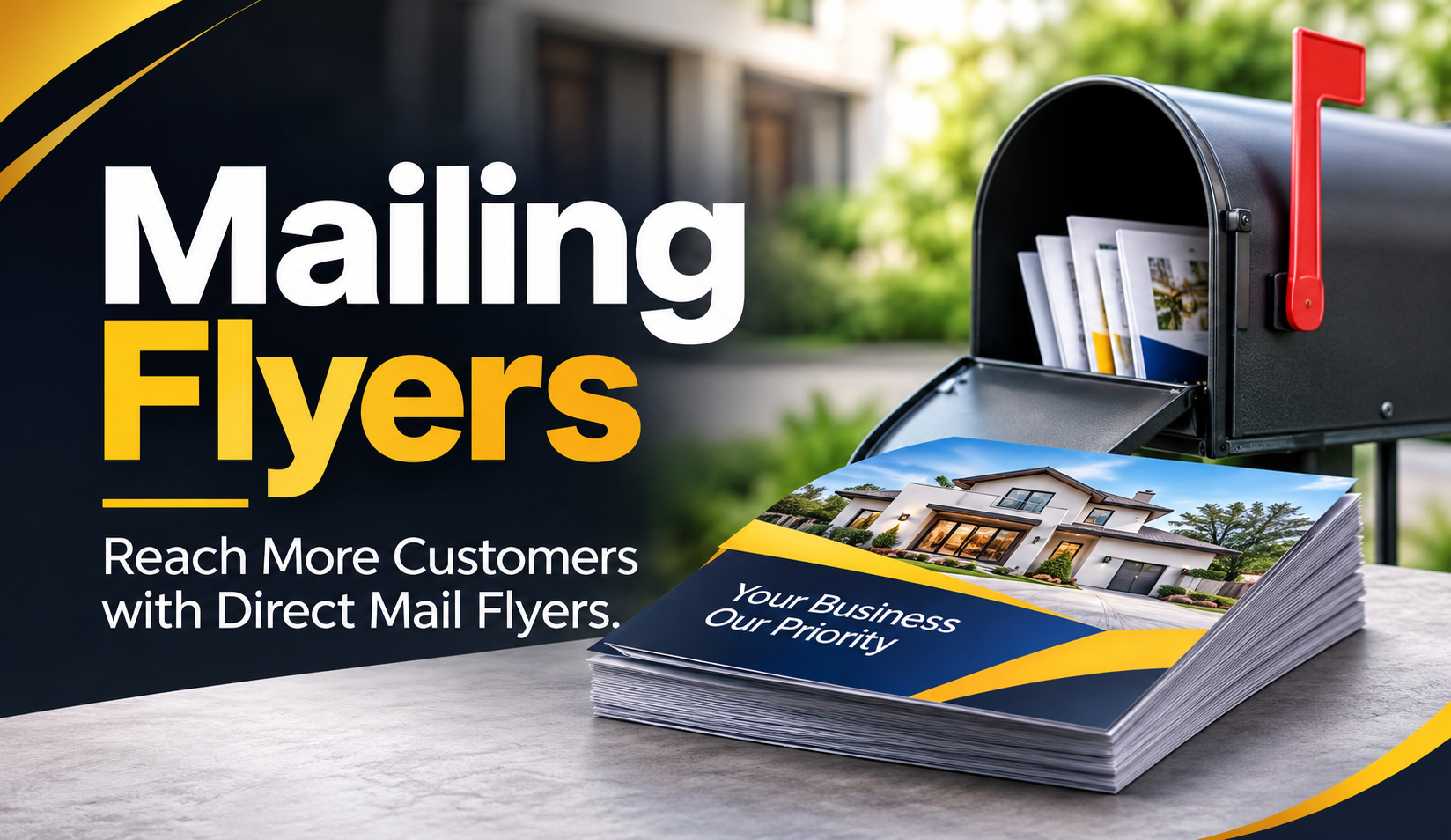
Every business wants to reach more customers, but getting the right message in front of the right people remains a common marketing challenge. Social media and digital advertising offer valuable opportunities, yet they also compete for attention in crowded online spaces. Many potential customers scroll past advertisements without taking the time to explore what a business offers.
Direct mail gives businesses another way to connect with their audience through something customers can physically hold, read, and revisit. With a well-planned mailing flyers campaign, businesses can introduce their products, promote local offers, announce new services, and reach households or specific customer groups. The key lies in understanding the audience, creating relevant content, and choosing a distribution strategy that supports the campaign’s goals.
What Are Mailing Flyers and How Do They Work?
Mailing flyers are printed promotional materials that businesses send directly to potential or existing customers through postal services or targeted mail distribution. Unlike general advertising, which often reaches a broad audience, a mailing campaign allows businesses to focus on particular locations, neighborhoods, demographics, or customer groups.
Businesses use flyers to communicate important information without requiring customers to visit a website or follow a social media account first. A well-designed flyer can introduce a business, explain an offer, highlight a new product, or encourage customers to take a specific action.
How Direct Mail Flyers Reach Potential Customers
A mailing flyer campaign starts with a clear understanding of the intended audience. Businesses identify suitable residential areas, customer segments, or mailing lists based on their products and services.
After selecting the audience, marketers prepare the flyer design, organize printing, and coordinate mailing or distribution. Each stage contributes to the final result. Even an attractive design may struggle to generate responses if the business sends it to people who have little interest in the offer.
Why Printed Marketing Still Matters
Digital marketing helps businesses reach customers quickly, but physical marketing materials offer a different experience. Customers can place a flyer on a kitchen counter, keep it near a workspace, or share it with another household member.
This physical presence gives a business another opportunity to communicate its message. A flyer does not depend on a social media algorithm or an online advertising platform to appear in front of its intended recipient.
7 Ways Mailing Flyers Help Businesses Reach Their Target Audience
A successful marketing campaign does more than distribute promotional material. It connects a relevant offer with people who have a genuine reason to consider it. Mailing flyers support this process in several practical ways.
1. Target Specific Neighborhoods and Communities
Local businesses often struggle to reach customers beyond their existing networks. A restaurant, cleaning company, retail store, or home improvement service may attract customers from nearby neighborhoods rather than from an entire city.
Mailing flyers allow businesses to concentrate their marketing efforts on selected postal routes and residential areas. For example, a new restaurant can introduce its menu and opening offer to households within a convenient travel distance.
This approach helps businesses focus their promotional budgets on communities that have a stronger connection to their services. Instead of sending the same message everywhere, they can choose areas that match their customer profile.
2. Build Brand Awareness Through Physical Marketing
Customers rarely remember every business they encounter during a normal day. Consistent brand exposure helps a company become more recognizable, especially when customers eventually need the products or services it offers.
A professionally designed flyer introduces important brand elements, including the business name, visual identity, contact information, and main services. When businesses maintain consistent colors, typography, and messaging across campaigns, customers can recognize their brand more easily.
For example, a local plumbing company can send seasonal maintenance flyers several times throughout the year. Each campaign reminds nearby homeowners about its services and gives them a convenient way to find the business when a plumbing issue arises.
3. Promote Special Offers and Limited-Time Deals
Special offers give customers a clear reason to pay attention to a marketing message. Businesses can use mailing flyers to promote seasonal discounts, grand openings, clearance sales, new product launches, and exclusive neighborhood offers.
However, a discount alone does not guarantee customer interest. The offer must match the audience’s needs and communicate its value clearly.
A clothing retailer, for example, might promote a seasonal collection with a limited-time discount. A home cleaning company could highlight a package that helps customers prepare their homes for an upcoming holiday. Both businesses can use a clear headline, concise offer details, and a direct response method to encourage enquiries.
4. Reach Customers Who Rarely Engage With Online Ads
Not every potential customer spends time on social media or interacts with online advertisements. Some people prefer traditional communication, while others simply overlook promotional content in their daily digital activity.
Printed flyers provide an additional channel for reaching these customers. They help businesses connect with households and communities that digital campaigns may not reach effectively.
We recommend that businesses consider their audience’s actual media habits before choosing a marketing channel. A campaign works better when its format matches the way potential customers prefer to receive information.
5. Deliver Detailed Product and Service Information
Digital advertisements often require short messages because customers move quickly between online content. Flyers give businesses more room to explain their services, present product benefits, and answer common customer questions.
For example, a home improvement company can use a flyer to highlight renovation services, explain its service categories, and provide contact details. A healthcare practice can communicate appointment information and introduce its available services.
The important point involves organization. Businesses should present the most valuable information first and avoid filling every available space with unnecessary text. A clear headline, useful images, concise descriptions, and a strong call to action help customers understand the message.
6. Support Repeat Marketing and Customer Recognition
A single promotional message rarely creates lasting brand recognition. Customers often need several relevant interactions before they remember a business or consider making a purchase.
Mailing flyers give businesses an opportunity to maintain regular communication with their target audience. They can plan campaigns around seasons, product launches, community events, and customer needs.
For example, a garden maintenance company might send spring gardening offers, summer lawn care promotions, and autumn cleanup reminders. Each campaign addresses a different customer requirement while maintaining a consistent brand presence.
7. Encourage Measurable Customer Responses
Businesses need to understand whether their marketing activities generate meaningful results. Mailing flyers can support measurement when marketers include specific response methods in their designs.
A unique promotional code, QR code, campaign-specific landing page, or dedicated phone number can help businesses identify responses from a particular mailing campaign.
These details allow marketers to compare different offers, locations, and flyer designs. They can then use actual customer responses to improve future campaigns rather than relying entirely on assumptions.
How to Identify the Right Target Audience for a Mailing Flyer Campaign
Audience selection plays a major role in direct mail marketing. Businesses sometimes focus heavily on printing quality and flyer design while giving insufficient attention to the people who will receive the material.
We recommend starting with customer research. Businesses should understand who benefits from their products, where those customers live, and what motivates them to make purchasing decisions.
Define Your Ideal Customer
Start by describing the people most likely to need your product or service. Consider factors such as age group, household needs, purchasing interests, business type, and location.
For example, a furniture retailer may focus on homeowners, newly married couples, and people moving into new properties. A commercial printing company may target local retailers, restaurants, offices, and other businesses that regularly need printed materials.
A clear customer profile helps businesses develop relevant offers and avoid spending money on audiences with limited interest.
Choose the Most Relevant Geographic Areas
Location matters, particularly for businesses that serve specific communities. A restaurant may benefit from reaching nearby households, while a roofing company may focus on residential neighborhoods within its service area.
Businesses should consider travel distance, service availability, local demand, and neighborhood characteristics before selecting mailing locations.
They can also test smaller geographic areas before expanding a campaign. This approach helps marketers evaluate customer responses and identify locations that offer stronger opportunities.
Understand Customer Needs and Buying Motivations
A flyer should answer a question that matters to its intended reader. Customers usually pay more attention when a promotion addresses a practical need rather than simply describing a company’s achievements.
A pet grooming business might highlight convenient appointments and grooming packages. A local electronics retailer could focus on product availability, seasonal deals, and warranty information.
When businesses understand customer concerns, they can create messages that feel relevant instead of generic.
What Makes a Mailing Flyer Design Effective?
Design influences whether customers notice a flyer, understand its message, and decide to take action. A business does not need an overly complicated design to attract attention. It needs a clear message, readable typography, suitable images, and a logical content structure.
Create a Strong and Clear Headline
The headline should communicate the main purpose of the flyer immediately. Customers should understand whether the business offers a discount, introduces a new service, announces an event, or promotes a product.
Avoid vague headlines that require readers to study the entire flyer before understanding its purpose. Instead, use direct language that highlights the main customer benefit.
For example, “Refresh Your Home with Professional Cleaning Services” communicates a clearer message than a general headline such as “Welcome to Our Business.”
Use High-Quality Images and Readable Typography
Images help customers understand products and services quickly. However, low-resolution photographs, excessive visual effects, and overcrowded layouts can reduce the overall quality of a printed flyer.
We recommend using sharp product photographs, balanced spacing, and typography that remains readable at the final print size. Businesses should also maintain sufficient contrast between text and background colors.
For additional guidance, explore these flyer image quality tips before preparing promotional artwork.
Include a Clear Call to Action
Every promotional flyer should tell customers what to do next. Without a clear next step, readers may understand the offer but still have no reason to contact the business.
Useful calls to action include:
- Visit our store today.
- Call now to request a quote.
- Scan the QR code to explore our collection.
- Book your appointment this week.
- Visit our website for current offers.
Choose one primary action and make it visually prominent. Too many competing instructions can confuse customers and weaken the campaign’s main objective.
Maintain Consistent Branding
A flyer should look like part of the business’s wider marketing identity. Consistent colors, logos, typography, and messaging help customers connect printed materials with the company’s website, packaging, storefront, and other promotional channels.
Businesses should also review contact information carefully before approving a design. Incorrect phone numbers, outdated addresses, and broken QR codes can create unnecessary frustration and reduce campaign effectiveness.
How to Plan a Successful Mailing Flyer Campaign
An effective campaign requires coordination between marketing objectives, audience research, design, printing, and distribution. Businesses should treat each stage as part of one connected process.
Step 1: Establish a Clear Marketing Objective
Start by deciding what the campaign should achieve. Some businesses want to increase store visits, while others want to generate enquiries, promote new products, or introduce their brand to a local community.
A specific objective helps marketers select the right message and measure results more accurately.
Step 2: Research and Segment Your Audience
Identify the customer groups that match the campaign objective. Divide larger audiences into relevant segments when different groups need different messages.
For example, a home services company might create separate promotional flyers for homeowners interested in plumbing, electrical work, and general maintenance.
This strategy helps the business communicate more directly with each customer group.
Step 3: Prepare the Design and Printing Materials
Once the business understands its audience and offer, the next step involves preparing the artwork and selecting suitable printing specifications.
Consider the following factors:
- Paper quality and thickness.
- Flyer dimensions and orientation.
- Color accuracy and image resolution.
- Typography and readability.
- Printing quantity.
- Finishing requirements.
The right specifications depend on the campaign budget, distribution method, and expected use of the flyer.
Step 4: Select the Mailing and Distribution Strategy
Businesses should choose a distribution method that matches their audience and budget. They may use targeted postal mailing, customer mailing lists, or local distribution services, depending on the campaign’s requirements.
Before distribution, check address accuracy, postal requirements, delivery areas, and any applicable privacy or marketing regulations.
A well-planned distribution strategy reduces unnecessary waste and helps the campaign reach its intended recipients.
Step 5: Track Campaign Performance
After distribution, monitor customer responses and compare the results with the original objective.
Businesses can track:
- Phone enquiries.
- Website visits from campaign-specific links.
- QR code scans.
- Promotional code redemptions.
- Appointment bookings.
- Store visits and sales.
These indicators help businesses understand which parts of the campaign work well and where they need improvement.
Common Mailing Flyer Marketing Mistakes Businesses Should Avoid
Even a well-funded campaign can struggle when businesses overlook basic marketing decisions. We often see companies focus on the appearance of their promotional materials without giving equal attention to audience relevance, message clarity, and distribution planning.
Sending Flyers to the Wrong Audience
A beautifully designed flyer cannot create much interest when the recipient has no need for the advertised product or service. Businesses should research their audience and select mailing locations carefully.
Including Too Much Information
Trying to explain every service, product, and company achievement on one flyer creates unnecessary clutter. Customers may lose interest before they reach the main offer.
Focus on the most important benefits and provide a website or QR code for additional details.
Using Poor-Quality Images
Blurry photographs and low-resolution graphics can make a business appear less professional. Always check the original image resolution and final print dimensions before approving the artwork.
Forgetting Contact Details and Calls to Action
A flyer should make it easy for interested customers to contact the business. Always check phone numbers, website addresses, store locations, and response instructions before printing.
Ignoring Campaign Performance
Some businesses distribute thousands of flyers without checking whether customers respond. Without tracking, they cannot confidently identify which locations, messages, or offers deliver better results.
A small testing campaign can provide useful insights before the business commits to a larger distribution budget.
Mailing Flyers vs. Digital Advertising: Which Strategy Should Businesses Choose?
Both printed and digital advertising offer useful ways to reach potential customers. However, each channel serves different marketing purposes, and businesses should consider their audience, budget, and campaign objectives before making a decision.
Digital advertising offers quick campaign adjustments, audience targeting options, and online performance tracking. Businesses can change advertisements, test different messages, and monitor customer interactions through digital platforms.
Mailing flyers offer physical communication, local visibility, and a tangible promotional format that customers can keep or share. They also provide another way to reach people who do not regularly engage with online advertisements.
Why Combining Both Marketing Channels Makes Sense
Businesses do not always need to choose between print and digital marketing. A coordinated campaign can use both channels to create a more consistent customer experience.
For example, a retail business can send promotional flyers to nearby households while running social media advertisements that highlight the same products and offers. The flyer can include a QR code that directs customers to the online store or a campaign-specific landing page.
This combination connects physical marketing with digital customer journeys. It also gives businesses additional opportunities to measure engagement and encourage conversions.
How Businesses Can Improve Their Return on Investment From Mailing Flyers
Marketing budgets require careful management, particularly for small businesses that cannot afford unnecessary spending. A successful flyer campaign should focus on reaching relevant customers and generating measurable business activity rather than simply distributing a large quantity of printed materials.
Start With a Small Campaign Test
Instead of immediately committing to a large mailing campaign, test a smaller group of locations or customer segments. Compare responses and identify which audience shows the strongest interest.
For example, a local restaurant can test two nearby neighborhoods with different promotional offers. The results may help the business understand which offer attracts more enquiries or visits.
Compare Different Headlines and Offers
Small changes in messaging can influence customer interest. Businesses can test different headlines, promotional offers, images, and calls to action while keeping other campaign elements consistent.
This approach helps marketers identify what resonates with the target audience.
Calculate the Cost Per Response
Businesses should compare campaign expenses with the number of meaningful customer responses. Include design, printing, postage, distribution, and other relevant costs when calculating the total campaign investment.
For example, if a campaign generates enquiries but very few sales, the business should examine the offer, audience relevance, and follow-up process. A higher response count does not automatically mean higher profitability.
Improve Future Campaigns With Customer Feedback
Customer questions and comments can reveal useful information about a campaign. If several people ask about the same service detail, businesses may need to communicate that information more clearly in future flyers.
Continuous improvement helps companies make better marketing decisions and use their budgets more effectively.
Frequently Asked Questions
1. How Do Mailing Flyers Help Small Businesses Attract More Customers?
Mailing flyers help small businesses introduce their products and services directly to selected households or communities. They support local brand awareness, communicate special offers, and provide customers with clear contact information. Businesses can improve results by targeting relevant neighborhoods and using messages that address specific customer needs.
2. Are Mailing Flyers Still Effective in the Digital Marketing Era?
Yes, mailing flyers can still support business marketing when companies use them strategically. They provide a physical promotional format that complements online advertising and helps businesses reach customers who may not regularly engage with digital promotions. Their effectiveness depends on audience selection, design quality, offer relevance, and distribution.
3. What Information Should a Business Include on a Mailing Flyer?
A business should include a clear headline, a brief description of its main offer, relevant product or service images, contact information, and a strong call to action. Depending on the campaign, it can also include a website address, QR code, business location, or promotional code. Keep the layout organized and avoid unnecessary information.
4. How Can Businesses Measure the Success of a Mailing Flyer Campaign?
Businesses can measure campaign performance through dedicated phone numbers, QR codes, promotional codes, campaign-specific landing pages, enquiries, and sales. They should also compare the total campaign cost with the number of meaningful responses and resulting revenue. These insights help marketers improve future campaigns.
Conclusion: Make Every Mailing Flyer Count
Mailing flyers give businesses a practical way to connect with potential customers, introduce their services, promote special offers, and strengthen local brand awareness. However, successful direct mail marketing requires more than attractive artwork or a large printing quantity. Businesses need to understand their audience, create relevant messages, choose suitable distribution areas, and measure customer responses.
From our perspective as a marketing and printing service provider, the strongest campaigns begin with a clear objective and attention to the details that influence the customer’s experience. Good design, reliable print quality, accurate information, and thoughtful distribution all contribute to a more effective marketing strategy.
At Laguna Digital, we understand the importance of connecting professional printing with practical marketing goals. Whether your business wants to introduce a new product, promote a local offer, or improve its direct mail strategy, a carefully planned flyer campaign can help you reach the people who matter to your business. Start with a clear message, understand your audience, and make every printed piece serve a purpose.