





Many owners are surprised to leave a surgery with an incision that has no stitches to remove. Instead the edges were joined with a thin layer of adhesive. Skin glue for dogs is a real closure option but it suits some wounds and not others. This guide explains when veterinarians reach for it and when they choose thread or staples instead. It also covers what the research says and what owners should watch during recovery. It is general educational information and the attending veterinarian chooses the closure for each patient.
The Quick Answer
Veterinarians tend to choose adhesive for short clean incisions where the edges meet easily and little tension pulls on the skin. They tend to choose thread or staples for long incisions and areas that move and wounds that are contaminated or under strain. Many surgeries combine methods. The deep layers are closed with suture and the skin surface is finished with adhesive.
What Skin Glue Is and How It Holds
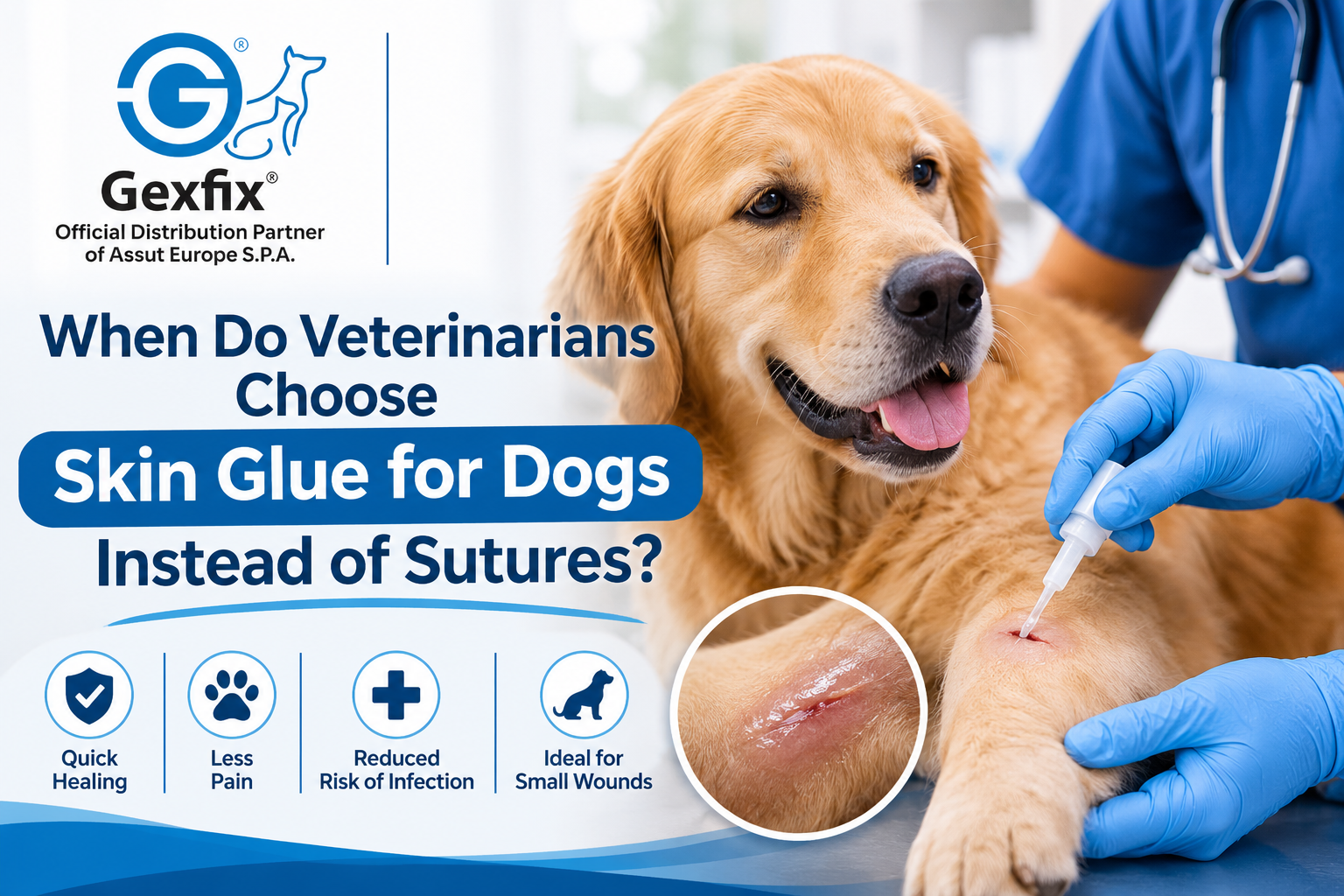
Veterinary tissue adhesive is a cyanoacrylate. When it touches moisture on the skin it sets into a thin flexible film that holds the edges together. The adhesive sloughs off as healing occurs. That means nothing needs to be removed later.
Adhesive works on the surface only. It does not support deeper tissue. One label says it is indicated as a tissue bridge provided that subcutaneous sutures are used when appropriate. In other words the layers beneath still need thread.
When Veterinarians Choose Skin Glue
Short Clean Incisions
The best candidates are small fresh wounds. One veterinary label describes the product as indicated for closure of animal skin in clean fresh wounds with easily apposed edges and applied by trained veterinary staff. Spay and neuter incisions and small lump removals are common examples when the deeper layers have been closed.
Laparoscopic Port Sites
Keyhole surgery leaves several tiny incisions. A review of dogs after laparoscopic ovariectomy looked at 289 dogs and 695 incisions closed with n-butyl cyanoacrylate. No complications occurred in 86.6 percent of incisions and 4.7 percent dehisced. The authors also found that owners scored scarring very low and no hypersensitivity was reported and concluded that adhesive is an acceptable way to close port sites. It was a single center review but it shows why the method is popular for small incisions.
Finishing Over a Closure
Some veterinarians place a thin layer over a closure that is already sound. Product descriptions list suture and staple line sealing among the uses. The layer acts as a surface barrier and can discourage licking at a fresh line. It supports a closure and never replaces one.
Shorter Anesthesia Time
Speed is another reason. In an experiment on 12 beagles one half of a spay incision was closed with mesh and 2-octyl cyanoacrylate and the other half with an intradermal suture pattern. The adhesive closure took about 73 seconds compared with about 398 seconds for the sutures. The authors wrote that the adhesive approach is an attractive alternative especially if surgical or anesthesia time is a concern. That was a research setting so clinic results may vary.
When Veterinarians Choose Sutures Instead
Wounds Under Tension
Tension is the main limit of adhesive. One distributor lists infected wounds and deep puncture wounds and high tension wounds as contraindications unless the adhesive supports sutures. A wound over a joint or along a flexing limb needs mechanical strength that glue cannot provide.
Deep Layers
Layers beneath the skin carry load and need support while they heal. A veterinary suture is chosen by the tissue and the time it takes to regain strength. A thread that is too heavy adds bulk and one that is too fine can break. Adhesive never reaches those layers.
Infected or Contaminated Wounds
Labels advise against using adhesive on infected or chronic wounds. Contaminated wounds often need drainage or open management first. Closure comes later and usually with thread.
Where Staples Fit
Staples sit between the two. A scalp stapler or skin stapler closes long straight incisions quickly with even spacing and the staples come out after healing. In the canine study comparing methods the authors concluded that the intradermal pattern was better than glue and not significantly better than staples and they suggested staples when time is an important factor. Staples have drawbacks as well. A paper on skin closure in dogs notes the risk of pressure necrosis if staples are placed too deep or the tissue swells. Long incisions in thick skin often favor staples while short low tension incisions favor adhesive.
What the Research Shows
The evidence on adhesive in dogs is encouraging but limited. Small studies point to speed and good cosmetic results. A 2024 paper on cyanoacrylate adhesives notes that they are widely used in wound closure and provide good cosmetic results and little discomfort but also mentions reports of negative effects from chemicals released as the adhesive breaks down. That study was done in rats.
A study of 10 dogs compared staples and n-butyl cyanoacrylate and an intradermal pattern and followed healing for a year. Its conclusion favored the buried suture over glue. A well placed vet suture pattern buried in the skin leaves nothing to remove and nothing exposed to the patient. Each method has a place and the veterinarian weighs speed and strength and cosmetic result against the demands of the wound.
Safe Application
Technique matters as much as the product. Labels give practical rules. Keep adhesive out of the wound. One label warns that adhesive dripping into the cavity can cause a foreign body reaction and that hair should not be glued into the site. The edges are held together for 5 to 10 seconds. The product should not go over pooled blood or fluid either.
Teams that use surgical glue for dogs well follow a simple order. They close the deep layers first and dry the incision line and appose the edges and apply a thin layer. Thick layers are not stronger and can slow the cure. The surgical glue for dogs mistakes post covers the most common errors.
Staff should also take care of themselves. Adhesive bonds skin and eyes in seconds. Bonded eyelids should not be forced open.
Aftercare for Owners
Owners play a big part in how a glued incision heals. Keep the area dry and clean for as long as the veterinarian advises. Do not pick at the film or apply ointments over it unless the veterinarian says so. Stop the dog from licking or scratching and use an e-collar if needed. The adhesive flakes away on its own over days to weeks.
Watch the site each day. Call the clinic if you see gaping edges or discharge or increasing redness or swelling. A recheck visit lets the team confirm healing.
Mistakes to Avoid
Choosing adhesive for a wound under tension is the most frequent mistake. Applying it to a wound that is still bleeding or over hair or into the incision is another. Forgetting to close the deeper layers first leaves the skin to carry load it cannot hold. Leaving the dog free to lick the site also causes problems. A final error is skipping the recheck because the incision looks closed.
Questions Owners Can Ask the Veterinarian
Ask why the veterinarian chose adhesive or stitches for your dog and whether the deeper layers were closed with suture. Ask how long the film will stay in place and what to do if part of it peels early. Ask whether your dog needs an e-collar and for how long. Find out what changes should prompt a call and when the recheck is due.
Final Thoughts
Veterinarians choose skin glue for dogs when the wound is short and clean and the edges meet easily with little tension. They choose thread or staples when the wound is long or contaminated or under strain. Many surgeries use more than one method so the closure matches each layer. If your dog goes home with glue on the incision keep it dry and prevent licking and watch for changes. Your veterinarian can explain the choice that was made.
Frequently Asked Questions
Q: Is skin glue as strong as stitches?
A: No. Adhesive holds the skin surface only and does not support deeper tissue. Veterinarians use it on short clean wounds with little tension and close the deeper layers with suture.
Q: How long does the glue stay on a dog’s incision?
A: It wears away as the skin heals which usually takes days to a couple of weeks. Do not pick at it. Ask the veterinarian what to expect for your dog.
Q: Does skin glue need to be removed?
A: No. Product descriptions say the adhesive sloughs off as healing occurs. That is one reason it suits clinics and owners who want to avoid a removal visit.
Q: Can my dog lick a glued incision?
A: Licking can loosen the film and irritate the skin. Most veterinarians recommend an e-collar or another way to keep the dog away from the site until it has healed.
Q: What if the glued edges open?
A: Call the clinic. Adhesive is not meant for wounds under tension and an opened incision may need to be closed again with sutures or staples.