


Most bulk materials handling industries use different types of equipment for different stages of production. Similarly, in foundry, many different types of equipment are used to melt metals, prepare moulds, handle materials, and produce metal castings.
However, for these machines to perform efficiently, you need to select the right type for your working conditions. In this article, let’s learn how to choose the right foundry equipment for your manufacturing needs.
Different Types of Foundry Equipment
In the foundry working process, these different types of equipment are used:
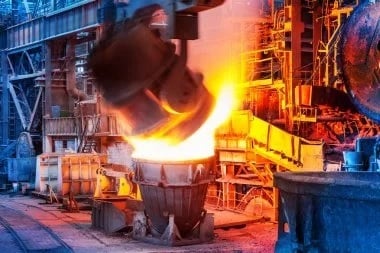
- Melting Equipment: These machines are used to heat metals and alloys until they reach the temperature required for metal casting.
- Moulding and Core-Making Equipment: Moulding equipment helps create the cavities into which molten metal is poured. The core-making equipment produces cores that form internal passages or hollow sections in cast components.
- Sand Compaction Equipment: These machines include vibrating tables; they are used to compact moulding sand around a pattern to create a stable mould.
- Material Handling Equipment: These machines include electromagnets and other lifting equipment suitable for transferring. They are used for moving raw materials, moulds, castings, etc., in different stages of production.
Factors to Consider When Choosing the Right Foundry Equipment
First, you should understand the different types of equipment used in a foundry and what types you need. Now let’s look at the factors that you should consider to choose the right equipment:
-
Type of Metal and Casting Process
You should first identify your facility’s casting method and what metal and alloy you work with. This is because different metals require different melting conditions, and different casting methods place different demands on mould preparation and handling equipment.
-
Production Capacity
The second step is for you to understand how much material you need to process per shift or production cycle. This way, you would not choose equipment that cannot handle your required workload, or else it will create delays, while also increasing investment and operating costs.
-
Casting Quality and Accuracy
While selecting the equipment, check whether it can support the quality standards required for your finished products. Depending on the application, this may involve dimensional accuracy, mould stability, surface finish, or consistency between production batches.
-
Level of Automation and Process Control
There are two types of machines: manually operated and automated ones. You need to choose which one is right for you. If you want automated machines, then focus on the right level of automation depending on production volume, process complexity, and available operational skills.
-
Available Space and Installation Requirements
Before purchasing equipment, assess the available floor space and the layout of your facility. Consider the machine’s dimensions, loading and unloading areas, access for maintenance, and the movement of materials around the production line.
-
Safety and Working Conditions
As you may very well know, foundry operations involve molten metal, high temperatures, heavy loads, dust, and moving machinery. Ensure that your selected machines can withstand these conditions and comply with the safety requirements applicable to the operation.
-
Maintenance and Spare Parts Availability
You should also check what level of routine maintenance does your select equipment needs. Before purchasing, ask about servicing requirements, the availability of replacement parts, and the ease of inspecting and maintaining key components.
-
Initial Cost and Long-Term Operating Expenses
Don’t just ask for the final price; it is only one part of the overall investment. Instead, you need to consider the energy consumption, maintenance, consumables, labour, and downtime in your budget too. And ask about these things from your supplier.
Foundry Equipment Solutions From Vibro Flux Equipments
To select the right foundry equipment, you need reliable manufacturers such as Vibro Flux Equipments. They provide a wide range of products, including a mining vibrating screen, vibrating feeders, vibrating tables, bin vibrators, and furnace charger.
They offer more than just the machine; they customise them to match the client’s requirements. Each machine is constructed of robust materials that can withstand heavy use. Furthermore, they offer installation support, commissioning, and after-sales services.
Conclusion
Choosing the right foundry equipment requires a clear understanding of your manufacturing process and the role each machine plays. Start by identifying the types of equipment you need, then compare options based on metal and casting requirements, production capacity, quality, automation, installation, safety, maintenance, and operating costs.
Reach out to Vibro Flux Equipments to browse their reliable solutions that meet every application’s requirements.