




A warehouse aisle, a carpeted office, and a tiled entrance need different cleaning methods. Yet businesses sometimes buy equipment based on building size or price alone. As a result, the cleaning team ends up working around a machine that cannot handle important parts of the job.
Understanding the differences between commercial floor cleaning machines helps you narrow the options before requesting quotes. Some equipment collects loose dirt, while other machines scrub hard surfaces or extract soil from carpet. Choosing well starts with identifying what needs removal and which surfaces need protection.
For facility managers across New Jersey, the purchase also needs to fit a practical budget. The initial price matters, but so do labor, accessories, maintenance, and downtime. This guide explains the main equipment categories and how to compare their costs against your daily cleaning needs.
Floor Scrubbers for Routine Hard-Surface Cleaning
An automatic floor scrubber applies cleaning solution, agitates the surface, and collects dirty water. However, its suitability depends on the flooring, finish, cleaning head, and approved detergent. Confirm those details before selecting a model.
Walk-Behind Scrubbers
Walk-behind machines deserve consideration for routes with smaller rooms, frequent turns, or obstacles. Depending on their dimensions, they may suit corridors, retail spaces, and sections of a larger facility where access limits machine size.
Still, compare the route length with the operator’s workload. A machine that handles tight spaces well may require too much walking across a large open floor. Therefore, test it over a representative route.
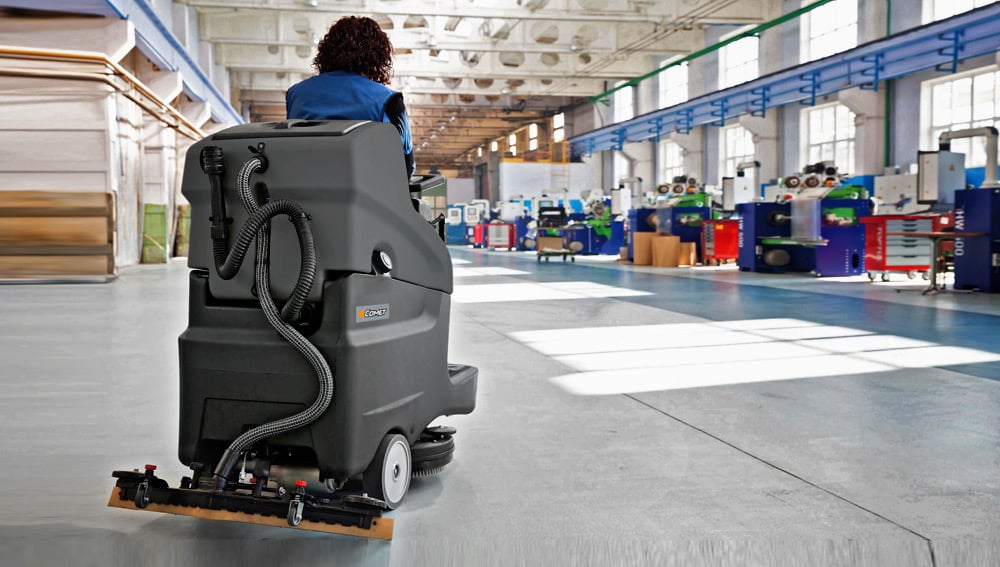
Ride-On Scrubbers
Ride-on equipment is worth evaluating for broad, connected areas such as open warehouse lanes. However, measure doorway clearance, turning space, and storage access. A larger cleaning path helps only when the machine can reach the required floor.
For either format, discuss water recovery during a demonstration. Ask the operator to test turns and edges as well as straight passes. Then inspect the results before accepting a productivity estimate.
Vacuum Cleaners and Extractors for Carpeted Areas
Carpet introduces a different set of equipment choices. A hard-floor scrubber cannot replace the routine vacuuming and periodic extraction that a carpet maintenance plan may require. Therefore, separate carpeted zones when planning your equipment budget.
Commercial vacuums come in several formats, including upright, canister, backpack, and wide-area models. Compare them against furniture density, stairs, route length, and storage space. Also, check filtration requirements for the material the team will collect.
An extractor serves a different purpose from a dry vacuum. It applies a cleaning solution and recovers moisture with suspended soil. Before using one, confirm that the carpet manufacturer approves the method and cleaning products.
Drying time also affects scheduling. Ask how the proposed process fits ventilation, access restrictions, and reopening times. Otherwise, equipment that cleans effectively could still create operational problems when a busy room needs to return to use.
Steam Cleaners and Floor Machines for Specific Tasks
Steam equipment may suit certain detail-cleaning tasks where the surface and its manufacturer’s care instructions allow heat and moisture. However, it should not become the default choice for every hard floor. Check compatibility with coatings, adhesives, joints, and surrounding materials.
Also, distinguish ordinary cleaning from any claimed sanitizing or disinfecting result. Such claims depend on the equipment, procedure, surface, and required contact conditions. Avoid assuming that a quick steam pass establishes a particular outcome.
Rotary floor machines form another category. With approved accessories, some models support tasks such as scrubbing or finish maintenance. However, confirm the exact function of the proposed machine rather than assuming every rotary unit performs the same work.
A burnisher, for example, serves a different role from a machine intended to collect dirty water. Therefore, ask what preparation, follow-up cleaning, and operator training each process requires. Include those additional steps when comparing equipment.
Sweepers for Loose Dirt and Larger Open Floors
If loose debris creates most of the workload, start by evaluating collection equipment. Scrubbing may still form part of the cleaning plan, but it does not remove the need to address waste that the scrubber cannot accept.
In warehouses, parking areas, and similar spaces, commercial floor sweeper machines may offer a suitable way to collect compatible loose debris. Match the model to the material, surface condition, access, and dust-control requirements. Also, confirm whether it supports the intended indoor or outdoor use.
Walk-behind and ride-on formats create different access and capacity tradeoffs. Meanwhile, hopper size, emptying arrangements, and filter care affect the daily routine. A demonstration should include these tasks rather than showing only a clean straight lane.
For fine dust or unusual materials, explain exactly what the team needs to collect. General-purpose equipment may not suit every substance or environment. Give the supplier enough information to recommend an appropriate machine and collection method.
Match Each Machine to the Surface and Soil
The following table provides a starting point for discussions with a supplier. Final suitability depends on the exact surface, finish, equipment, accessories, and manufacturer instructions.
| Surface or cleaning area | Equipment to evaluate | Important checks |
| Sealed concrete aisles | Sweeper and automatic scrubber | Debris type, coating compatibility, access, and water recovery |
| Ceramic tile | Scrubber with an approved cleaning setup | Tile finish, grout condition, brush selection, and detergent |
| Resilient flooring | Compatible scrubber or maintenance machine | Flooring care guidance, pad choice, and chemical limits |
| Carpeted offices | Commercial vacuum and suitable extractor | Carpet construction, approved method, and drying time |
| Parking and loading areas | Sweeper approved for the conditions | Surface condition, debris, dust control, and operating environment |
| Small detail-cleaning zones | Compatible steam equipment or specialist tools | Heat and moisture tolerance, access, and task requirements |
Avoid making the surface name your only selection rule. Two concrete floors may have different coatings and maintenance instructions. Likewise, one tiled area may collect dry grit while another develops sticky residue.
Next, consider how soil enters and moves through the building. Delivery areas, entrances, and production zones may need different routines. A practical plan can combine machines rather than forcing one unit to handle every task.
Before committing, test the proposed setup in a suitable area. Review both cleaning results and any effect on the finish. Then confirm the agreed method with the people responsible for maintaining the floor.
Understand What Drives Equipment Costs
There is no useful single price for commercial cleaning equipment. A compact vacuum and a large ride-on scrubber serve very different purposes. Even within one category, capacity, configuration, accessories, and support can change the quote substantially.
Purchase and Setup Expenses
Ask for an itemized price covering the machine and the equipment needed to use it. Depending on the model, this could include batteries, a charger, pads, brushes, filters, or specialist attachments. Confirm delivery and setup charges as well.
Also, check the site requirements. Charging access, storage, water points, and transport arrangements may affect the full cost of bringing equipment into service. Identify these needs before approving the purchase.
Labor and Ongoing Expenses
Compare the time needed for the complete cleaning process. Include preparation, operation, filling, emptying, and daily machine care. A lower purchase price may offer limited value if the equipment requires significantly more staff time.
Then request estimates for consumables and scheduled maintenance. Ask about wear parts, battery replacement where relevant, and service arrangements. These figures help you build a more realistic ownership budget.
Compare Quotes Using the Same Workload
Start with a written brief describing your floors, soil, accessible cleaning area, and schedule. Give each supplier the same information so their recommendations address a comparable task. Otherwise, differences between quotes may reflect different assumptions.
Request a demonstration using your normal route where possible. Have a regular operator test the machine and record the full job time. Also, note missed areas, stops, ease of handling, and the work needed afterward.
If the workload is occasional or uncertain, compare rental with ownership. Include delivery, collection, rental duration, accessories, and responsibility for damage or cleaning. This helps establish whether temporary access suits the task.
New Jersey businesses discussing options with Pressure King Inc. can use the same brief to explain their requirements. Bring measurements, floor-care instructions, and details of the current cleaning process. Clear information supports a more useful equipment discussion.
Conclusion
Choosing floor-cleaning equipment becomes easier when you separate the tasks your facility needs to complete. Evaluate sweepers for suitable loose debris, scrubbers for compatible hard-floor cleaning, and vacuums or extractors for carpet care. Consider specialist equipment where the task calls for it.
Then compare complete costs against actual working conditions. A suitable machine should protect the surface, fit the route, and help your team finish within the available cleaning time.