



A business can have a strong idea, an established customer base, and plans for expansion, but achieving its objectives may depend on access to suitable finance. Whether it needs to purchase equipment, manage working capital, acquire property, or invest in growth, understanding funding options is an important part of running a successful organisation.
Commercial lending connects businesses that need capital with finance providers that assess and potentially support their funding requirements. The process involves understanding the business, reviewing financial information, considering affordability, and identifying appropriate funding arrangements.
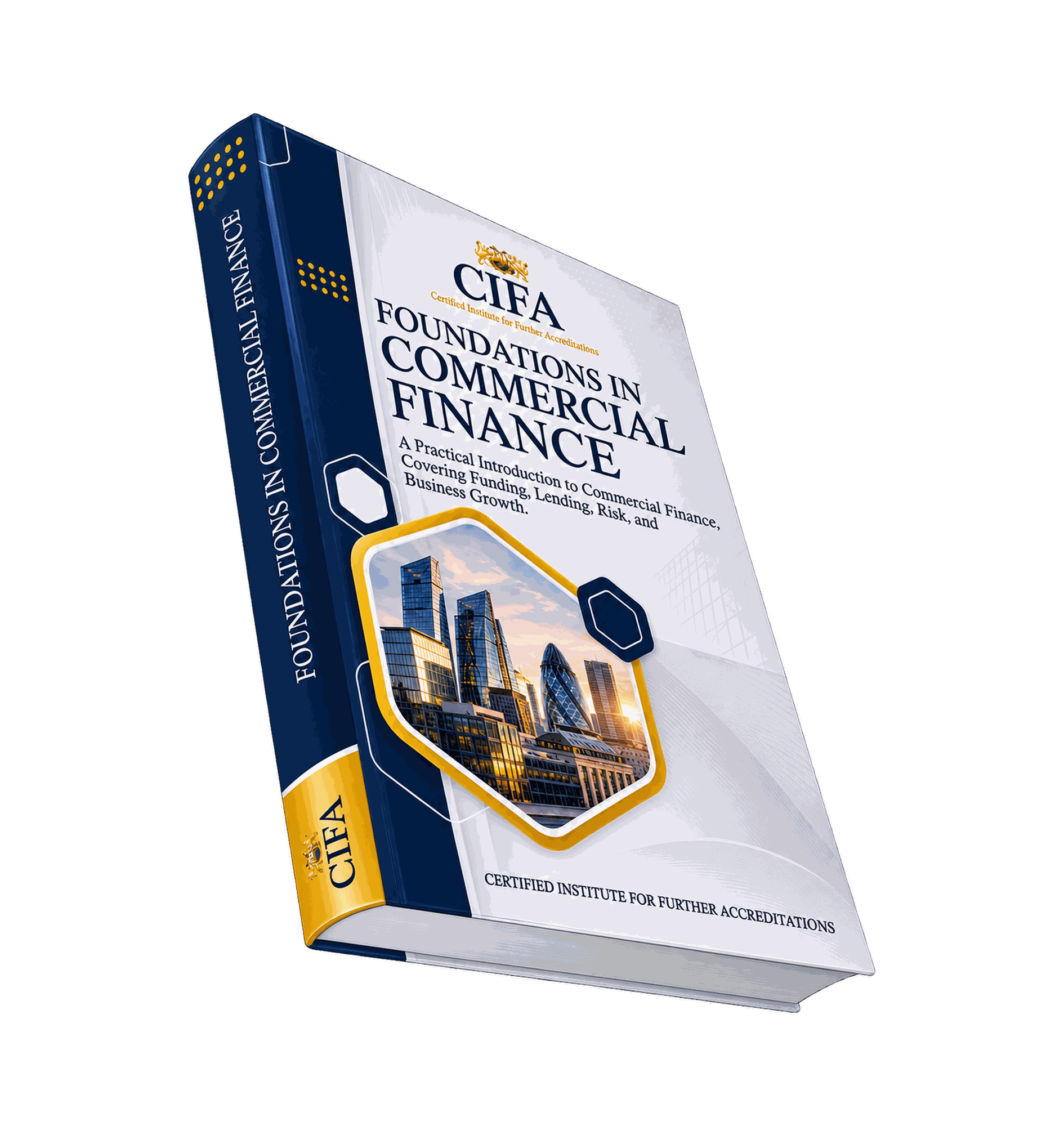
A Foundation to Commercial Finance course can help learners develop an understanding of these processes. CIFA’s programme introduces the financial and professional knowledge involved in commercial lending, from identifying client requirements to supporting funding proposals and managing transactions.
The Connection Between Business Growth and Finance
Businesses often need additional capital when their activities change. A small company may need funds to purchase stock before a busy season, while an established organisation may require long-term finance to acquire premises or upgrade machinery.
Funding can support several business objectives:
- Purchasing equipment and business assets.
- Managing short-term cash flow requirements.
- Financing commercial property.
- Supporting business expansion.
- Refinancing existing financial commitments.
- Funding stock and operational expenditure.
- Investing in new products or services.
However, borrowing creates obligations. Businesses need to consider the cost of finance, repayment arrangements, and the effect of additional debt on their financial position.
Understanding these considerations is essential when exploring commercial finance.
What Makes Commercial Lending Different from Personal Borrowing?
Commercial lending focuses on the financial circumstances and requirements of a business rather than an individual’s personal borrowing needs alone.
A lender may examine the organisation’s trading history, financial statements, cash flow, existing liabilities, business model, and purpose of borrowing. Depending on the product, it may also consider assets, security, guarantees, and wider commercial risks.
This makes business finance assessment a detailed process. A company seeking funding needs to explain why the money is required and provide information that helps a lender evaluate the application.
Commercial finance professionals therefore need to understand both financial information and the practical circumstances of the businesses they support.
Different Types of Commercial Lending
The right type of finance depends on the purpose of borrowing, the business’s financial position, and the lender’s requirements.
1. Term Loans
A business term loan provides an agreed amount of money that is repaid over a specified period. It may be used for investment, expansion, or other business purposes.
The interest rate, repayment schedule, security requirements, and eligibility criteria depend on the lender and the individual agreement.
2. Asset Finance
Asset finance can help businesses acquire equipment, vehicles, machinery, or other assets without necessarily paying the full cost upfront.
The structure of the arrangement depends on the product selected and the provider’s terms.
3. Invoice Finance
Businesses sometimes wait weeks or months for customers to settle invoices. Invoice finance may allow eligible organisations to access funding against outstanding invoices, helping address certain cash flow timing issues.
4. Commercial Mortgages
Commercial mortgages are used to finance business-related property. These facilities may support the purchase or refinancing of premises and usually involve property and affordability assessments.
5. Working Capital Finance
Working capital facilities can help businesses manage everyday financial requirements, such as supplier payments, stock purchases, and operating expenses.
Learning about these products helps develop a clearer understanding of how different funding arrangements serve different commercial purposes.
Financial Information: The Starting Point for Lending Decisions
A lender needs relevant information to understand a business’s financial condition. Financial analysis helps bring together details about performance, resources, liabilities, and cash flow.
Understanding Profitability
Profitability indicates whether a business generates income in excess of its relevant expenses. Financial reports can help show how revenue and costs have changed over time.
However, profitability should not be considered in isolation. A profitable business may still face cash flow pressures if its customers pay late or its expenses are due before income is received.
Reviewing Assets and Liabilities
Assets include resources such as cash, stock, equipment, and property. Liabilities represent amounts owed to lenders, suppliers, and other parties.
Reviewing these figures can help explain the organisation’s financial position and existing commitments.
Examining Financial Trends
Comparing financial information across different periods can reveal changes in revenue, expenses, margins, borrowing, and other indicators.
Trends may help identify areas requiring further investigation before a funding application is submitted.
Cash Flow Forecasting and Repayment Capacity
Cash flow is one of the important considerations in commercial lending because businesses need available funds to meet their obligations.
A cash flow forecast estimates when money is expected to enter and leave the organisation. It may include customer receipts, supplier payments, wages, rent, taxes, loan repayments, and other expenses.
For example, a construction business may receive payment only after completing certain project stages. It could therefore need funding to cover materials and labour before receiving the next payment.
A forecast can help explain the timing of this requirement and the expected sources of repayment.
When reviewing affordability, businesses and lenders may consider:
- Expected sales and customer receipts.
- Regular operating expenses.
- Existing borrowing commitments.
- Seasonal trading patterns.
- Planned expenditure.
- Possible changes in revenue.
- The repayment schedule of the proposed facility.
Forecasts rely on estimates and assumptions. They should be realistic, regularly reviewed, and adjusted when business conditions change.
How Credit Assessment Works
Credit assessment helps lenders evaluate the risks associated with providing finance. The process differs between providers and products, but it generally involves examining the borrower’s circumstances and ability to meet financial commitments.
Important considerations may include:
Trading history: How long the organisation has been operating and how its business activities have developed.
Financial performance: Revenue, profitability, expenses, and financial trends.
Affordability: Whether expected cash flow can support the proposed repayments.
Existing debt: The organisation’s current borrowing and other financial obligations.
Security: Whether the funding arrangement requires assets or other forms of security.
Purpose of finance: How the requested funds will be used and whether the proposed facility matches the business requirement.
Understanding these factors helps learners appreciate why commercial lending requires careful analysis rather than relying on a single financial figure.
What Will You Study in CIFA’s Foundation to Commercial Finance Course?
CIFA’s Foundation to Commercial Finance course is an intermediate-level digital programme with 40 CPD hours and eight chapters. Its syllabus introduces the main financial and professional considerations involved in business lending.
Chapter 1: Commercial Finance Fundamentals
Explore the commercial finance environment and understand why businesses seek external funding. This chapter introduces the foundations of business lending and the role of finance solutions in supporting commercial activities.
Chapter 2: Financial Statement Analysis
Learn how financial statements provide information about an organisation’s performance and financial position. The chapter introduces the role of financial information in commercial lending assessments.
Chapter 3: Cash Flow Forecasting and Affordability
Understand how businesses estimate future cash movements and why repayment capacity is an important consideration when seeking finance.
Chapter 4: Business Funding Solutions
Explore different commercial funding arrangements and the circumstances in which businesses may consider particular finance products.
Chapter 5: Credit Assessment and Lender Criteria
Develop an understanding of how lenders examine applications and consider financial performance, affordability, existing commitments, and other relevant criteria.
Chapter 6: Client Fact-Finding and Funding Proposals
Learn why gathering accurate information is important and how funding proposals communicate a business’s requirements to potential finance providers.
Chapter 7: Regulation and Professional Integrity
Explore the importance of regulatory awareness, responsible communication, ethical behaviour, and professional standards in financial services.
Chapter 8: Transaction Management and Client Relationships
Understand the stages involved in managing commercial finance transactions and maintaining clear, professional relationships with clients.
The Importance of Preparing a Strong Funding Proposal
A funding proposal helps explain a business’s requirements and provides supporting information for a lender’s consideration.
A proposal may contain several elements:
- Business background: An overview of the organisation, its activities, and trading history.
- Funding purpose: An explanation of why finance is required.
- Amount requested: The proposed funding amount and intended use.
- Financial information: Relevant accounts, management figures, and bank statements.
- Cash flow forecasts: Estimates of future receipts and payments.
- Repayment considerations: Information about how the business expects to meet its obligations.
- Supporting documents: Any additional evidence requested by the finance provider.
A clear proposal can make the funding requirement easier to understand. It should be accurate, complete, and consistent with the business’s financial information.
Professional Integrity in Commercial Finance
Commercial finance involves handling financial information and discussing decisions that may have significant consequences for businesses. Professional conduct is therefore an important part of the work.
Finance professionals should communicate clearly, handle confidential information appropriately, recognise potential conflicts of interest, and avoid making misleading statements.
They should also understand the rules and procedures relevant to their activities. Regulatory requirements can vary depending on the finance product, the parties involved, and the nature of the service being provided.
CIFA includes regulation and professional integrity in its programme to help learners recognise the importance of responsible conduct alongside technical financial knowledge.
Who Should Consider This Course?
CIFA’s programme may be suitable for individuals who want to understand the commercial lending environment and develop knowledge relevant to business funding.
Graduates and Career Changers
People considering a move into financial services can use the course to become familiar with commercial finance terminology and lending processes.
Banking and Finance Employees
Individuals working in banking operations, finance administration, or lending support may benefit from a broader understanding of business funding assessments.
Aspiring Commercial Finance Brokers
Learners interested in commercial finance broking can explore funding products, client fact-finding, credit assessment, and proposal preparation as part of their professional development.
Business Owners and Entrepreneurs
Business owners may find the subject useful when learning about lender requirements, cash flow, affordability, and funding options.
Business Support Professionals
People involved in preparing financial documentation, supporting clients, or coordinating finance applications can develop a clearer understanding of the commercial lending process.
Online Study and Learning Features at CIFA
CIFA delivers the Foundation to Commercial Finance programme through a digital learning platform. This format can help learners organise their studies around work and other commitments.
The published programme includes:
- 40 CPD hours.
- Eight structured learning chapters.
- Chapter-based mock exams.
- Practical study resources and a toolkit.
- Downloadable materials.
- A capstone assessment.
- Practical templates and a glossary.
- Lifetime portal access.
- A certificate of achievement after successfully completing and passing the required exam.
Learners should review the official course information for current pricing, assessment arrangements, and the precise resources included with enrolment.
Career Areas Related to Commercial Finance
Knowledge of commercial lending may be relevant to a range of roles and professional pathways, depending on experience and further qualifications.
Possible areas include:
- Commercial lending administration.
- Credit support.
- Loan processing.
- Business finance operations.
- Banking support.
- Funding application coordination.
- Commercial finance client services.
- Finance documentation and administration.
The course offers foundational learning; it does not guarantee employment or automatically authorise someone to carry out regulated financial activities. Individual roles may require further qualifications, practical experience, employer training, or regulatory permissions.
Frequently Asked Questions
1. What is the Foundation to Commercial Finance course?
It is an intermediate-level CIFA programme introducing commercial lending, business funding, financial statement analysis, cash flow forecasting, credit assessment, and client transaction management.
2. How many CPD hours does the course provide?
CIFA lists the course as offering 40 CPD hours across eight learning chapters.
3. What is the difference between commercial finance and business finance?
The terms are often used in related ways. Business finance broadly concerns how organisations manage and obtain money, while commercial finance commonly refers to funding products and arrangements designed for business requirements.
4. Why do lenders review cash flow forecasts?
Cash flow forecasts help explain expected receipts and payments. They can support an assessment of whether a business may have sufficient cash available to meet its financial commitments.
5. Does CIFA’s course include practical learning materials?
Yes. CIFA lists downloadable resources, practical templates, a glossary, chapter-based mock exams, and a capstone assessment among the programme features.
6. Can I study commercial finance online?
Yes. CIFA provides this programme digitally through its online learning portal, with lifetime portal access listed as a course feature.
7. Will this course guarantee a job in commercial finance?
No course can guarantee employment. The programme can help develop relevant foundational knowledge, while job opportunities depend on experience, additional qualifications, employer requirements, and role-specific criteria.
Conclusion
Commercial lending requires an understanding of business funding needs, financial performance, cash flow, affordability, and lender requirements. These areas help explain how organisations approach funding and how finance providers assess applications.
CIFA’s Foundation to Commercial Finance course introduces these subjects through eight chapters and 40 CPD hours of digital learning. By covering financial statement analysis, funding solutions, credit assessment, client proposals, and professional integrity, the programme provides a structured starting point for learning about commercial finance.
For graduates, career changers, business owners, and finance professionals, this knowledge can support further development and a clearer understanding of how businesses access funding.