








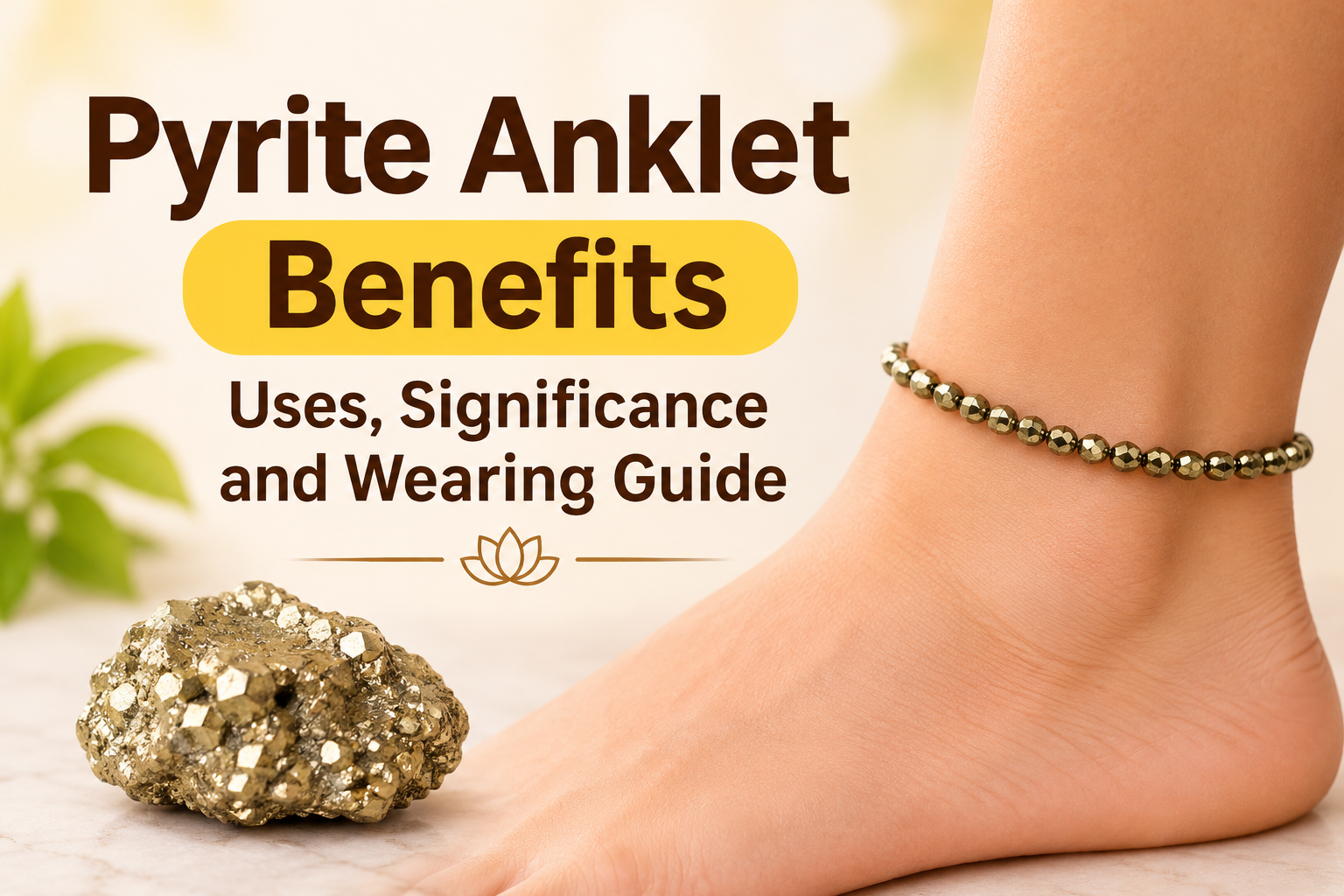
Pyrite is a metallic-looking mineral known for its golden shine and its nickname, “Fool’s Gold.” It has become a popular choice in crystal-inspired jewelry, including anklets. In crystal traditions, pyrite is associated with confidence, abundance, motivation, and protection. A pyrite anklet combines these symbolic meanings with a distinctive accessory that can be styled with everyday outfits.
If you are thinking about wearing one, it helps to understand what pyrite represents, how people traditionally use it, and how to care for it. Here is a practical guide to its significance and wearing style.
What Is a Pyrite Anklet?
Pyrite is a naturally occurring iron sulfide mineral with a brassy yellow color and metallic luster. Its appearance can resemble gold, which explains the nickname “Fool’s Gold.” It is used in decorative objects and jewelry, including bracelets, pendants, and anklets.
In crystal practices, pyrite is often associated with confidence, determination, prosperity, and protection. These meanings come from spiritual traditions and personal beliefs; they are not scientifically established effects. As an accessory, its warm metallic appearance also makes it easy to pair with different styles.
What Are the Traditional Benefits of a Pyrite Anklet?
People choose pyrite jewelry for its appearance as well as the symbolism connected with the stone. The following benefits are commonly mentioned in crystal traditions.
1. Symbolizes Abundance and Prosperity
Pyrite is often called a stone of abundance. In crystal traditions, it represents ambition, opportunity, and a positive approach to financial goals. Some people wear a pyrite anklet as a reminder to stay focused on their plans and take practical steps toward them.
The stone does not attract money or guarantee financial success. Planning, informed decisions, and consistent effort remain important.
2. Represents Confidence and Motivation
The golden appearance of pyrite is often linked with confidence and personal power. It is traditionally associated with determination and the willingness to take initiative.
For someone working toward a personal or professional goal, wearing pyrite may serve as a symbolic reminder to trust their abilities and keep moving forward.
3. Traditionally Associated With Protection
Some crystal traditions connect pyrite with protection and grounding. It is sometimes used as a symbolic boundary against unwanted influences or negativity.
People who value this meaning may choose to wear it as a personal reminder to maintain boundaries and approach difficult situations with confidence. These associations are matters of belief, not proven protective properties.
4. Encourages a Goal-Oriented Mindset
Pyrite is also linked with focus, ambition, and persistence in crystal practices. Wearing it may help someone keep a personal intention in mind, such as completing a project, developing a skill, or building a new routine.
The anklet itself does not improve concentration, but it can hold personal meaning as part of a mindful routine.
Why Choose a Pyrite Anklet Instead of a Bracelet?
The choice between an anklet and a bracelet mostly comes down to comfort and style. An anklet offers a different way to wear gemstone jewelry without adding another accessory to the wrist. It can be subtle under trousers or stand out with dresses, skirts, and sandals.
Some crystal enthusiasts also assign symbolic meanings to where a stone is worn. However, there is no universal rule that wearing pyrite around the ankle creates a different effect from wearing it on the wrist. Choose the placement you prefer and find comfortable.
How to Wear a Pyrite Anklet
A few practical considerations can help you wear your anklet comfortably.
1. Choose the Right Fit
The anklet should sit comfortably around your ankle without feeling tight or slipping excessively. Leave enough room for natural movement, and check the clasp or elastic before wearing it.
2. Pick a Style That Suits Your Routine
A simple beaded design can work for everyday outfits, while a delicate chain or detailed setting may suit occasional wear. Consider your footwear and clothing so the anklet does not catch or rub.
3. Decide Which Ankle Feels Comfortable
Some spiritual practices attach symbolic meanings to the left and right sides of the body. These interpretations vary, and there is no universal rule for wearing a pyrite anklet on a particular ankle. Comfort and personal preference are good guides.
4. Remove It During Certain Activities
Take the anklet off before swimming, showering, exercising, or using cleaning products. This helps reduce exposure to moisture, chemicals, friction, and accidental damage.
How to Care for a Pyrite Anklet
Pyrite needs more careful handling than some common jewelry materials. It can react with moisture and may tarnish or deteriorate if stored in damp conditions.
- Keep it away from water, sweat, perfumes, and household chemicals.
- Do not soak it or use ultrasonic jewelry cleaners.
- Wipe it gently with a soft, dry cloth after wearing.
- Store it in a dry place, preferably in a separate pouch or jewelry box.
- Avoid prolonged contact with humid environments.
If the anklet includes other materials, follow the care instructions for the complete piece as well.
Is a Pyrite Anklet Right for You?
A pyrite anklet can be a distinctive addition to your jewelry collection, especially if you like its golden appearance and the traditional symbolism of abundance, confidence, and determination. It can be worn as a style accessory or as a personal reminder of goals and intentions.
Its spiritual associations are based on crystal traditions, not guaranteed outcomes. Choose a well-made design, check that it fits comfortably, and keep it dry to maintain its appearance. The best way to wear a pyrite anklet is to make it part of your style in a way that feels natural and meaningful to you.