





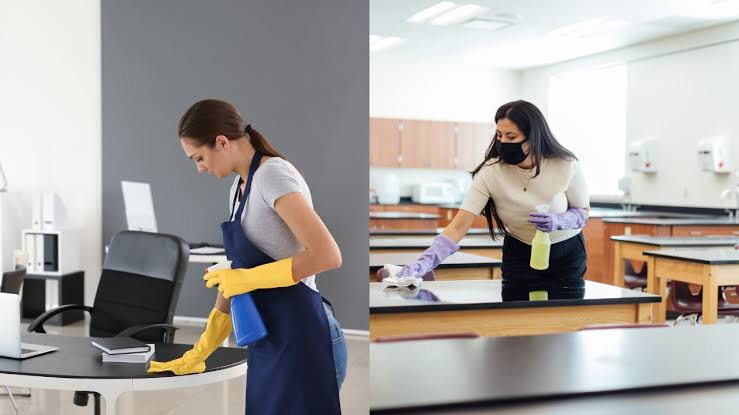
Clean school facilities provide students and staff with a comfortable environment for learning and daily activities. Classrooms, cafeterias and restrooms require specific cleaning methods because each space serves a different purpose. Professional school janitorial services support these needs through regular cleaning, appropriate sanitation practices and consistent maintenance that helps schools maintain hygienic spaces throughout the academic year.
Classroom Cleaning Protocols
Classrooms contain frequently used furniture, learning materials and shared equipment. Janitorial staff should follow daily cleaning routines that address these surfaces while keeping the learning environment tidy.
Essential classroom cleaning tasks include:
- Desk and Chair Cleaning: Wipe desks, chairs and workstations to remove dust, dirt and visible marks.
- High-Touch Surfaces: Clean door handles, light switches and cabinet handles regularly.
- Floor Maintenance: Vacuum carpets and sweep or mop hard floors using suitable cleaning equipment.
- Shared Equipment: Clean keyboards, learning devices and classroom supplies according to manufacturer instructions.
These practices help maintain classroom cleanliness and prepare learning spaces for daily activities.
Cafeteria Cleaning and Sanitization Protocols
School cafeterias experience frequent food handling and dining activities. Cleaning teams should focus on food-contact surfaces, dining furniture and waste collection areas to maintain hygienic conditions.
Important cafeteria cleaning procedures include:
- Table Sanitization: Clean dining tables and apply suitable sanitizers according to product instructions.
- Spill Removal: Wipe food and beverage spills promptly to maintain clean walking surfaces.
- Floor Care: Sweep and mop dining areas to remove crumbs, food residue and tracked-in dirt.
- Waste Management: Empty garbage containers, replace liners and clean bins regularly.
Consistent cafeteria cleaning helps maintain pleasant dining areas throughout scheduled meal periods.
Restroom Cleaning and Disinfection Protocols
School restrooms require careful attention because students and staff use shared fixtures throughout the day. Janitorial teams should follow cleaning procedures suited to restroom surfaces and equipment.
Key restroom cleaning tasks include:
- Fixture Cleaning: Scrub toilets, sinks and urinals using appropriate cleaning products.
- Surface Disinfection: Disinfect flush handles, faucets and door handles following product contact-time instructions.
- Supply Replenishment: Refill soap dispensers, toilet paper holders and paper towel dispensers.
- Floor and Drain Care: Mop restroom floors and inspect drains for proper drainage.
Routine restroom checks help maintain cleanliness, hygiene and adequate supplies during school hours.
Cleaning Frequency and Safety Protocols
Schools should set cleaning schedules according to room usage, daily activities and surface requirements. Janitorial supervisors can assign tasks for different periods, monitor completed work and maintain cleaning records. Regular inspections help teams adjust cleaning frequency based on facility conditions and occupancy levels.
Staff should follow product labels, use appropriate protective equipment and store cleaning chemicals securely. Dedicated cleaning tools for classrooms, cafeterias and restrooms help limit cross-contamination. Proper training also supports safe handling, accurate product dilution and consistent cleaning practices across school facilities throughout the academic year.
Conclusion
Maintaining clean school facilities requires consistent attention to classrooms, cafeterias and restrooms. Each area benefits from suitable cleaning methods, regular inspections and trained janitorial staff. Professional school janitorial services help schools manage these responsibilities through dependable cleaning routines. These efforts support comfortable learning spaces, hygienic dining areas and well-maintained restrooms for students and staff every day.